Overview
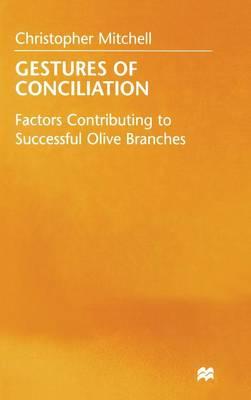
This work examines the ideas, assumptions and theories that underpin how leaders of parties in intractable conflicts begin and sustain a process of peacemaking by offering to their adversaries ""olive branches"" in more modern terms symbolic gestures, concessions, tension reducing moves or confidence building measures. It discusses means of overcoming political and psychological barriers to accurate communication, trust building, domestic consensus formation, and ""ripe"" conditions for conciliation, suggesting practical guidelines for accommodation.
Full Product Details
Author: Christopher Mitchell
Publisher: Palgrave Macmillan
Imprint: Palgrave Macmillan
Dimensions:
Width: 15.20cm
, Height: 3.00cm
, Length: 22.90cm
Weight: 0.687kg
ISBN: 9780333474334
ISBN 10: 0333474333
Pages: 333
Publication Date: 15 March 2000
Audience:
Professional and scholarly
,
Professional and scholarly
,
Professional & Vocational
,
Postgraduate, Research & Scholarly
Format: Hardback
Publisher's Status: Active
Availability: In Print

This item will be ordered in for you from one of our suppliers. Upon receipt, we will promptly dispatch it out to you. For in store availability, please contact us.
Reviews
'...a significant contribution...Mitchell's...rich examination of a wide range of variables involved in the contemplation and implementation of such moves deserves to be read by practitioners and students of conflict resolution alike. This book should become a required text in graduate courses on the techniques of successful conflict resolution.' - Paul D. Senese, American Political Science '...worth reading for a mature and rational discussion of how conciliatory gestures can be initiated.' - Undala Alam, International Affairs '...the most complete and comprehensive account of conciliation available, rescuing the concept from relative anonymity and providing a platform of researchers, policy makers, teachers, trainers and active peacemakers to learn from and build on. - Tom Woodhouse, Peace and Conflict: Journal of Peace Psychology
'...a significant contribution...Mitchell's...rich examination of a wide range of variables involved in the contemplation and implementation of such moves deserves to be read by practitioners and students of conflict resolution alike. This book should become a required text in graduate courses on the techniques of successful conflict resolution.' - Paul D. Senese, American Political Science '...worth reading for a mature and rational discussion of how conciliatory gestures can be initiated.' - Undala Alam, International Affairs '...the most complete and comprehensive account of conciliation available, rescuing the concept from relative anonymity and providing a platform of researchers, policy makers, teachers, trainers and active peacemakers to learn from and build on. - Tom Woodhouse, Peace and Conflict: Journal of Peace Psychology
Author Information
Christopher Mitchell is Drucie French-Cumbie Professor of Conflict Analysis and Resolution at George Mason University.