Overview
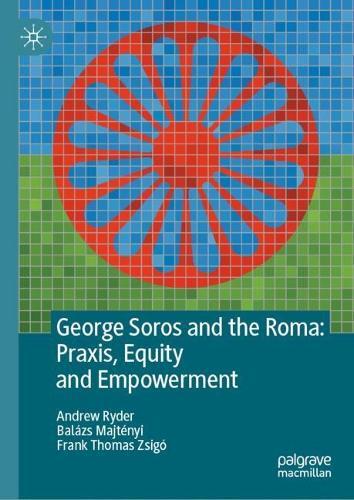
For three decades the philanthropist and billionaire investor George Soros has played a prominent role in promoting a vision of ‘Open Society’ in Central Eastern Europe (CEE), promoting the transition from communist statism to liberal democracy through his philanthropic measures, most notably his support for the Open Society Foundations. Within this body of work an important aspect has been Soros support and commitment to the development of Roma civil society. Support from Soros endeavours has enabled the development and progression of Roma civil society, especially at the transnational level, preparing and training Roma community leaders in the skills of community development and project management. Thousands of Roma individuals have also benefited from generous scholarship programmes funded by Open Society and Soros, completing school and university studies and other forms of training, thereby engendering role models. Soros-supported initiatives have also been highly influential in transnational diplomacy within for example the Council of Europe and the European Union, playing an important role in policy frameworks like the Decade for Roma Inclusion and the EU Framework for National Roma Integration Strategies.
Full Product Details
Author: Andrew Ryder ,
Balázs Majtényi ,
Frank Thomas Zsigo
Publisher: Springer Nature Switzerland AG
Imprint: Palgrave Macmillan
ISBN: 9783032065995
ISBN 10: 3032065992
Pages: 298
Publication Date: 07 January 2026
Audience:
College/higher education
,
Postgraduate, Research & Scholarly
Format: Hardback
Publisher's Status: Forthcoming
Availability: Not yet available

This item is yet to be released. You can pre-order this item and we will dispatch it to you upon its release.
Author Information
Andrew Ryder is a British academic and social justice campaigner based in Budapest. He is a Professor at Eötvös Loránd University and Director of the Institute for Political and International Studies and was a board member of the Roma Education Fund. Prior to this, he was an academic at the Corvinus University Budapest, University of Bristol and before entering academia was the researcher to the All-Party Parliamentary Group for Gypsies, Roma and Travellers (based in the Westminster Parliament) and Policy Officer for the Gypsy and Traveller Law Reform Coalition (winners of the Liberty Human Rights Award in 2004). Balázs Majtényi is from Hungary and is a professor at Eötvös Loránd University, he holds a law degree and a history MA (both from Eötvös Loránd University). He completed his Ph.D. at the same institution in political sciences. His research interests include social history, nation-building, citizenship and human rights, with a focus on issues of minority, migrant, and refugee protection, the Hungarian public law turn and social history of the Hungarian Roma. Frank Thomas Zsigó is a Canadian/Hungarian political scientist and assistant professor at Eötvös Loránd University in Budapest. He has worked with a number of Roma NGOs in Hungary and served as a consultant to Roma organizations at the midway point of the Decade for Roma Inclusion. He has recently conducted research on the situation of Ukrainian Roma refugees in Hungary.