Overview
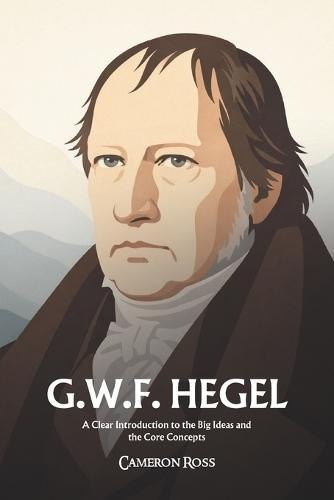
Georg Wilhelm Friedrich Hegel transformed philosophy into a meditation on history itself. Reality, for Hegel, is not static substance but unfolding process. Contradiction is not error but engine. Through dialectic, Spirit comes to know itself across time. Freedom emerges gradually, through conflict and reconciliation, embedded within institutions such as family, civil society, and state. History is neither chaos nor mere succession. It is rational development, though rationality often appears only in retrospect. Hegel's ambition was totality, yet his system vibrates with tension. Later thinkers would inherit, invert, or resist his framework. Marx radicalized it, existentialists contested it, phenomenologists reinterpreted it. Hegel remains difficult because he demands patience with becoming. He insists that truth is not isolated insight but movement grasped conceptually, where negativity itself becomes productive. What you will find in this book: Dialectic as the Logic of Reality This book begins by clarifying what Hegel means by dialectic, moving beyond the simplistic thesis-antithesis-synthesis formula. Dialectic, in Hegel's system, names the dynamic through which concepts reveal their internal contradictions and develop into more comprehensive forms. The analysis explains how negativity functions as a productive force rather than mere destruction. Reality itself is interpreted as structured by self-mediation and becoming. Dialectic therefore operates not only as a method of argument but as the ontological grammar of thought and world. Phenomenology and the Education of Consciousness Hegel's Phenomenology of Spirit is reconstructed as a narrative of consciousness moving through successive shapes of experience. This section analyzes how certainty, perception, self-consciousness, and reason unfold through conflict and recognition. The famous master-slave dialectic is situated within a broader account of how subjectivity achieves self-knowledge through dependence on the other. The book clarifies how experience becomes the site where freedom is gradually articulated rather than immediately given. Logic and the Structure of Conceptual Necessity In the Science of Logic, Hegel develops a rigorous account of being, essence, and concept. This section explains how logical categories are not static classifications but stages in the self-development of thought. The movement from indeterminate being to determinate concept is reconstructed step by step, demonstrating how abstraction leads to richer determination. Logic becomes the inner architecture of reality itself, rather than a neutral instrument applied externally to objects. History, Spirit, and the Realization of Freedom Hegel interprets history as the unfolding of spirit through institutions, conflicts, and cultural forms. This section analyzes how freedom becomes actual within ethical life-family, civil society, and state. The book clarifies the controversial claim that ""the rational is actual,"" situating it within a framework where historical development embodies the gradual self-recognition of human agency. Art, Religion, and Philosophy as Absolute Spirit Hegel's system culminates in the account of absolute spirit expressed through art, religion, and philosophy. This section examines how each form presents truth in a distinct medium: sensuous appearance, symbolic representation, and conceptual thought. The book explains why philosophy, for Hegel, achieves the most explicit articulation of truth, while remaining historically situated. Add this book to your cart now to engage with a systematic philosophy that interprets reality, history, and freedom as moments of a single unfolding rational process.
Full Product Details
Author: Cameron Ross
Publisher: Independently Published
Imprint: Independently Published
Dimensions:
Width: 15.20cm
, Height: 0.70cm
, Length: 22.90cm
Weight: 0.186kg
ISBN: 9798249535889
Pages: 132
Publication Date: 23 February 2026
Audience:
General/trade
,
General
Format: Paperback
Publisher's Status: Active
Availability: Available To Order

We have confirmation that this item is in stock with the supplier. It will be ordered in for you and dispatched immediately.