|
|
|||
|
||||
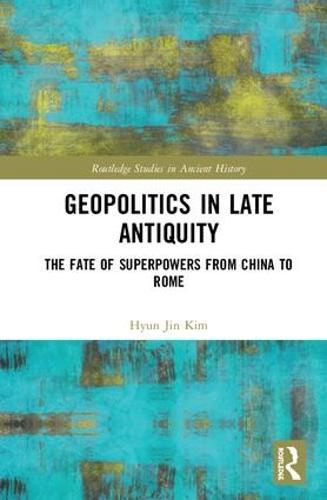
OverviewGeopolitics in Late Antiquity explores the geopolitical revolution which shook the foundations of the ancient world, the dawning of the millennium of Inner Asian dominance and virtual monopoly of world power (with interludes) that began with the rise of the Huns and then continued under the hegemony of various other steppe peoples. Kim examines first the geopolitical situation created by the rise of Inner Asian powers, and then the reactions of the great empires of Eurasia to this geopolitical challenge. A unique feature of this book is its in-depth analysis of the geostrategies (some successful, others misguided) adopted by China, Rome and Persia to cope with the growing Inner Asian threat. The conclusions and insights drawn from this analysis are then used to inform modern geopolitics, mainly the contest for hegemonic power between the United States and China. Geopolitics in Late Antiquity is a crucial resource for both academic and learned general readership, who have an interest in the fate of antiquity’s superpowers and also for those engaged in current international relations policy-making, who wish to learn from historical precedents. Full Product DetailsAuthor: Hyun Jin KimPublisher: Taylor & Francis Ltd Imprint: Routledge Weight: 0.352kg ISBN: 9781138292550ISBN 10: 1138292559 Pages: 130 Publication Date: 09 October 2018 Audience: College/higher education , General/trade , Tertiary & Higher Education , General Format: Hardback Publisher's Status: Active Availability: In Print This item will be ordered in for you from one of our suppliers. Upon receipt, we will promptly dispatch it out to you. For in store availability, please contact us. Table of ContentsAcknowledgements; 1 Introduction; 1.1 The great geopolitical dilemma, theoretical approaches; 1.2 Territorial disputes and retrenchment, the re-emergence of policymaking; 1.3 Summary; 2 The geopolitical situation: the superpowers and the Huns; 2.1 Han China and the Huns; 2.2. Rome and the Huns; 2.3 Sassanian Persia and the Huns; 3 The superpower reaction; 3.1 China strikes back; 3.2 Rome falters; 3.3 Persian collapse; 4 Conclusion: the geostrategic choices for the future; 4.1 China as the geopolitical equivalent of the great Turco-Mongol Empires of Eurasia; 4.2 The geostrategic options for the US; Select bibliography; IndexReviewsHyun Jin Kim is a true global historian. Able to exploit Chinese and classical sources directly, he has transformed our understanding of steppe history in late antiquity. The challenge posed by the Huns (Xiongnu for the Chinese) to the established great powers was serious. After surveying the varied responses of the Han empire, the two halves of the Roman empire, and the Sasanian Persian empire, and their varied outcomes, he offers sound advice to contemporary policy-makers in China and the USA. - James Howard-Johnston, Oxford University, UK Author InformationHyun Jin Kim is Senior Lecturer in Classics at the University of Melbourne, Australia. He took his DPhil from the University of Oxford, UK, and is the author of multiple books on Greece-Rome and China comparative studies, the Huns and Inner Asia and the historical implications of China’s contemporary rise. Tab Content 6Author Website:Countries AvailableAll regions |
||||