Overview
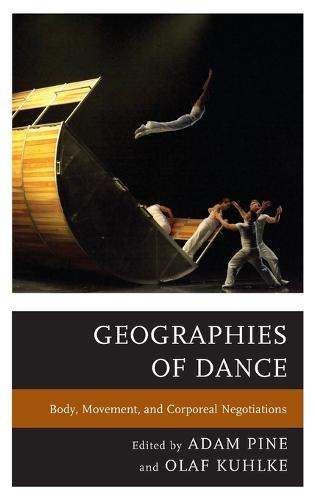
This volume provides a theoretical and practical examination of the relationships between bodies, dance and space. Using ten case studies, it illustrates the symbolic power of dance that is crafted by choreographers and acted out by dancers. The book portrays a multitude of ways in which public and private spaces (stages, buildings, town squares as well as natural environments) are transformed and made meaningful by dance. Furthermore, it explores the meaning of dance as emotionally experienced by dancers, and examines how movement in certain spaces creates meaning without the use of words or symbols.
Full Product Details
Author: Adam M. Pine ,
Olaf Kuhlke ,
Frances Bronet ,
Georgia Connover
Publisher: Bloomsbury Publishing Plc
Imprint: Lexington Books
Dimensions:
Width: 16.10cm
, Height: 2.40cm
, Length: 23.40cm
Weight: 0.531kg
ISBN: 9780739171844
ISBN 10: 0739171844
Pages: 264
Publication Date: 24 December 2013
Audience:
Professional and scholarly
,
Professional & Vocational
Format: Hardback
Publisher's Status: Active
Availability: In Print

This item will be ordered in for you from one of our suppliers. Upon receipt, we will promptly dispatch it out to you. For in store availability, please contact us.
Reviews
This book shows how dance makes space effective in myriad ways. It is both a primer and, like dance, an exploration of what both the body and space can do. Anyone moving onto this rich terrain needs to start here. -- Nigel Thrift, University of Warwick Geographies of Dance provides a valuable set of engagements with the relations, variously choreographed and creative, between dancing bodies and our understandings and experiences of space and place. Empirically rich and conceptually ambitious, the fascinating essays in this volume serve to demonstrate the vibrancy of current scholarship on this topic while also mapping out important trajectories for future research. -- Derek McCormack, University of Oxford
The first of two proposed volumes edited by Pine and Kuhlke, this collection explores how space and place, identity and cultural diversity create embodied dance as individuals and groups negotiate the complexities of modern life. Chapter topics illustrate that people in the varied environments and sites find meaning and community through dance in different ways than one usually employs when viewing and writing about dance and dancers. Included are essays on Israeli-Jewish women's interest in belly dancing as a way to connect physicality with feminine emotions; the experiences of exotic dancers in popular strip clubs in a large city where neighborhood placement conflicts affect their ability to make a living; the evolution of jazz in Capetown, South Africa, from the 1940s swing styles and jazz era to the more current influences of hip-hop, tango, and salsa; and the work of four Toronto choreographers trained in Bharata Natyam Indian dance as they incorporate more contemporary forms to expand their cultural identities. This interdisciplinary collection offers a unique perspective on the broad role of dance in global cultures. Summing Up: Recommended. Upper-division undergraduates through faculty and professionals; general readers. CHOICE This book shows how dance makes space effective in myriad ways. It is both a primer and, like dance, an exploration of what both the body and space can do. Anyone moving onto this rich terrain needs to start here. -- Nigel Thrift, University of Warwick Geographies of Dance provides a valuable set of engagements with the relations, variously choreographed and creative, between dancing bodies and our understandings and experiences of space and place. Empirically rich and conceptually ambitious, the fascinating essays in this volume serve to demonstrate the vibrancy of current scholarship on this topic while also mapping out important trajectories for future research. -- Derek McCormack, University of Oxford
The first of two proposed volumes edited by Pine and Kuhlke, this collection explores how space and place, identity and cultural diversity create embodied dance as individuals and groups negotiate the complexities of modern life. Chapter topics illustrate that people in the varied environments and sites find meaning and community through dance in different ways than one usually employs when viewing and writing about dance and dancers. Included are essays on Israeli-Jewish women's interest in belly dancing as a way to connect physicality with feminine emotions; the experiences of exotic dancers in popular strip clubs in a large city where neighborhood placement conflicts affect their ability to make a living; the evolution of jazz in Capetown, South Africa, from the 1940s swing styles and jazz era to the more current influences of hip-hop, tango, and salsa; and the work of four Toronto choreographers trained in Bharata Natyam Indian dance as they incorporate more contemporary forms to expand their cultural identities. This interdisciplinary collection offers a unique perspective on the broad role of dance in global cultures. Summing Up: Recommended. Upper-division undergraduates through faculty and professionals; general readers. * Choice Reviews * This book shows how dance makes space effective in myriad ways. It is both a primer and, like dance, an exploration of what both the body and space can do. Anyone moving onto this rich terrain needs to start here. -- Nigel Thrift, University of Warwick Geographies of Dance provides a valuable set of engagements with the relations, variously choreographed and creative, between dancing bodies and our understandings and experiences of space and place. Empirically rich and conceptually ambitious, the fascinating essays in this volume serve to demonstrate the vibrancy of current scholarship on this topic while also mapping out important trajectories for future research. -- Derek McCormack, University of Oxford
The first of two proposed volumes edited by Pine and Kuhlke, this collection explores how space and place, identity and cultural diversity create embodied dance as individuals and groups negotiate the complexities of modern life. Chapter topics illustrate that people in the varied environments and sites find meaning and community through dance in different ways than one usually employs when viewing and writing about dance and dancers. Included are essays on Israeli-Jewish women's interest in belly dancing as a way to connect physicality with feminine emotions; the experiences of exotic dancers in popular strip clubs in a large city where neighborhood placement conflicts affect their ability to make a living; the evolution of jazz in Capetown, South Africa, from the 1940s swing styles and jazz era to the more current influences of hip-hop, tango, and salsa; and the work of four Toronto choreographers trained in Bharata Natyam Indian dance as they incorporate more contemporary forms to expand their cultural identities. This interdisciplinary collection offers a unique perspective on the broad role of dance in global cultures. Summing Up: Recommended. Upper-division undergraduates through faculty and professionals; general readers. * CHOICE * This book shows how dance makes space effective in myriad ways. It is both a primer and, like dance, an exploration of what both the body and space can do. Anyone moving onto this rich terrain needs to start here. -- Nigel Thrift, University of Warwick Geographies of Dance provides a valuable set of engagements with the relations, variously choreographed and creative, between dancing bodies and our understandings and experiences of space and place. Empirically rich and conceptually ambitious, the fascinating essays in this volume serve to demonstrate the vibrancy of current scholarship on this topic while also mapping out important trajectories for future research. -- Derek McCormack, University of Oxford
Author Information
Adam M. Pine is assistant professor of geography and Director of the Urban and Regional Studies program at the University of Minnesota Duluth. Olaf Kuhlke is associate professor of geography and Associate Dean of the College of Liberal Arts at the University of Minnesota Duluth.