|
|
|||
|
||||
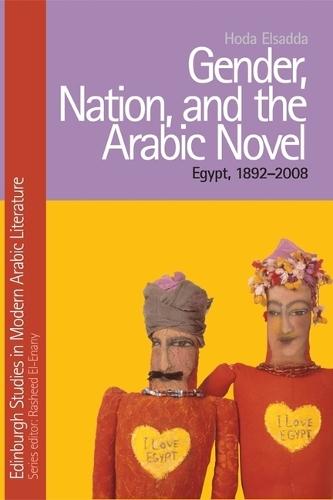
OverviewGender studies in Arabic literature has become equated with women's writing, leaving aside the possibility of a radical rethinking of the Arabic literary canon and Arab cultural history. While the 'woman question' in the Arabic novel has received considerable attention, the 'male question' has gone largely unnoticed. Now, Hoda Elsadda bucks that trend to give us a nuanced understanding of literary imaginings of masculinity and femininity in the Egyptian novel. Foregrounding voices that have been marginalised alongside canonical works, she engages with new directions in the novel tradition. Full Product DetailsAuthor: Hoda Elsadda (Professor of English and Comparative Literature, Cairo University)Publisher: Edinburgh University Press Imprint: Edinburgh University Press ISBN: 9781399564984ISBN 10: 1399564986 Pages: 304 Publication Date: 31 May 2026 Audience: Professional and scholarly , Professional & Vocational Format: Paperback Publisher's Status: Forthcoming Availability: Not yet available This item is yet to be released. You can pre-order this item and we will dispatch it to you upon its release. Language: English Table of ContentsIntroduction: Gender, nation and the canon of the Arabic novel Part I 1. Beginnings: Discourses on Ideal Manhood and Ideal Womanhood 2. The New Man: Conflicting Masculinities in the Fiction of Haikal, al-Mazini and a-Rafi'I 3. Tawfiq al-Hakim and the Civilizational Novel Part II 4. Naguib Mahfouz's Trilogy: A National Allegory 5. Latifa al-Zayyat: Gender and Nationalist Politics 6. Defeated Masculinities in Sonallah Ibrahim Part III 7. The Personal is Political: Debating the New Writing in the 1990s 8. The Postcolonial Nomadic Novel 9. Liminal Spaces/ Liminal Identities: Hamdi Abu Golayyel, Ahmed Alaidy and Muhammad 'Ala' al-Din Conclusion Arabic References English References IndexReviewsElsadda brilliantly upends standing understandings of the Arabic novel. Nuanced and incisive, she dissects over a century of Egyptian Arabic novels, demonstrating that the liberal national elite’s gendered imaginations of the nation shaped the literary canon. She convincingly argues that national political projects must imagine themselves through cultural production and that both are systematically shot through with gendered constructions of power. -- Suad Joseph, Professor of Anthropology and Women and Gender Studies, University of California, Davis Author InformationHoda Elsadda is Professor of English and Comparative Literature at Cairo University, and co-founder and Chair of the Board of the Women and Memory Forum. Previously, she held a Chair in the Study of the Contemporary Arab World at the University of Manchester. She is a widely published scholar and activist and her work has focused on Arab and Muslim women’s history and narratives, comparative literature and feminist issues. Tab Content 6Author Website:Countries AvailableAll regions |
||||