Overview
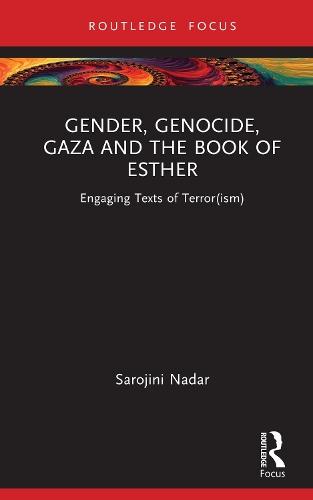
Gender, Genocide, Gaza and the Book of Esther bridges the gap between gendered and geopolitical analyses by interrogating both the sexual and ethnic violence embedded in the Book of Esther. While much scholarship has examined the potential genocide of the Jews in the narrative, far less attention has been paid to the Persian “retaliation genocide.” Framed within decolonial feminist perspectives, this book shifts between the harem—the royal institution where women were sequestered for the king’s use—and herem, the practice of divinely sanctioned warfare that justifies the extermination of an enemy. Rather than operating as discrete forms of violence, the book argues that the harem and the herem are co-constitutive, revealing how gendered and ethnic domination function in tandem. Through a combination of narrative inquiry, inter-textual readings, critical discourse analysis, and theological assessments of both the biblical text and its contemporary reception, Gender, Genocide, Gaza and the Book of Esther invites interpreters to consider the larger frameworks of ethnicity and racialization within which hermeneutics of sexual violence take place. A close literary reading of Esther is paired with an analysis of its contemporary geopolitical appropriations, particularly its use in Christian Zionist rhetoric. The explicit invocation of the Amalekite extermination trope by Israel’s prime minister in October 2023 to justify attacks on Gaza, underscores the enduring political afterlives of texts of terror. This book contends that a feminist reading of Esther cannot limit itself to an analysis of sexual violence but must extend its critique intersectionally, engaging with the broader necropolitical economies that structure both ancient and modern deployments of biblical violence.
Full Product Details
Author: Sarojini Nadar
Publisher: Taylor & Francis Ltd
Imprint: Routledge
Weight: 0.450kg
ISBN: 9781032895499
ISBN 10: 1032895497
Pages: 140
Publication Date: 21 May 2025
Audience:
College/higher education
,
Tertiary & Higher Education
Format: Hardback
Publisher's Status: Active
Availability: In Print

This item will be ordered in for you from one of our suppliers. Upon receipt, we will promptly dispatch it out to you. For in store availability, please contact us.
Author Information
Sarojini Nadar is Desmond Tutu South African Research Chair (SARChI) in Religion and Social Justice, University of the Western Cape, South Africa. The chair is bilaterally funded by the National Research Foundation (NRF) and the Lund Mission Society (LMS) under grant number: 118854. Opinions, findings, and conclusions expressed are the author's own. This monograph was made possible through research sabbatical fellowships at Wesley House, Cambridge; University of Bamberg and the Polin Institute for Theological Research at Åbo Akademi University.