Overview
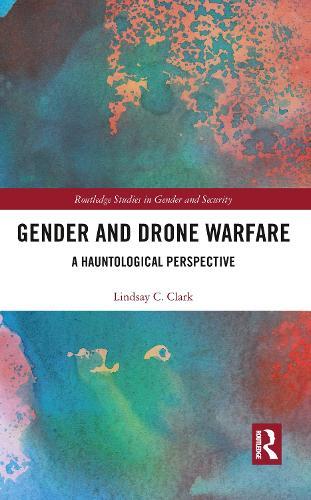
This book investigates how drone warfare is deeply gendered and how this can be explored through the methodological framework of ‘Haunting’. Utilising original interview data from British Reaper drone crews, the book analyses the way killing by drones complicates traditional understandings of masculinity and femininity in warfare. As their role does not include physical risk, drone crews have been critiqued for failing to meet the masculine requirements necessary to be considered ‘warriors’ and have been derided for feminising war. However, this book argues that drone warfare, and the experiences of the crews, exceeds the traditional masculine/feminine binary and suggests a new approach to explore this issue. The framework of Haunting presented here draws on the insights of Jacques Derrida, Avery Gordon, and others to highlight four key themes – complex personhood, in/(hyper)visibility, disturbed temporality and power – as frames through which the intersection of gender and drone warfare can be examined. This book argues that Haunting provides a framework for both revealing and destabilising gendered binaries of use for feminist security studies and International Relations scholars, as well as shedding light on British drone warfare. This book will be of interest to students of gender studies, sociology, war studies, and critical security studies.
Full Product Details
Author: Lindsay Clark (University of New South Wales (UNSW), Canberra, Australia)
Publisher: Taylor & Francis Ltd
Imprint: Routledge
Weight: 0.303kg
ISBN: 9780367786052
ISBN 10: 0367786052
Pages: 208
Publication Date: 31 March 2021
Audience:
College/higher education
,
Professional and scholarly
,
Tertiary & Higher Education
,
Professional & Vocational
Format: Paperback
Publisher's Status: Active
Availability: In Print

This item will be ordered in for you from one of our suppliers. Upon receipt, we will promptly dispatch it out to you. For in store availability, please contact us.
Reviews
'Drone technology is not only shaping the nature of warfare but also the perceived nature of the soldier, as Clark [...] explores in this book. Being distant from the battlefield, drone pilots are not in immediate physical danger, which has the perceived effect of feminizing their warrior status. However, by combining the methodology of ""haunting"" (drawing on Jacques Derrida’s notion of ""hauntology"": paying attention to unseen spaces, non-linearity, and intuitions) with Cynthia Weber’s queer logics, Clark argues that the pilot’s experiences actually exceed the masculine/feminine binary and disrupt traditional gendered understandings of warfare. Clark clearly lays out the applicability of both methodological frameworks, illustrating each with narrative examples. Hauntology, for instance, ""discomforts"" the interwoven binaries surrounding issues of complex personhood, ruptured and distorted temporalities, power, and in/(hyper)visibility. Queer logic, meanwhile, allows for the coexistence of opposing ""sides,"" such as the drone pilot being simultaneously present and far from the battlefield. A solid contribution to the ""Routledge Studies in Gender and Security"" series, this text provides a novel theoretical model with larger implications for feminist security studies. umming Up: Recommended. Graduate students and faculty.'--S. J. Shaw, Antioch University, CHOICE
'Drone technology is not only shaping the nature of warfare but also the perceived nature of the soldier, as Clark [...] explores in this book. Being distant from the battlefield, drone pilots are not in immediate physical danger, which has the perceived effect of feminizing their warrior status. However, by combining the methodology of haunting (drawing on Jacques Derrida's notion of hauntology : paying attention to unseen spaces, non-linearity, and intuitions) with Cynthia Weber's queer logics, Clark argues that the pilot's experiences actually exceed the masculine/feminine binary and disrupt traditional gendered understandings of warfare. Clark clearly lays out the applicability of both methodological frameworks, illustrating each with narrative examples. Hauntology, for instance, discomforts the interwoven binaries surrounding issues of complex personhood, ruptured and distorted temporalities, power, and in/(hyper)visibility. Queer logic, meanwhile, allows for the coexistence of opposing sides, such as the drone pilot being simultaneously present and far from the battlefield. A solid contribution to the Routledge Studies in Gender and Security series, this text provides a novel theoretical model with larger implications for feminist security studies. umming Up: Recommended. Graduate students and faculty.'--S. J. Shaw, Antioch University, CHOICE
Author Information
Lindsay Clark is a research fellow at the University of New South Wales, Canberra, Australia, and has a PhD in International Relations from the University of Birmingham, UK