Overview
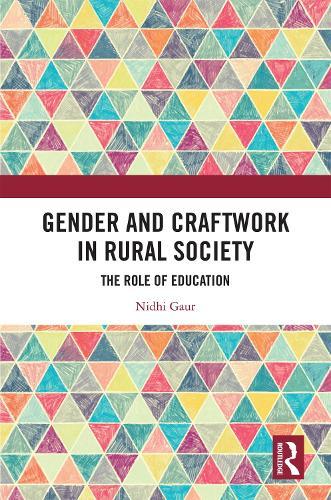
This book examines the potential of craft-centred education to influence the gender socialisation of rural children through a philosophical, sociological, and psychological lens. It discusses Gandhi’s vision of craft-centred education and situates its place within his concept of ‘swaraj.’ The volume looks at the construction of gender at home, students’ participation in crafts at school, and parental perception of craft-centred education. It studies the students’ experience, its impact on their intellectual and physical development, and the nature of the interaction between the socialisation of children at home and in school. An important contribution to the study of Gandhian practices, the book will be of considerable interest to students and researchers of gender studies, education, non-violence, peace studies, and South Asian studies.
Full Product Details
Author: Nidhi Gaur
Publisher: Taylor & Francis Ltd
Imprint: Routledge India
Weight: 0.440kg
ISBN: 9781032843476
ISBN 10: 1032843470
Pages: 182
Publication Date: 11 December 2024
Audience:
College/higher education
,
Tertiary & Higher Education
Format: Hardback
Publisher's Status: Active
Availability: In Print

This item will be ordered in for you from one of our suppliers. Upon receipt, we will promptly dispatch it out to you. For in store availability, please contact us.
Reviews
"“Dr Nidhi Gaur has written a delightful engaging and lucid book. It looks at children studying in a Gandhian school near Wardha. Her work shows us the viability of the extensions of Ashram life where everything is woven together. Marcel Mauss spoke of the ""total social fact"" where specialization, differentiation and knowledge are in an interactive mode. So also, Dr Gaur's work will show how therapeutic craft education is in modern schools.” Susan Visvanathan was formerly Professor and Chairperson, CSSS, JNU, New Delhi. “Nidhi Gaur's meticulous field work and analysis go into the depths of an old and important question about the impact of handicrafts on the mind and behaviour. This study looks at the school Gandhi had started at Sevagram and reveals to us the mystery of its continued success.” Krishna Kumar, former Director, NCERT."
“Dr Nidhi Gaur has written a delightful engaging and lucid book. It looks at children studying in a Gandhian school near Wardha. Her work shows us the viability of the extensions of Ashram life where everything is woven together. Marcel Mauss spoke of the ""total social fact"" where specialization, differentiation and knowledge are in an interactive mode. So also, Dr Gaur's work will show how therapeutic craft education is in modern schools.” Susan Visvanathan was formerly Professor and Chairperson, CSSS, JNU, New Delhi. “Nidhi Gaur's meticulous field work and analysis go into the depths of an old and important question about the impact of handicrafts on the mind and behaviour. This study looks at the school Gandhi had started at Sevagram and reveals to us the mystery of its continued success.” Krishna Kumar, former Director, NCERT.
Author Information
Nidhi Gaur works in gender and education with Room to Read. She completed her doctoral studies at the Central Institute of Education, University of Delhi, India. She has contributed papers and essays on craft-centred education, Gandhi studies, and children’s literature.