Overview
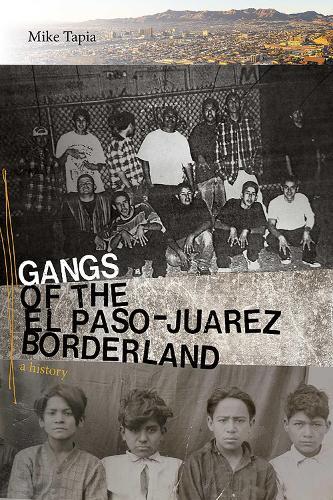
This thought-provoking book examines gang history in the region encompassing West Texas, Southern New Mexico, and Northern Chihuahua, Mexico. Known as the El Paso-Juarez borderland region, the area contains more than three million people spanning 130 miles from east to west. From the badlands -the historically notorious eastern Valle de Juarez - to the Puerto Palomas port of entry at Columbus, New Mexico, this area has become more militarized and politicized than ever before. Mike Tapia examines this region by exploring a century of historical developments through a criminological lens and by studying the diverse subcultures on both sides of the law. Tapia looks extensively at the role of history and geography on criminal subculture formation in the binational urban setting of El Paso-Juarez, demonstrating the region's unique context for criminogenic processes. He provides a poignant case study of Homeland Security and the apparent lack of drug-war spillover in communities on the US-Mexico border.
Full Product Details
Author: Mike Tapia
Publisher: University of New Mexico Press
Imprint: University of New Mexico Press
Dimensions:
Width: 15.20cm
, Height: 1.10cm
, Length: 22.80cm
Weight: 0.295kg
ISBN: 9780826362162
ISBN 10: 0826362168
Pages: 200
Publication Date: 30 December 2020
Audience:
Professional and scholarly
,
Professional & Vocational
Format: Paperback
Publisher's Status: Active
Availability: In Print

This item will be ordered in for you from one of our suppliers. Upon receipt, we will promptly dispatch it out to you. For in store availability, please contact us.
Reviews
Very rarely do criminologists get to read an authoritative book by an authoritative scholar on a topic with great interest but little scholarly attention. Tapia's book is a landmark achievement on the gangs of the El Paso-Juarez region in a one-hundred-year time period. You will not be able to put this book down. - Alex R. Piquero, coeditor of Rational Choice and Criminal Behavior: Recent Research and Future Challenges Tapia provides a sorely needed supplement to our knowledge of gangs in the Southwest, giving us a detailed history of gang development, cartel and street-gang relations, and the evolution of street-prison gang hybrids in the El Paso, Las Cruces, and Juarez regions. - Christian Bolden, contributor to The Encyclopedia of Theoretical Criminology
Very rarely do criminologists get to read an authoritative book by an authoritative scholar on a topic with great interest but little scholarly attention. Tapia's book is a landmark achievement on the gangs of the El Paso-Juárez region in a one-hundred-year time period. You will not be able to put this book down."" - Alex R. Piquero, coeditor of Rational Choice and Criminal Behavior: Recent Research and Future Challenges ""Tapia provides a sorely needed supplement to our knowledge of gangs in the Southwest, giving us a detailed history of gang development, cartel and street-gang relations, and the evolution of street-prison gang hybrids in the El Paso, Las Cruces, and Juárez regions."" - Christian Bolden, contributor to The Encyclopedia of Theoretical Criminology
Mike Tapia offers a seminal work on the history and significance of criminal subcultures in the borderlands. . . . Mainstream perceptions of gangs are often negative and one-dimensional. Tapia's book contributes to scholarship that digs deeper to provide a richer sociocultural consideration of these subcultures.--Michelle E. Carreon, Western Historical Quarterly Tapia excels at providing a descriptive overview of different communities and groups, uncovering a lot of unknown information about local gangs in this region of the country.--Robert J. Duran, Latino Studies The author's fluid writing style and his meshing of the disciplines of criminology and history makes it a must-read for anyone who wants to understand the broader dynamics of gang evolution in the borderlands region.--Mitchel P. Roth, Southwestern Historical Quarterly The best overview available on street gangs in this region of the country. . . . Tapia deserves high praise for doggedly sifting through a myriad of source material in order to piece together a history to a phenomenon that often escaped much documentation or critical analysis in the early decades of its formation.--Eduardo Obregon Pagan, The Journal of Arizona History A nuanced look at gang development, culture, and crime that evenhandedly outlines the causes and consequences of gangs on the border, a force that is neither entirely catastrophic nor wholly benign, but a phenomenon born of complex socioeconomic, geographical, and historical processes and relationships.--Eladio Bobadilla, Journal of Southern History Explores one hundred years of a defiant, intriguing, and sometimes deadly urban social phenomenon.--El Paso Times Tapia provides a sorely needed supplement to our knowledge of gangs in the Southwest, giving us a detailed history of gang development, cartel and street-gang relations, and the evolution of street-prison gang hybrids in the El Paso, Las Cruces, and Juarez regions.--Christian L. Bolden, author of Out of the Red: My Life of Gangs, Prison, and Redemption Tapia's book is a rare and authoritative look at a unique and complicated subculture.--Yvette Benavides, Book Public on Texas Public Radio Very rarely do criminologists get to read an authoritative book by an authoritative scholar on a topic with great interest but little scholarly attention. Tapia's book is a landmark achievement on the gangs of the El Paso-Juarez region in a one-hundred-year time period. You will not be able to put this book down.--Alex R. Piquero, coeditor of Rational Choice and Criminal Behavior: Recent Research and Future Challenges
Author Information
Mike Tapia is an associate professor of criminology at New Mexico State University. He is the author of The Barrio Gangs of San Antonio, 1915-2015.