Overview
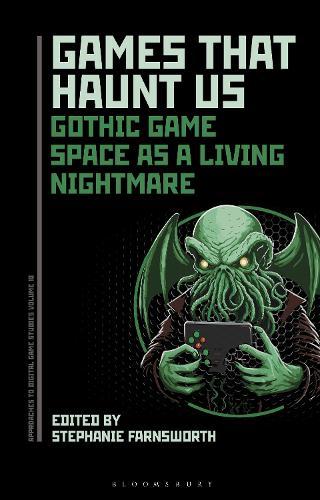
Games That Haunt Us: Gothic Game Space as a Living Nightmare is an examination of how the Gothic appears in game space to interrogate an area of substantial importance to contemporary games, with a focus on environments, bodies, and defining the Gothic in games. The Gothic, both as a literary and videogame genre has increased in prominence amongst literature, media, and culture scholars globally, as games studies becomes a more recognized and exciting field of study and as Gothic scholars find new ways to apply their works across emerging mediums. But why have Gothic games risen in popularity since 2010? What do players feel when they play these games? Why are themes surrounding fraught identities, mourning, and monstrosity gaining so much attention? Games That Haunt Us investigates the very nature of the Gothic and how video games provide new ways of connecting with the genre. The scholars in this collection look at why Gothic games are having their moment of popularity, the unsettling themes they evoke in unstable times, why we are fascinated with death and decay, theories surrounding body horror, and how games transform avatars and ourselves. Games That Haunt Us is arranged into three sequential themes: what makes a Gothic game; Gothic environments in game space; and how Gothic bodies are approached and utilized in ludonarratives.
Full Product Details
Author: Stephanie Farnsworth (University of Sunderland, UK)
Publisher: Bloomsbury Publishing Plc
Imprint: Bloomsbury Academic
ISBN: 9798765124963
Pages: 272
Publication Date: 19 February 2026
Audience:
Professional and scholarly
,
Professional & Vocational
Format: Hardback
Publisher's Status: Forthcoming
Availability: Manufactured on demand

Reviews
Games That Haunt Us is a vital and unsettling collection that reveals just how powerfully the Gothic animates videogame worlds. From haunted environments to monstrous bodies, its chapters illuminate why Gothic games speak so urgently to our cultural moment. This is essential reading for anyone interested in games, the Gothic, or the uncanny intersections between the two. * Leighton Evans, Professor, Swansea University, UK, and editor of Virtual Reality Gaming: Perspectives on Immersion, Embodiment and Presence (2025) * In real life we avoid being scared, but for many of us we seek out that experience from our entertainment. With a specific focus on defining what makes a game Gothic, this collection considers what makes horror games so compelling. The chapters in it offer an engaging look at both the expected and unexpected games that frighten us, showing how prevalent Gothic themes are across games. As such, it is as useful for genre scholars as it is for horror aficionados. * Matthew Wysocki, Associate Professor, Flagler College, USA *
Games That Haunt Us is a vital and unsettling collection that reveals just how powerfully the Gothic animates videogame worlds. From haunted environments to monstrous bodies, its chapters illuminate why Gothic games speak so urgently to our cultural moment. This is essential reading for anyone interested in games, the Gothic, or the uncanny intersections between the two. * Leighton Evans, Professor, Swansea University, UK *
Games That Haunt Us is a vital and unsettling collection that reveals just how powerfully the Gothic animates videogame worlds. From haunted environments to monstrous bodies, its chapters illuminate why Gothic games speak so urgently to our cultural moment. This is essential reading for anyone interested in games, the Gothic, or the uncanny intersections between the two. * Leighton Evans, Professor, Swansea University, UK, and editor of Virtual Reality Gaming: Perspectives on Immersion, Embodiment and Presence (2025) *
Author Information
Stephanie Farnsworth is a PhD candidate at the University of Sunderland, UK. She is founder and Director of Events for MultiPlay, an international community of games scholars and researchers that hosts 4-5 online conferences each year. On the editorial board for MultiPlay, Stephanie is currently working on the Liberate Me Plenty anthology (2023) on queer game studies as well as a special edition journal on The Last of Us. Her research focuses upon ‘mutant theory’, expanding upon monster theory and examining the relationship audiences have to biotechnology. She writes about body horror, bodily transformations and biofuturism.