Overview
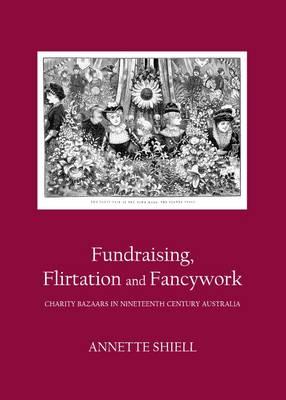
Fundraising, Flirtation and Fancywork examines the history and development of the charity bazaar movement in Australia. Transported from Britain, the charity bazaar played an integral role in Australian communal, social and philanthropic life from the early days of European settlement. Ranging in size and scale, from simple sales of goods to month long extravaganzas, charity bazaars were such a popular and successful means of raising revenue that they sustained the majority of the nation's major public and religious institutions.The nineteenth-century charity bazaar was a paradox. On the one hand, it encapsulated responsibility and civic duty through its raison d'etre, which was the provision of support for charitable causes. On the other, it encouraged a loosening of social and gendered restraint as women of the middle and upper classes repositioned themselves in a public space where the acquisition of material goods, gambling and flirting with men was actively encouraged.From their inception, bazaars were the domain of women. They provided middle and upper class women with an opportunity to exercise their organisational, creative and social skills outside the domestic sphere, within a framework of socially acceptable philanthropic endeavour. Women's dominance and public role in charity bazaars destabilised conventional gender relations.The nucleus of the charity bazaar was the fancywork produced by women for sale on the stalls. Bazaars were an accessible and important repository for the display and sale of women's creative work and the bazaar movement was instrumental in shaping women's fancywork.Bazaars were revered and reviled in colonial Australia. Despite the criticisms and the many social and cultural changes that occurred in nineteenth-century Australia, charity bazaars continued to escalate in number, popularity and complexity. They predated and influenced the great international exhibitions and the development of larger shops and emporiums and by the end of the century, had evolved into themed entertainment and shopping spectacles known as grand bazaars.Charity bazaars mirrored and shaped the social customs, mores and fashions of their time and are a rich, largely untapped, interdisciplinary historical source.
Full Product Details
Author: Annette Shiell
Publisher: Cambridge Scholars Publishing
Imprint: Cambridge Scholars Publishing
Edition: Unabridged edition
Dimensions:
Width: 14.80cm
, Height: 3.00cm
, Length: 21.20cm
Weight: 0.576kg
ISBN: 9781443839860
ISBN 10: 1443839868
Pages: 325
Publication Date: 04 February 2013
Audience:
Professional and scholarly
,
Professional and scholarly
,
Professional & Vocational
,
Professional & Vocational
Format: Hardback
Publisher's Status: Active
Availability: Available To Order

We have confirmation that this item is in stock with the supplier. It will be ordered in for you and dispatched immediately.
Reviews
This author's treatment of the charity bazaar provides a localized look at this significant but largely invisible phenomenon. [...] This is an accessible, enjoyable treatment of the subject, useful for all social historians as well as those interested in nineteenth-century women's history and consumerism. Beverly GordonUniversity of WisconsinThe Historian, 77:4 (2015) Shiell has [...] shown that charity bazaars (and their associated commercial and semi-commercial counterparts) need to be taken seriously by scholars of welfare, of business, of gender and of wider social and cultural history. Even at the minutely local level the Australian bazaar was part of a broader transnational enterprise, changing over time as the colony itself became more complex and closely settled. It provides fertile ground for cross-disciplinary analysis. Margaret TennantAustralian Historical Studies, 45:1 (2014)
Shiell has [...] shown that charity bazaars (and their associated commercial and semi-commercial counterparts) need to be taken seriously by scholars of welfare, of business, of gender and of wider social and cultural history. Even at the minutely local level the Australian bazaar was part of a broader transnational enterprise, changing over time as the colony itself became more complex and closely settled. It provides fertile ground for cross-disciplinary analysis. - Margaret Tennant, Australian Historical Studies, 45:1 (March 2014), 153.
Author Information
Dr Annette Shiell is a Melbourne based museum curator with a background in art and craft, Australian history and popular culture. Her personal and professional interests include ephemera, textile handcrafts and domestic material culture. She is the author/editor of several publications including The Lie of the Land, Australians and the Monarchy and Bonzer: Australian Comics 1900–1990s.