|
|
|||
|
||||
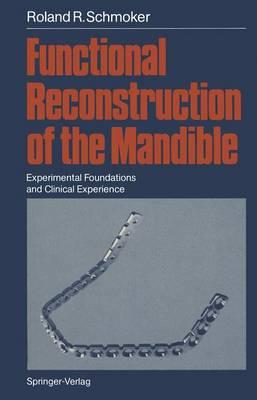
OverviewSince 1958 the Association for the Study of Internal Fixation (ASIF) has worked to establish the experimental and biomechanical prin ciples of the operative treatment of fractures. It has been proven that immediate, pain-free mobilization, made possible by stable internal fixation, is the key to restoring function in a fractured extremity. The same principles were applied in 1972173 by Roland Schmoker, who developed a universal plate and sophisticated instrument set designed initially for the treatment of comminuted fractures of the mandible. To extend the applications of his plate to reconstructions after ex tensive tumor resections, he supplemented the device with tem poromandibular joint prostheses and anchoring elements for the at tachment of dentures. He first tested the functional stability of these implants experimentally in sheep. Later he found that the minipig had a more human-like jaw shape and masticatory action, and so he tested the implants in 37 mini pigs that underwent extensive mandibular re sections without bone grafting, using sequential dye injections and postoperative weight gain to chart the progress of osseous regener ation. Seven other animals were not operated and served as controls. Full Product DetailsAuthor: Roland R. Schmoker , M.E. Müller , Terry C. TelgerPublisher: Springer-Verlag Berlin and Heidelberg GmbH & Co. KG Imprint: Springer-Verlag Berlin and Heidelberg GmbH & Co. K Edition: Softcover reprint of the original 1st ed. 1987 Dimensions: Width: 17.00cm , Height: 0.70cm , Length: 24.40cm Weight: 0.242kg ISBN: 9783642717581ISBN 10: 3642717586 Pages: 120 Publication Date: 06 December 2011 Audience: Professional and scholarly , Professional & Vocational Format: Paperback Publisher's Status: Active Availability: Manufactured on demand We will order this item for you from a manufactured on demand supplier. Table of Contents1 Historical Review.- 2 Evaluation of Preexisting Methods.- 3 Statement of Problem.- I: Experimental Studies.- Materials and Methods.- Results.- Discussion.- II: Clinical Application.- Materials, Methods, and Results.- Discussion.- Conclusions.- Acknowledgments.- References.ReviewsAuthor InformationTab Content 6Author Website:Countries AvailableAll regions |
||||