Overview
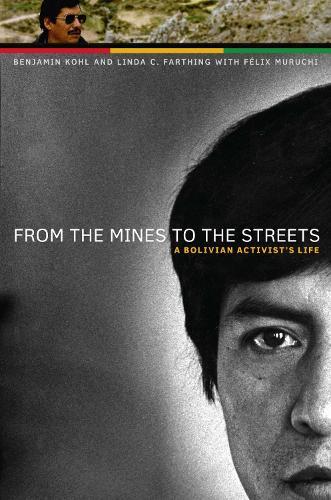
From the Mines to the Streets draws on the life of FÉlix Muruchi to depict the greater forces at play in Bolivia and elsewhere in South America during the last half of the twentieth century. It traces FÉlix from his birth in an indigenous family in 1946, just after the abolition of bonded labor, through the next sixty years of Bolivia's turbulent history. As a teenager, FÉlix followed his father into the tin mines before serving a compulsory year in the military, during which he witnessed the 1964 coup d'État that plunged the country into eighteen years of military rule. He returned to work in the mines, where he quickly rose to become a union leader. The reward for his activism was imprisonment, torture, and exile. After he came home, he participated actively in the struggles against neoliberal governments, which led in 2006-the year of his sixtieth birthday-to the inauguration of Evo Morales as Bolivia's first indigenous president. The authors weave Muruchi's compelling recollections with contextual commentary that elucidates Bolivian history. The combination of an unforgettable life story and in-depth text boxes makes this a gripping, effective account, destined to become a classic sourcebook.
Full Product Details
Author: Benjamin H. Kohl ,
Linda C. Farthing ,
Félix Muruchi
Publisher: University of Texas Press
Imprint: University of Texas Press
Dimensions:
Width: 15.20cm
, Height: 1.80cm
, Length: 22.90cm
Weight: 0.367kg
ISBN: 9780292743922
ISBN 10: 0292743920
Pages: 271
Publication Date: 01 April 2011
Audience:
College/higher education
,
College/higher education
,
Professional and scholarly
,
Postgraduate, Research & Scholarly
,
Tertiary & Higher Education
Format: Paperback
Publisher's Status: Active
Availability: In Print

This item will be ordered in for you from one of our suppliers. Upon receipt, we will promptly dispatch it out to you. For in store availability, please contact us.
Reviews
Benjamin Kohl and Linda Farthing have . . . registered a singular achievement in providing a new, fresh, and eminently readable book that simultaneously adds to and expands the genre. * Journal of Latin American Studies * This book should be used by a casual reader to grasp a deeper understanding of the challenges of political activism in a developing country or a broader understanding of Bolivian politics and development. Advanced readers will find this to be a useful cases study to understand how profoundly political systems can affect individual life. * Bulletin of Latin American Research *
This book should be used by a casual reader to grasp a deeper understanding of the challenges of political activism in a developing country or a broader understanding of Bolivian politics and development. Advanced readers will find this to be a useful cases study to understand how profoundly political systems can affect individual life.--Jason Eichorst, Rice University Bulletin of Latin American Research (07/01/2013)
Author Information
Benjamin Kohl is Associate Professor of Geography and Urban Studies at Temple University. He also coauthored Impasse in Bolivia: Neoliberal Hegemony and Social Resistance with Linda Farthing. Linda C. Farthing has written and edited curriculum materials, books, and articles on Latin America and Nepal; field-produced documentary films in Colombia and Bolivia; and directed college semester-abroad programs. FÉlix Muruchi continues to be socially and politically active. He is co-author of Ponchos Rojos and Minero con Poder de Dinamita.