Overview
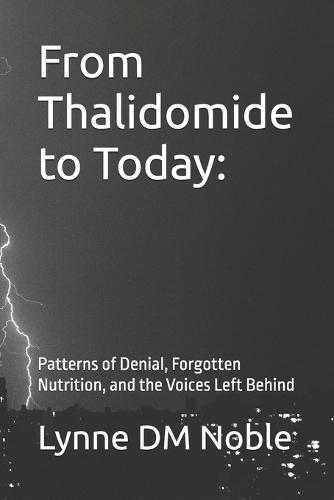
This book examines how modern health systems evolved into highly centralised, evidence-driven institutions, and how this evolution created structural blind spots that affect individuals experiencing harm. It traces the historical disappearance of nutritional and foundational approaches to health, showing how institutional priorities gradually shifted toward pharmaceutical and regulatory frameworks that favour standardisation over individual variation. The early chapters explore how institutional authority was built: through scientific formalisation, regulatory consolidation, and the cultural expectation that official guidance represents the most reliable form of knowledge. These systems provide stability and coordination, but they also introduce constraints. Evidence-based frameworks struggle with complexity, emerging signals, and harms that fall outside predefined categories. As a result, institutions often respond to early reports of harm with minimisation, reframing, or silence - not because the harm is impossible, but because their structures are not designed to accommodate uncertainty. The book then turns to the individuals affected by these limitations. It analyses the experience of dismissal, the erosion of trust, and the psychological and practical consequences of navigating a system that cannot fully recognise their reality. In the absence of institutional support, people turn to each other. Communities form, initially as survival spaces, and later as stable networks that share patterns, observations, and practical strategies. These communities develop their own forms of knowledge, grounded in lived experience rather than formal evidence. As these groups grow, a parallel system emerges. Institutional knowledge and experiential knowledge begin to coexist, each with its own strengths and limitations. Institutions offer structure and population-level guidance; communities offer early pattern recognition and context that institutions cannot capture. The coexistence of these systems creates tension, particularly when institutional narratives diverge from widespread lived experience. The later chapters analyse this dual-system landscape. They examine institutional lag, epistemic inequality, and the redistribution of authority in a world where individuals increasingly draw from multiple sources of understanding. The book argues that this shift is not a temporary disruption but a structural feature of contemporary health systems. It suggests that a more coherent future would require epistemic pluralism, greater transparency, and mechanisms for integrating experiential signals without compromising methodological rigour. The final chapters do not propose a new model of healthcare. Instead, they clarify the conditions under which institutions, individuals, and communities might coexist with less friction. They emphasise that uncertainty is inherent, that no single system can capture the full complexity of human health, and that navigating this complexity requires recognising the value and limitations of both institutional and experiential knowledge. The book concludes by acknowledging that the landscape will continue to evolve. The task is not to eliminate tension, but to understand it - and to move forward with a clearer sense of how modern health systems function, where they fall short, and how individuals adapt in the space between authority and experience.
Full Product Details
Author: Lynne DM Noble
Publisher: Independently Published
Imprint: Independently Published
Dimensions:
Width: 15.20cm
, Height: 1.00cm
, Length: 22.90cm
Weight: 0.248kg
ISBN: 9798248224449
Pages: 178
Publication Date: 13 February 2026
Audience:
General/trade
,
General
Format: Paperback
Publisher's Status: Active
Availability: Available To Order

We have confirmation that this item is in stock with the supplier. It will be ordered in for you and dispatched immediately.