Overview
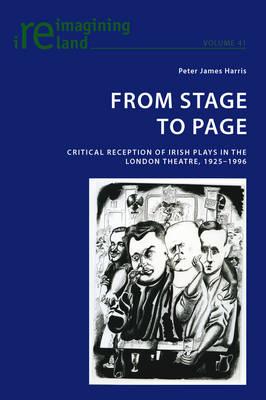
In December 1921 the Anglo-Irish Treaty was signed, which led to the creation of the Irish Free State and the partition of Ireland the following year. The consequences of that attempt to reconcile the conflicting demands of republicans and unionists alike have dictated the course of Anglo-Irish relations ever since. This book explores how the reception of Irish plays staged in theatres in London’s West End serves as a barometer not only of the state of relations between Great Britain and Ireland, but also of the health of the British and Irish theatres respectively. For each of the eight decades following Irish Independence a representative production is set in the context of Anglo-Irish relations in the period and developments in the theatre of the day. The first-night criticism of each production is analysed in the light of its political and artistic context as well as the editorial policy of the publication for which a given critic is writing. The author argues that the relationship between context and criticism is not simply one of cause and effect but, rather, the result of the interplay of a number of cultural, historical, political, artistic and personal factors.
Full Product Details
Author: Eamon Maher ,
Peter James Harris
Publisher: Peter Lang AG, Internationaler Verlag der Wissenschaften
Imprint: Peter Lang AG, Internationaler Verlag der Wissenschaften
Edition: New edition
Volume: 41
Dimensions:
Width: 15.00cm
, Height: 1.80cm
, Length: 22.50cm
Weight: 0.450kg
ISBN: 9783034302661
ISBN 10: 3034302665
Pages: 306
Publication Date: 27 April 2011
Audience:
Professional and scholarly
,
Professional & Vocational
Format: Paperback
Publisher's Status: Active
Availability: In Print

This item will be ordered in for you from one of our suppliers. Upon receipt, we will promptly dispatch it out to you. For in store availability, please contact us.
Reviews
One admires in reading this volume the deft and succinct handling of complex material [...] I know of no past or recent publication that comes close to covering the field addressed here. (Richard Allen Cave, Royal Holloway, University of London) Harry's work is a celebration of the continuing value and relevance of context and reception to our understanding of the ephemeral nature of theatre work. Harris recognises critics as human beings who have prejudices and make mistakes but whose 'opinions and standpoints are subject to change, and, one hopes, evolution' (256). It is this continuing critical development of which we are all part that Harris's work captures and identifies so conclusively. (Michelle Paull, Irish Studies Review 20, 2013/3)
One admires in reading this volume the deft and succinct handling of complex material [...] I know of no past or recent publication that comes close to covering the field addressed here. (Richard Allen Cave, Royal Holloway, University of London) Harry's work is a celebration of the continuing value and relevance of context and reception to our understanding of the ephemeral nature of theatre work. Harris recognises critics as human beings who have prejudices and make mistakes but whose 'opinions and standpoints are subject to change, and, one hopes, evolution' (256). It is this continuing critical development of which we are all part that Harris's work captures and identifies so conclusively. (Michelle Paull, Irish Studies Review 20, 2013/3)
One admires in reading this volume the deft and succinct handling of complex material [...] I know of no past or recent publication that comes close to covering the field addressed here. (Richard Allen Cave, Royal Holloway, University of London) Harry's work is a celebration of the continuing value and relevance of context and reception to our understanding of the ephemeral nature of theatre work. Harris recognises critics as human beings who have prejudices and make mistakes but whose `opinions and standpoints are subject to change, and, one hopes, evolution' (256). It is this continuing critical development of which we are all part that Harris's work captures and identifies so conclusively. (Michelle Paull, Irish Studies Review 20, 2013/3)
One admires in reading this volume the deft and succinct handling of complex material [...] I know of no past or recent publication that comes close to covering the field addressed here. (Richard Allen Cave, Royal Holloway, University of London)
«One admires in reading this volume the deft and succinct handling of complex material [...] I know of no past or recent publication that comes close to covering the field addressed here.» (Richard Allen Cave, Royal Holloway, University of London) «Harry’s work is a celebration of the continuing value and relevance of context and reception to our understanding of the ephemeral nature of theatre work. Harris recognises critics as human beings who have prejudices and make mistakes but whose ‘opinions and standpoints are subject to change, and, one hopes, evolution’ (256). It is this continuing critical development of which we are all part that Harris’s work captures and identifies so conclusively.» (Michelle Paull, Irish Studies Review 20, 2013/3)
Author Information
Peter James Harris is Professor of English Literature at the State University of São Paulo (UNESP), São José do Rio Preto, Brazil, where he is also Head of the Modern Languages Department. He is currently working on a monograph entitled The End of the World ... Again: Representations of the Apocalypse on the London Stage.