Overview
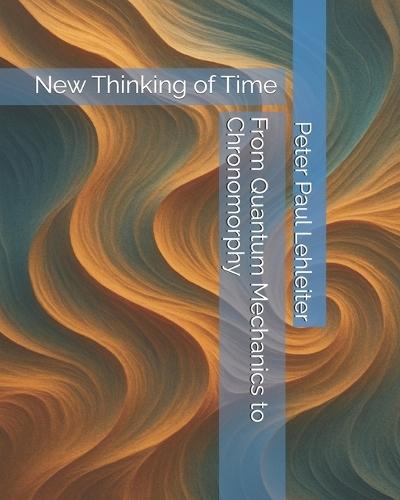
This book unites two independent but complementary parts, both addressing the role of time in physics and empirical science from entirely new perspectives. Part I - Time and Quantum Mechanics The first part develops a conceptual framework for reinterpreting quantum mechanics (QM) through the lens of structured time. Complex-valued quantum states are treated not merely as probability amplitudes but as flows of temporally organized values. Starting from the Schrödinger equation and de Broglie's early insights, the book explores how quantum theory might gain conceptual clarity if time were understood as more than a mechanical parameter. Key topics include: - The wave function as a cyclic, time-structured flow rather than a purely probabilistic object - Connections between quantum theory, special relativity, and temporal coherence - Experimental proposals for detecting structured time in physical systems The result is a reinterpretation that preserves the mathematical core of QM while opening new conceptual and empirical avenues. Part II - Time, Randomness, and Empirical Evidence The second part turns to empirical studies. Using high-resolution analyses of seemingly random processes-such as roulette outcomes-it uncovers statistically significant correlations between event timing and astronomical structures. These findings suggest that time is not a passive background but an active, generative principle shaping event distributions. Key topics include: - Simulation-based methods for detecting temporal patterns in random systems - Evidence linking mesoscopic randomness to macroscopic (astronomical) time structures - A framework for hidden-variable models derived from empirical data of a mesoscopic experiment Together, the two parts present a bold proposal: time is not only real but structurally rich, shaping both physical theory and empirical reality in ways yet to be fully understood. Part III - Time and Cosmology The third part extends the framework to cosmology. Evidence from Part II indicates with high significance that we are not dealing with a special case but with a general phenomenon: quantum-like effects manifest across scales whenever processes are sufficiently rich in temporal structure. Generalizing this observation leads to a modified notion of the Planck constant, special relativity as a flat-space limit of a global wave function, and natural extensions to general relativity and cosmology. Within this model, black holes appear as oscillatory concentrations of time energy, decaying far faster than predicted by Hawking radiation. On the largest scales, coherence continues to accumulate, suggesting that the universe does not end in heat death but undergoes cyclical restart. Key topics include: - A generalized Planck constant allowing scale-dependent quantum effects - Black holes as oscillatory concentrations of time energy - Cosmology as a cycle of coherence, condensation, and restart This book is intended for readers interested in an expanded, structurally precise conception of time. Those who wish to delve further into a fundamental critique of quantum-mechanical orthodoxy, including its historical and systematic underpinnings, are referred to ""Revision in the Matter of Quantum Orthodoxy versus Reality: Evidence Taking with Historical Findings and a Structural Pleading.""
Full Product Details
Author: Peter Paul Lehleiter
Publisher: Chronomorph Verlag
Imprint: Chronomorph Verlag
Dimensions:
Width: 20.30cm
, Height: 0.80cm
, Length: 25.40cm
Weight: 0.313kg
ISBN: 9783982664729
ISBN 10: 3982664721
Pages: 150
Publication Date: 02 September 2025
Audience:
General/trade
,
General
Format: Paperback
Publisher's Status: Active
Availability: Available To Order

We have confirmation that this item is in stock with the supplier. It will be ordered in for you and dispatched immediately.