Overview
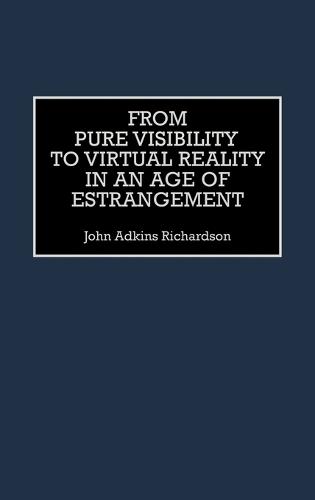
Continuities in artistic form from the fourteenth century in Italy to the present are examined, with emphasis on two overriding tendencies: (1) the formalization of visual representations and their interpretations, and (2) the association of that formality with extreme individualism in the Western world. Challenges to the tradition struck only at certain aspects of it (such as strict perspective and the hierarchy of subject matter) but did not undercut such fundamental characteristics as the nature of a given visual space or harmony derived from concentration of elements rather than, for example, cumulative distribution of elements, commonplace in Islamic and Early Christian art. Theories of art history and criticism have expressed the same inclination toward focusing on pictorial form and the contextual implications of it, not just because post-medieval art does so, but also because of the influence of Enlightenment philosophical thought. Kantian epistemology, too, reduces knowledge to form, a development that led theorists of Pure Visibility to establish an abstract formalism in opposition to the doctrines of content in the idealistic aesthetics that had survived from the pre-Christian Era. It is no accident that the development of this theory is coeval with the emergence of modernism, for both are expressive of the same individualistic concept of existence. Attempts to resist the conception of art as order on the grounds that such rationalism is inimical to free thought have ultimately revealed themselves to be alternative versions of what they resist; thus, deconstructionism, for example, is hardly more than an extreme formalization of conventional criticism.
Full Product Details
Author: John Richardson
Publisher: Bloomsbury Publishing Plc
Imprint: Praeger Publishers Inc
Dimensions:
Width: 15.20cm
, Height: 1.70cm
, Length: 22.90cm
Weight: 0.524kg
ISBN: 9780275960889
ISBN 10: 0275960889
Pages: 240
Publication Date: 27 August 1998
Recommended Age: From 7 to 17 years
Audience:
College/higher education
,
Professional and scholarly
,
Undergraduate
,
Postgraduate, Research & Scholarly
Format: Hardback
Publisher's Status: Active
Availability: Manufactured on demand

We will order this item for you from a manufactured on demand supplier.
Reviews
As a teacher of studio art, I am in constant awe of my students' inability to rise above current cant or to provide themselves with a firm historical foundation for their approach to artmaking, or for their beliefs and convictions as artists. Often, in their looking for critical theory, my students' thinking is bathed more in shadow than in light. What John Adkins Richardson has created in his new book is a new guide for the perplexed-- a powerful lantern which can light the way for the practitioner of art as well as for the observer. It is a clear-minded, articulate guide to contemporary and modern art, its origins and development since the Renaissance. Professor Richardson not only offers refreshing perspective on the major historical movements, he sets straight the relationship of artmaking to theory. In doing so he has given teachers of the practice of art a valuable gift to share with students and colleagues. -Robert Kirschbaum Professor of Fine Arts and Director of Studio Arts Trinity College Hartford, Connecticut
Author Information
JOHN ADKINS RICHARDSON is Professor Emeritus of Art and Design at Southern Illinois University at Edwardsville. Previously published books include Modern Art and Scientific Thought (1971) and Art: The Way It Is (1974).