|
|
|||
|
||||
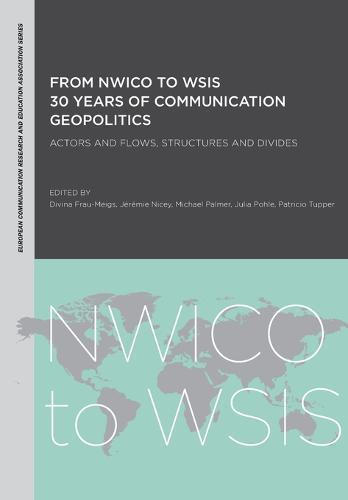
OverviewTwo major regulatory activities have framed global media policies since World War II: the New World Information and Communication Order (NWICO) and the more recent World Summit on the Information Society (WSIS). Through extensive research and testimonies from those involved, this book presents an in-depth account from the 1970s to today of the major issues concerning information flow in international geopolitics, including a look at the negotiations surrounding the major policy debates. Few studies of NWICO and WSIS have considered the continuity between the two activities—or included in the debate the crucial intermediary period between—and this book provides new insight into an issue of multilingual and multicultural importance. Full Product DetailsAuthor: Divina Frau-Meigs , Jeremie Nicey , Michael Palmer , Julia PohlePublisher: Intellect Imprint: Intellect Books Dimensions: Width: 17.80cm , Height: 1.50cm , Length: 22.90cm Weight: 0.445kg ISBN: 9781841506753ISBN 10: 1841506753 Pages: 240 Publication Date: 15 February 2013 Audience: College/higher education , Postgraduate, Research & Scholarly Format: Paperback Publisher's Status: Active Availability: Manufactured on demand We will order this item for you from a manufactured on demand supplier. Table of ContentsIntroduction PART I: On the Agenda: NWICO Correlations between NWICO and Information Society: Reflections of a NWICO actor – Mustapha Masmoudi The history of NWICO and its lessons – Kaarle Nordenstreng NWICO: Reuters’ Gerald Long versus UNESCO’s Seán MacBride – Michael Palmer IPS, an alternative source of news: From NWICO to civil society – Patricio Tupper New scenarios for the Right to Communicate in Latin America – Gustavo Gonzalez Rodriguez Past witnesses’ present comments – Hıfzı Topuz PART II: Shifting Sands The Right to Communicate – A continuing victim of historic links to NWICO and UNESCO? – Alan McKenna ‘Going Digital’: A historical perspective on early international cooperation in informatics – Julia Pohle ICTs, discourse and knowledge societies: Implications for policy and practice – Robin Mansell Past witnesses’ present comments – Alain Modoux PART III: Changing the agenda: WSIS and the future Towards Knowledge Societies in UNESCO and beyond – J.P. Singh The notion of access to information and knowledge: Challenges and divides, sectors and limits – Jérémie Nicey The international news agencies (and their TV/multimedia sites): The defence of their traditional lead in international news production – Camille Laville and Michael Palmer The least imperfect form of global governance yet? Civil society and multi-stakeholder governance of communication – Jeremy Shtern, Normand Landry and Marc Raboy Civil society and the amplification of media governance, during WSIS and beyond – Divina Frau-Meigs Past witnesses’ present comments – Bertrand de La Chapelle PART IV: Postface From New International Information Order to New Information Market Order – Roberto SavioReviewsThis is an excellent reference book that every professor teaching international communication should possess. -- Journalism and Mass Communication Quarterly This is an excellent reference book that every professor teaching international communication should possess. --Journalism and Mass Communication Quarterly Author InformationDivina Frau-Meigs is professor of Information and Communication Sciences at the University Sorbonne Nouvelle. Jeremie Nicey is a postdoctoral researcher at the University Sorbonne Nouvelle, where Michael Palmer is a professor. Julia Pohle is PhD student at the University Sorbonne Nouvelle. Patricio Tupper is professor at the University of Vincennes in Saint-Denis. Tab Content 6Author Website:Countries AvailableAll regions |
||||