Overview
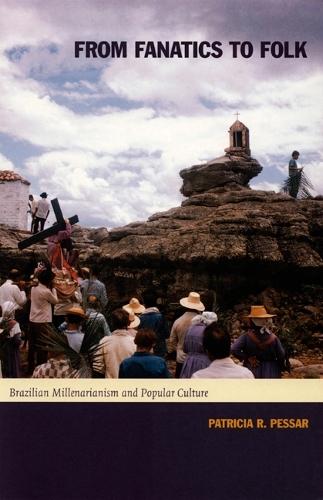
From Fanatics to Folk rejects conventional understandings of Brazilian millenarianism as exceptional and self-defeating. Considering millenarianism over the long sweep of Brazilian history, Patricia R. Pessar shows it to have been both dominant discourse and popular culture--at different times the inspiration for colonial conquest, for backlanders' resistance to a modernizing church and state, and for the nostalgic appropriation of today's elites in pursuit of ""traditional"" folklore and ""authentic"" expressions of faith. Pessar focuses on Santa Brigida, a Northeast Brazilian millenarian movement begun in the 1930s. She examines the movement from its founding by Pedro Batista--initially disparaged as a charlatan by the backland elite and later celebrated as a modernizer, patriot, and benefactor--through to the contemporary struggles of its followers to maintain their transgressive religious beliefs in the face of increased attention from politicians, clergy, journalists, filmmakers, researchers, and museum curators.Pessar combines cultural history spanning the colonial period to the present; comparative case studies of the Canudos, Contestado, Juazeiro and Santa Brigida movements; and three decades of ethnographic research in the Brazilian Northeast. Highlighting the broad range of individuals and institutions involved, the cross-fertilization between movements, contestation and accommodation vis-a-vis the church and state, and matters of spirituality and faith, From Fanatics to Folk reveals Brazilian millenarianism as long-enduring and constantly in flux.
Full Product Details
Author: Patricia R. Pessar
Publisher: Duke University Press
Imprint: Duke University Press
Dimensions:
Width: 15.20cm
, Height: 1.90cm
, Length: 23.50cm
Weight: 0.399kg
ISBN: 9780822332640
ISBN 10: 0822332647
Pages: 288
Publication Date: 28 January 2004
Audience:
Professional and scholarly
,
Professional & Vocational
Format: Paperback
Publisher's Status: Active
Availability: In Print

This item will be ordered in for you from one of our suppliers. Upon receipt, we will promptly dispatch it out to you. For in store availability, please contact us.
Reviews
From Fanatics to Folk is a remarkable study of a Brazilian millenarian movement that--because of the extended time-frame and combination of fieldwork and archival research--blends the best features of historical and anthropological interpretation. Patricia R. Pessar is attentive to the way in which the state, the political sphere, and the institutional church influenced the course of the movement. At the same time, she never loses sight of the role of religious beliefs and personal interactions. --Barbara Weinstein, author of For Social Peace in Brazil: Industrialists and the Remaking of the Working Class in Sao Paulo, 1920-1964 No one has written to any significant extent on Pedro Batista before this book, and Patricia R. Pessar's detailed explanation of what has become of Batista's movement following his death is fascinating. Her interdisciplinary use of history, anthropology, and political science is exemplary. --Paul J. Vanderwood, author of The Power of God against the Guns of Government: Religious Upheaval in Mexico at the Turn of the Nineteenth Century
No one has written to any significant extent on Pedro Batista before this book, and Patricia R. Pessar's detailed explanation of what has become of Batista's movement following his death is fascinating. Her interdisciplinary use of history, anthropology, and political science is exemplary. -Paul J. Vanderwood, author of The Power of God against the Guns of Government: Religious Upheaval in Mexico at the Turn of the Nineteenth Century From Fanatics to Folk is a remarkable study of a Brazilian millenarian movement that-because of the extended time-frame and combination of fieldwork and archival research-blends the best features of historical and anthropological interpretation. Patricia R. Pessar is attentive to the ways in which the state, the political sphere, and the institutional church influenced the course of the movement. At the same time, she never loses sight of the role of religious beliefs and personal interactions. -Barbara Weinstein, author of For Social Peace in Brazil: Industrialists and the Remaking of the Working Class in Sao Paulo, 1920-1964
Author Information
Patricia R. Pessar is Professor of American Studies and Anthropology at Yale University. She is the author of A Visa for a Dream: Dominicans in the United States and a coauthor of Between Two Islands: Dominican International Migration.