|
|
|||
|
||||
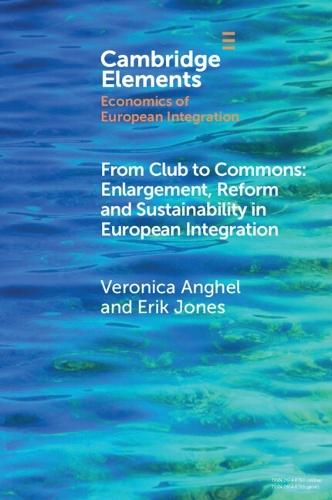
OverviewThe Element identifies the logic of how the European Union (EU) has developed both in terms of the way the organization works and the way it has expanded to include new member states. It combines insights from the economic theories related to clubs and common-pool resources. The argument is that the EU may have started as a club, where members agreed to lose arrangements to generate and govern non-rivalrous goods from which only they could benefit, but it quickly evolved into a system of common-pool resources, where members have to manage rivalrous goods, the access to which cannot easily be refused to outsiders. That evolution was necessary to avoid the depletion of the goods EU member states depend on. The argument is illustrated through the evolution of the single market, the single currency, the single financial space, and security. This title is also available as Open Access on Cambridge Core. Full Product DetailsAuthor: Veronica Anghel (European University Institute) , Erik Jones (European University Institute)Publisher: Cambridge University Press Imprint: Cambridge University Press Weight: 0.147kg ISBN: 9781009499187ISBN 10: 1009499181 Pages: 92 Publication Date: 20 November 2025 Audience: General/trade , General Format: Paperback Publisher's Status: Active Availability: Manufactured on demand We will order this item for you from a manufactured on demand supplier. Table of Contents1. Introduction; 2. Club theory, theories of economic goods and European integration; 3. The implications of accessing attractive goods; 4. The evolution of the EU's economic governance; 5. The European union as a security provider; 6. Conclusion; List of common acronyms; References.ReviewsAuthor InformationTab Content 6Author Website:Countries AvailableAll regions |
||||