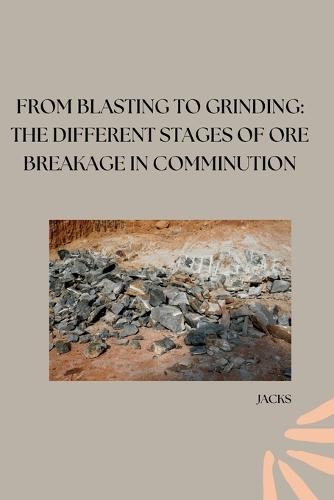
From Blasting to Grinding: The Different Stages of Ore Breakage in Comminution

Author:   Jacks
Publisher:   Tredition Gmbh
ISBN:  

9783384253439


Pages:   152
Publication Date:   07 June 2024
Format:   Paperback
Availability:   In Print   Availability explained
This item will be ordered in for you from one of our suppliers. Upon receipt, we will promptly dispatch it out to you. For in store availability, please contact us.

Our Price $44.85 Quantity:  
Add to Cart

Share |

From Blasting to Grinding: The Different Stages of Ore Breakage in Comminution


Overview

Comminution is an essential part of mineral processing which involves the breakage of ore to achieve size reduction. Its aim is to increase the likelihood of separation and liberation of valuable minerals from gangue in subsequent processing stages (Napier-Munn et al., 1996; Fuerstenau, 2003; Wills and Napier-Munn, 2015). Ore breakage in comminution occurs in three forms, namely; blasting, crushing and grinding (Kapur et al., 1997; Le Pham, 2011; Yahyaei et al., 2016). During blasting, ore breakage occurs by means of explosive devices. In crushing, it occurs via mechanical compression of ore against hard surfaces (Unland and Szczelina, 2004). In the case of grinding, ore breakage takes places through a combination of two or more of: impact (ores drop against a rigid body or media drop against ores), abrasion (ores of similar size shear against each other) and attrition (relatively big ores grind smaller materials) (Austin, 2002; Le Pham, 2011; Wills and Napier-Munn, 2015). Comminution is well known to be highly energy-intensive. Previous studies have shown that comminution typically accounts for 50% of the energy consumption in a mineral processing circuit, and globally comminution activity accounts for about 0.2% of the world's electricity supply (Napier-Munn et al., 1999; Ballantyne and Powell, 2014). In addition, the process has been shown to be inefficient, in that a small fraction of the energy supplied is directly utilised for rock breakage (Tromas, 2008). The remaining energy is either lost as heat (Radziszewski, 2013), carbon dioxide (CO2) emissions (Norgate and Haque, 2010) or absorbed by the comminution equipment causing wear and degradation (Weerasekara et al., 2013).

Full Product Details

Author:   Jacks
Publisher:   Tredition Gmbh
Imprint:   Tredition Gmbh
Dimensions:   Width: 15.20cm , Height: 0.90cm , Length: 22.90cm
Weight:   0.231kg
ISBN:  

9783384253439


ISBN 10:   3384253434
Pages:   152
Publication Date:   07 June 2024
Audience:   General/trade ,  General
Format:   Paperback
Publisher's Status:   Active
Availability:   In Print   Availability explained
This item will be ordered in for you from one of our suppliers. Upon receipt, we will promptly dispatch it out to you. For in store availability, please contact us.

Table of Contents

Reviews

Author Information

Tab Content 6

Author Website:  

Countries Available

All regions
Latest Reading Guide

April RG 26_2


Shopping Cart
Your cart is empty
Shopping cart
Mailing List