|
|
|||
|
||||
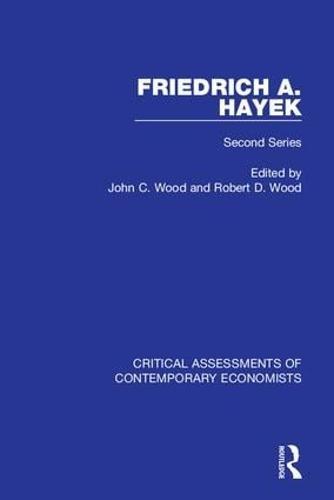
OverviewHayek's reputation has gone through a remarkable cycle. An eminent exponent of the Austrian theory of business cycles in the 1930s, he was worsted in the controversy over Keynes' Treatise on Money (1930). Following this defeat, Hayek retreated into capital theory, an esoteric branch of economics in which few economists then took an active interest. He gave up economics altogether after the war and turned to psychology, political philosophy, philosophy of law and the history of ideas. However, in 1974 he won the Nobel Prize and returned to mainstream economics as a leading critic of Keynesianism and an advocate of free banking as the answer to inflation. Today Hayek reigns supreme as the kind of moral philosopher and political economist that economics has not seen since Adam Smith. Hayek's work continues to have a huge influence and this collection will chart the various responses to his work up to the present day, addressing the many and multifaceted contributions that his work has made to the study of economics - and to the social sciences as a whole. Full Product DetailsAuthor: John Cunningham Wood , Robert D. WoodPublisher: Taylor & Francis Ltd Imprint: Routledge Volume: no.2 Weight: 3.492kg ISBN: 9780415310550ISBN 10: 0415310555 Pages: 1720 Publication Date: 26 February 2004 Audience: General/trade , Professional and scholarly , College/higher education , General , Professional & Vocational Format: Mixed media product Publisher's Status: Active Availability: In Print This item will be ordered in for you from one of our suppliers. Upon receipt, we will promptly dispatch it out to you. For in store availability, please contact us. Table of ContentsReviewsAuthor InformationTab Content 6Author Website:Countries AvailableAll regions |
||||