|
|
|||
|
||||
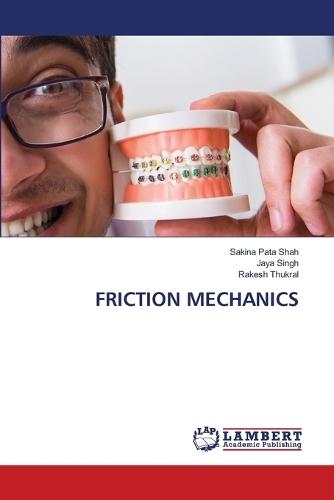
OverviewFriction, a clinical challenge particularly with sliding mechanics, must be dealt with efficiently to provide optimal orthodontics results. Friction is a force that retards or resists the relative motion of two objects in contact. The direction of fiction is tangential to the common boundary of the two surfaces in contact (Drescher et al, 1989)1. As two surfaces in contact slide against each other, two components of total force arise: the fictional component (F) is parallel but in opposition to the sliding motion, and the normal force (N) perpendicular to the contacting surfaces and to the fictional force component.During mechanotherapy involving movement of the bracket relative to the wire, friction at the bracket-wire interface may prevent the attainment of optimal force levels in the supporting tissues. Therefore, a decrease in frictional resistance tends to benefit the hard and soft tissue response. It has been proposed that approximately 50% of the force applied to slide a tooth is used to overcome friction. Other factors that affect frictional resistance include saliva, arch-wire dimension and material, angulation of the wire to the bracket, and mode of ligation. Full Product DetailsAuthor: Sakina Pata Shah , Jaya Singh , Rakesh ThukralPublisher: LAP Lambert Academic Publishing Imprint: LAP Lambert Academic Publishing Dimensions: Width: 15.20cm , Height: 0.80cm , Length: 22.90cm Weight: 0.181kg ISBN: 9786208444990ISBN 10: 6208444993 Pages: 128 Publication Date: 12 May 2025 Audience: General/trade , General Format: Paperback Publisher's Status: Active Availability: Available To Order We have confirmation that this item is in stock with the supplier. It will be ordered in for you and dispatched immediately. Table of ContentsReviewsAuthor InformationTab Content 6Author Website:Countries AvailableAll regions |
||||