Overview
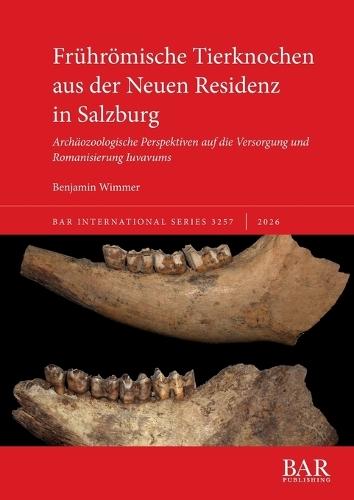
Die Siedlung Iuvavum (die heutige Stadt Salzburg in Österreich) war eines von wenigen urbanen Zentren in der römischen Provinz Noricum. Tierknochen aus den Schichten des ersten Jahrhunderts nach Christus im nördlichen Innenhof der ""Neuen Residenz"" ermöglichen eine detaillierte Beleuchtung der Tiernutzungs- und Versorgungsstrategien in einem zunehmenden urbanisierten Umfeld aus archäozoologischer Perspektive. In Kontinuität des eisenzeitlichen regionalen Musters überwiegen auch in frührömischer Zeit Reste von Rindern vor solchen von Schweinen und Schafen/Ziegen. Wildtiere spielten nur eine marginale Rolle in der Ernährung der Städter. Eine Zunahme von Rindern einer großen Bauform, Hunde und Pferde mit Körpergrößen, welche für die späte Eisenzeit noch ungewöhnlich waren, die Präsenz von Katzen, sowie ein nicht unbedeutender Anteil an Hausgeflügel weisen auf intensive Kontakte nach Süden. Auf einen Überblick zur Region und Fundstätte, eine Beschreibung der angewandten Methoden, sowie taphonomische Überlegungen folgen eine nach Tierarten gegliederte Analyse des Materials, sowie eine Synthese der Daten im regionalen Rahmen. The town of Iuvavum (the present-day city of Salzburg in Austria) was one of the few urban centres in the Roman province of Noricum. Faunal remains from layers dating to the 1st century AD in the northern courtyard of the ""Neue Residenz"" permit a detailed zooarchaeological investigation of animal husbandry and supply strategies in an increasingly urbanised setting. Similar to the preceding Iron Age, cattle were the regionally predominant species in the Early Roman period. Pigs and sheep/goats played a substantial secondary role in feeding the town. Wild animals only contributed marginally to this endeavour. An increase in cattle of a large morphotype, dogs and horses of body sizes unusual for pre-Roman times, as well as the presence of cats and a non-negligible number of chickens indicate close contacts with the south. This book comprises an overview of the region and site, a description of the methods employed, and taphonomic considerations, followed by a species-by-species analysis, as well as a synthesis of the data within a regional framework.
Full Product Details
Author: Benjamin Wimmer
Publisher: British Archaeological Reports (Oxford) Ltd
Imprint: British Archaeological Reports (Oxford) Ltd
Volume: 3257
Dimensions:
Width: 21.00cm
, Height: 2.20cm
, Length: 29.70cm
Weight: 1.048kg
ISBN: 9781407364001
ISBN 10: 1407364006
Pages: 324
Publication Date: 27 February 2026
Audience:
General/trade
,
General
Format: Paperback
Publisher's Status: Active
Availability: Available To Order

We have confirmation that this item is in stock with the supplier. It will be ordered in for you and dispatched immediately.
Language: German
Reviews
'This book provides a well-structured and meticulously executed corpus that will serve as a valuable reference for future research.' Dr Dominik Hagmann, University of Continuing Education Krems 'This monograph makes a significant contribution to the advancement of archaeozoological studies in Central Europe at a particularly delicate moment, which is now widely at the centre of studies, namely the livestock farming and economy of Romanisation and the (early) Roman period.' Professor Umberto Tecchiati, State University of Milan