Overview
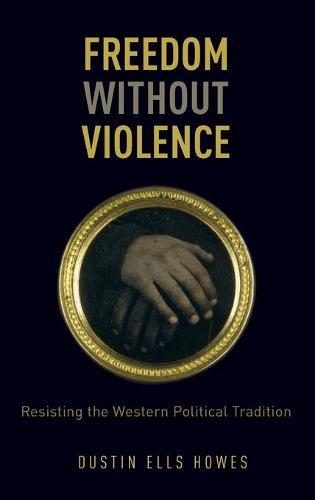
There is a long tradition in Western political thought suggesting that violence is necessary to defend freedom. But nonviolence and civil disobedience have played an equally long and critical role in establishing democratic institutions.Freedom Without Violence explores the long history of political practice and thought that connects freedom to violence in the West, from Athenian democracy and the Roman republic to the Age of Revolutions and the rise of totalitarianism. It is the first comprehensive examination of the idea that violence is necessary to obtain, defend, and exercise freedom. The book also brings to the fore the opposing theme of nonviolent freedom, which can be found both within the Western tradition and among critics of that tradition. Since the plebs first vacated Rome to refuse military service and win concessions from the patricians in 494 B.C., nonviolence and civil disobedience have played a critical role in republics and democracies. Abolitionists, feminists and anti-colonial activists all adopted and innovated the methods of nonviolence. With the advent of the Velvet Revolutions, the end of apartheid in South Africa and, most recently, the Arab Spring, nonviolence has garnered renewed interest in both scholarly publications and the popular imagination. In this book, Dustin Ells Howes traces the intellectual history of freedom as it relates to the concepts and practices of violence and nonviolence. Through a critique and reappraisal of the Western political tradition, Freedom Without Violence constructs a conception of nonviolent freedom. The book argues that cultivating and practicing this brand of freedom is the sine qua non of a vibrant democracy that resists authoritarianism, imperialism and oligarchy.
Full Product Details
Author: Dustin Ells Howes (David J. Kriskovich Distinguished Professor of Political Science, David J. Kriskovich Distinguished Professor of Political Science, Louisiana State University)
Publisher: Oxford University Press Inc
Imprint: Oxford University Press Inc
Dimensions:
Width: 15.70cm
, Height: 3.10cm
, Length: 23.90cm
Weight: 0.499kg
ISBN: 9780199336999
ISBN 10: 0199336997
Pages: 284
Publication Date: 14 April 2016
Audience:
College/higher education
,
Undergraduate
,
Postgraduate, Research & Scholarly
Format: Hardback
Publisher's Status: Active
Availability: Manufactured on demand

We will order this item for you from a manufactured on demand supplier.
Reviews
This is an ambitious and challenging book...[It] covers a massive range of material, and it is clearly based on extensive research and thinking. - The Review of Politics In a moment when war and violence are liberally defended as the means necessary to achieve or preserve freedom, Howes' Freedom without Violence offers a timely and trenchant critique of our easy acquiescence to this view of freedom's relationship to violence. The book moves across the history of Western political thought to examine the origins and transformations that led to such a decided convergence between violence and freedom. But the book's real achievement is to unearth from the fissures of this tradition alternative practices and notions of self-rule - of willing, ruling, and acting - that underwrite more durable forms of nonviolent freedom. With this work, Howes continues to bring the history and theory of nonviolence into conversation with mainstream political theory with admirable political and intellectual seriousness. - Karuna Mantena, author of Alibis of Empire In this remarkable work of historical and theoretical scholarship, Dustin Howes critically explicates the often-overlooked relationship between freedom and violence in the Western tradition. He then examines and contributes to the attempts to develop a concept of freedom that goes along with nonviolence. It is indispensable for anyone interested in freedom, violence, and nonviolence in history or the present. - James Tully, author of Democracy and Civic Freedom and Imperialism and Civic Freedom A major challenge facing humanity today is to find ways of defending freedom without resorting to the horrors of modern warfare. A sober analysis of the entire Western political tradition has led Howes to the conclusion that the yearning for nonviolent ways of maintaining freedom is steadily getting stronger. This is a book for our troubled times. Academics, journalists and policy makers will find its vision appealing and realistic. - Anthony J. Parel, Professor Emeritus, University of Calgary
In a moment when war and violence are liberally defended as the means necessary to achieve or preserve freedom, Howes' Freedom without Violence offers a timely and trenchant critique of our easy acquiescence to this view of freedom's relationship to violence. The book moves across the history of Western political thought to examine the origins and transformations that led to such a decided convergence between violence and freedom. But the book's real achievement is to unearth from the fissures of this tradition alternative practices and notions of self-rule - of willing, ruling, and acting - that underwrite more durable forms of nonviolent freedom. With this work, Howes continues to bring the history and theory of nonviolence into conversation with mainstream political theory with admirable political and intellectual seriousness. - Karuna Mantena, author of Alibis of Empire In this remarkable work of historical and theoretical scholarship, Dustin Howes critically explicates the often-overlooked relationship between freedom and violence in the Western tradition. He then examines and contributes to the attempts to develop a concept of freedom that goes along with nonviolence. It is indispensable for anyone interested in freedom, violence, and nonviolence in history or the present. - James Tully, author of Democracy and Civic Freedom and Imperialism and Civic Freedom A major challenge facing humanity today is to find ways of defending freedom without resorting to the horrors of modern warfare. A sober analysis of the entire Western political tradition has led Howes to the conclusion that the yearning for nonviolent ways of maintaining freedom is steadily getting stronger. This is a book for our troubled times. Academics, journalists and policy makers will find its vision appealing and realistic. - Anthony J. Parel, Professor Emeritus, University of Calgary
This is an ambitious and challenging book...[It] covers a massive range of material, and it is clearly based on extensive research and thinking. - The Review of Politics In a moment when war and violence are liberally defended as the means necessary to achieve or preserve freedom, Howes' Freedom without Violence offers a timely and trenchant critique of our easy acquiescence to this view of freedom's relationship to violence. The book moves across the history of Western political thought to examine the origins and transformations that led to such a decided convergence between violence and freedom. But the book's real achievement is to unearth from the fissures of this tradition alternative practices and notions of self-rule - of willing, ruling, and acting - that underwrite more durable forms of nonviolent freedom. With this work, Howes continues to bring the history and theory of nonviolence into conversation with mainstream political theory with admirable political and intellectual seriousness. - Karuna Mantena, author of Alibis of Empire In this remarkable work of historical and theoretical scholarship, Dustin Howes critically explicates the often-overlooked relationship between freedom and violence in the Western tradition. He then examines and contributes to the attempts to develop a concept of freedom that goes along with nonviolence. It is indispensable for anyone interested in freedom, violence, and nonviolence in history or the present. - James Tully, author of Democracy and Civic Freedom and Imperialism and Civic Freedom A major challenge facing humanity today is to find ways of defending freedom without resorting to the horrors of modern warfare. A sober analysis of the entire Western political tradition has led Howes to the conclusion that the yearning for nonviolent ways of maintaining freedom is steadily getting stronger. This is a book for our troubled times. Academics, journalists and policy makers will find its vision appealing and realistic. - Anthony J. Parel, Professor Emeritus, University of Calgary
Author Information
Dustin Ells Howes is David J. Kriskovich Distinguished Professor of Political Science at Louisiana State University.