Overview
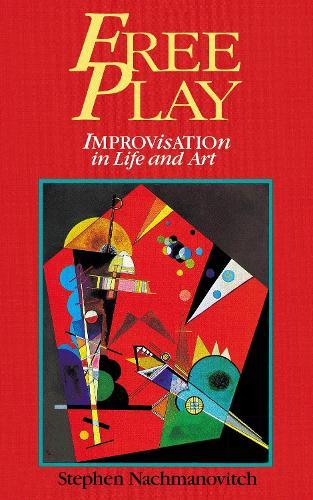
Free Play is about the inner sources of spontaneous creation. It is about where art in the widest sense comes from. It is about why we create and what we learn when we do. It is about the flow of unhindered creative energy- the joy of making art in all its varied forms.Free Play is directed toward people in any field who want to contact, honor, and strengthen their own creative powers. It integrates material from a wide variety of sources among the arts, sciences, and spiritual traditions of humanity. Filled with unusual quotes, amusing and illuminating anecdotes, and original metaphors, it reveals how inspiration arises within us, how that inspiration may be blocked, derailed or obscured by certain unavoidable facts of life, and how finally it can be liberated - how we can be liberated - to speak or sing, write or paint, dance or play, with our own authentic voice. The whole enterprise of improvisation in life and art, of recovering free play and awakening creativity, is about being true to ourselves and our visions. It brings us into direct, active contact with boundless creative energies that we may not even know we had.
Full Product Details
Author: Stephen Nachmanovitch
Publisher: Tarcher/Putnam,US
Imprint: Tarcher/Putnam,US
Dimensions:
Width: 12.70cm
, Height: 1.50cm
, Length: 20.30cm
ISBN: 9780874776317
ISBN 10: 0874776317
Pages: 224
Publication Date: 01 May 1991
Audience:
General/trade
,
General
Format: Paperback
Publisher's Status: Active
Availability: In Print 
This item will be ordered in for you from one of our suppliers. Upon receipt, we will promptly dispatch it out to you. For in store availability, please contact us.
Table of Contents
SECTION 1-EMBRYOLOGY DEVELOPMENT OF MUSCULOSKELETAL SYSTEM 1-1 Amphioxus and Human Embryo at 16 Days, 2 1-2 Differentiation of Somites into Myotomes, Sclerotomes, and Dermatomes, 3 1-3 Progressive Stages in Formation of Vertebral Column, Dermatomes, and Myotomes; Mesenchymal Precartilage Primordia of Axial and Appendicular Skeletons at 5 Weeks, 4 1-4 Fate of Body, Costal Process, and Neural Arch Components of Vertebral Column, With Sites and Time of Appearance of Ossification Centers, 5 1-5 First and Second Cervical Vertebrae at Birth; Development of Sternum, 6 1-6 Early Development of Skull, 7 1-7 Skeleton of Full-Term Newborn, 8 1-8 Changes in Position of Limbs Before Birth; Precartilage Mesenchymal Cell Concentrations of Appendicular Skeleton at 6 Weeks, 9 1-9 Changes in Ventral Dermatome Pattern During Limb Development, 10 1-10 Initial Bone Formation in Mesenchyme; Early Stages of Flat Bone Formation, 11 1-11 Secondary Osteon (Haversian System), 12 1-12 Growth and Ossification of Long Bones, 13 1-13 Growth in Width of a Bone and Osteon Remodeling, 14 1-14 Remodeling: Maintenance of Basic Form and Proportions of Bone During Growth, 15 1-15 Development of Three Types of Synovial Joints, 16 1-16 Segmental Distribution of Myotomes in Fetus of 6 Weeks; Developing Skeletal Muscles at 8 Weeks, 17 1-17 Development of Skeletal Muscle Fibers, 18 1-18 Cross Sections of Body at 6 to 7 Weeks, 19 1-19 Prenatal Development of Perineal Musculature, 20 1-20 Origins and Innervations of Pharyngeal Arch and Somite Myotome Muscles, 21 1-21 Branchiomeric and Adjacent Myotomic Muscles at Birth, 22 SECTION 2-PHYSIOLOGY 2-1 Microscopic Appearance of Skeletal Muscle Fibers, 25 2-2 Organization of Skeletal Muscle, 26 2-3 Intrinsic Blood and Nerve Supply of Skeletal Muscle, 27 2-4 Composition and Structure of Myofilaments, 28 2-5 Muscle Contraction and Relaxation, 29 2-6 Biochemical Mechanics of Muscle Contraction, 30 2-7 Sarcoplasmic Reticulum and Initiation of Muscle Contraction, 31 2-8 Initiation of Muscle Contraction by Electric Impulse and Calcium Movement, 32 2-9 Motor Unit, 33 2-10 Structure of Neuromuscular Junction, 34 2-11 Physiology of Neuromuscular Junction, 35 2-12 Pharmacology of Neuromuscular Transmission, 36 2-13 Physiology of Muscle Contraction, 37 2-14 Energy Metabolism of Muscle, 38 2-15 Muscle Fiber Types, 39 2-16 Structure, Physiology, and Pathophysiology of Growth Plate, 40-41 2-17 Structure and Blood Supply of Growth Plate, 42 2-18 Peripheral Fibrocartilaginous Element of Growth Plate, 43 2-19 Composition and Structure of Cartilage, 44 2-20 Bone Cells and Bone Deposition, 45 2-21 Composition of Bone, 46 2-22 Structure of Cortical (Compact) Bone, 47 2-23 Structure of Trabecular Bone, 48 2-24 Formation and Composition of Collagen, 49 2-25 Formation and Composition of Proteoglycan, 50 2-26 Structure and Function of Synovial Membrane, 51 2-27 Histology of Connective Tissue, 52 2-28 Dynamics of Bone Homeostasis, 53 2-29 Regulation of Calcium and Phosphate Metabolism, 54 2-30 Effects of Bone Formation and Bone Resorption on Skeletal Mass, 55 2-31 Four Mechanisms of Bone Mass Regulation, 56 2-32 Normal Calcium and Phosphate Metabolism, 57 2-33 Nutritional Calcium Deficiency, 59 2-34 Effects of Disuse and Stress (Weight Bearing) on Bone Mass, 60 2-35 Musculoskeletal Effects of Weightlessness (Space Flight), 61 2-36 Bone Architecture and Remodeling in Relation to Stress, 62 2-37 Stress-Generated Electric Potentials in Bone, 63 2-38 Bioelectric Potentials in Bone, 64 2-39 Age-Related Changes in Bone Geometry, 65 2-40 Age-Related Changes in Bone Geometry (Continued), 66 SECTION 3-METABOLIC DISEASES 3-1 Parathyroid Hormone, 68 3-2 Pathophysiology of Primary Hyperparathyroidism, 69 3-3 Clinical Manifestations of Primary Hyperparathyroidism, 70 3-4 Differential Diagnosis of Hypercalcemic States, 71 3-5 Pathologic Physiology of Hypoparathyroidism, 72 3-6 Clinical Manifestations of Chronic Hypoparathyroidism, 74 3-7 Clinical Manifestations of Hypocalcemia, 75 3-8 Pseudohypoparathyroidism, 76 3-9 Mechanism of Parathyroid Hormone Activity on End Organ, 77 3-10 Mechanism of Parathyroid Hormone Activity on End Organ: Cyclic AMP Response to PTH, 78 3-11 Clinical Guide to Parathyroid Hormone Assay: Different Forms of PTH and Their Detection by Whole (Bioactive) PTH and I-PTH Immunometric Assays, 79 3-12 Clinical Guide to Parathyroid Hormone Assay (Continued), 80 3-13 Childhood Rickets, 81 3-14 Adult Osteomalacia, 82 3-15 Nutritional Deficiency: Rickets and Osteomalacia, 83 3-16 Vitamin D-Resistant Rickets and Osteomalacia due to Proximal Renal Tubular Defects (Hypophosphatemic Rachitic Syndromes), 84 3-17 Vitamin D-Resistant Rickets and Osteomalacia due to Proximal and Distal Renal Tubular Defects, 85 3-18 Vitamin D-Dependent (Pseudodeficiency) Rickets and Osteomalacia, 86 3-19 Vitamin D-Resistant Rickets and Osteomalacia due to Renal Tubular Acidosis, 87 3-20 Metabolic Aberrations of Renal Osteodystrophy, 88 3-21 Rickets, Osteomalacia, and Renal Osteodystrophy, 89 3-22 Bony Manifestations of Renal Osteodystrophy, 90 3-23 Vascular and Soft Tissue Calcification in Secondary Hyperparathyroidism of Chronic Renal Disease, 91 3-24 Clinical Guide to Vitamin D Measurement, 92 3-25 Hypophosphatasia, 93 3-26 Causes of Osteoporosis, 94 3-27 Involutional Osteoporosis, 95 3-28 Clinical Manifestations of Osteoporosis, 96 3-29 Progressive Spinal Deformity in Osteoporosis, 97 3-30 Radiology of Osteopenia, 98 3-31 Radiology of Osteopenia (Continued), 99 3-32 Radiology of Osteopenia (Continued), 100 3-33 Transiliac Bone Biopsy, 101 3-34 Treatment of Complications of Spinal Osteoporosis, 102 3-35 Treatment of Osteoporosis, 103 3-36 Treatment of Osteoporosis (Continued), 104 3-37 Osteogenesis Imperfecta Type I, 106 3-38 Osteogenesis Imperfecta Type III, 107 3-39 Marfan Syndrome, 108 3-40 Marfan Syndrome (Continued), 109 3-41 Ehlers-Danlos Syndromes, 110 3-42 Ehlers-Danlos Syndromes (Continued), 111 3-43 Osteopetrosis (Albers-Schoenberg Disease), 112 3-44 Paget Disease of Bone, 113 3-45 Paget Disease of Bone (Continued), 114 3-46 Pathophysiology and Treatment of Paget Disease of Bone, 115 3-47 Fibrodysplasia Ossificans Progressiva, 116 SECTION 4-CONGENITAL AND DEVELOPMENTAL DISORDERS DWARFISM 4-1 Achondroplasia-Clinical Manifestations, 118 4-2 Achondroplasia-Clinical Manifestations (Continued), 119 4-3 Achondroplasia-Clinical Manifestations of Spine, 120 4-4 Achondroplasia-Diagnostic Testing, 121 4-5 Hypochondroplasia, 122 4-6 Diastrophic Dwarfism, 123 4-7 Pseudoachondroplasia, 124 4-8 Metaphyseal Chondrodysplasia, McKusick Type, 125 4-9 Metaphyseal Chondrodysplasia, Schmid Type, 126 4-10 Chondrodysplasia Punctata, 127 4-11 Chondroectodermal Dysplasia (Ellis-van Creveld Syndrome), Grebe Chondrodysplasia, and Acromesomelic Dysplasia, 128 4-12 Multiple Epiphyseal Dysplasia, Fairbank Type, 129 4-13 Pycnodysostosis (Pyknodysostosis), 130 4-14 Camptomelic (Campomelic) Dysplasia, 131 4-15 Spondyloepiphyseal Dysplasia Tarda and Spondyloepiphyseal Dysplasia Congenita, 132 4-16 Spondylocostal Dysostosis and Dyggve- Melchior-Clausen Dysplasia, 133 4-17 Kniest Dysplasia, 134 4-18 Mucopolysaccharidoses, 135 4-19 Principles of Treatment of Skeletal Dysplasias, 136 NEUROFIBROMATOSIS 4-20 Diagnostic Criteria and Cutaneous Lesions in Neurofibromatosis, 137 4-21 Cutaneous Lesions in Neurofibromatosis, 138 4-22 Spinal Deformities in Neurofibromatosis, 139 4-23 Bone Overgrowth and Erosion in Neurofibromatosis, 140 OTHER 4-24 Arthrogryposis Multiplex Congenita, 141 4-25 Fibrodysplasia Ossificans Progressiva and Progressive Diaphyseal Dysplasia, 142 4-26 Osteopetrosis and Osteopoikilosis, 143 4-27 Melorheostosis, 144 4-28 Congenital Elevation of Scapula, Absence of Clavicle, and Pseudarthrosis of Clavicle, 145 4-29 Madelung Deformity, 146 4-30 Congenital Bowing of the Tibia, 147 4-31 Congenital Pseudoarthrosis of the Tibia and Dislocation of the Knee, 148 LEG-LENGTH DISCREPANCY 4-32 Clinical Manifestations, 149 4-33 Evaluation of Leg-Length Discrepancy, 150 4-34 Charts for Timing Growth Arrest and Determining Amount of Limb Lengthening to Achieve Limb-Length Equality at Maturity, 151 4-35 Growth Arrest, 152 4-36 Ilizarov and De Bastiani Techniques for Limb Lengthening, 153 CONGENITAL LIMB MALFORMATION 4-37 Growth Factors, 154 4-38 Foot Prehensility in Amelia, 155 4-39 Failure of Formation of Parts: Transverse Arrest, 156 4-40 Failure of Formation of Parts: Transverse Arrest (Continued), 157 4-41 Failure of Formation of Parts: Transverse Arrest (Continued), 158 4-42 Failure of Formation of Parts: Transverse Arrest (Continued), 159 4-43 Failure of Formation of Parts: Transverse Arrest (Continued), 160 4-44 Failure of Formation of Parts: Transverse Arrest (Continued), 161 4-45 Failure of Formation of Parts: Transverse Arrest (Continued), 162 4-46 Failure of Formation of Parts: Longitudinal Arrest, 163 4-47 Failure of Formation of Parts: Longitudinal Arrest (Continued), 164 4-48 Failure of Formation of Parts: Longitudinal Arrest (Continued), 165 4-49 Failure of Formation of Parts: Longitudinal Arrest (Continued), 166 4-50 Duplication of Parts, Overgrowth, and Congenital Constriction Band Syndrome, 167 SECTION 5-RHEUMATIC DISEASES RHEUMATIC DISEASES 5-1 Joint Pathology in Rheumatoid Arthritis, 170 5-2 Early and Moderate Hand Involvement in Rheumatoid Arthritis, 171 5-3 Advanced Hand Involvement in Rheumatoid Arthritis, 172 5-4 Foot Involvement in Rheumatoid Arthritis, 173 5-5 Knee, Shoulder, and Hip Joint Involvement in Rheumatoid Arthritis, 174 5-6 Extra-articular Manifestations in Rheumatoid Arthritis, 175 5-7 Extra-articular Manifestations in Rheumatoid Arthritis (Continued), 176 5-8 Immunologic Features in Rheumatoid Arthritis, 177 5-9 Variable Clinical Course of Adult Rheumatoid Arthritis, 178 TREATMENT OF RHEUMATOID ARTHRITIS 5-10 Exercises for Upper Extremities, 179 5-11 Exercises for Shoulders and Lower Extremities, 180 5-12 Surgical Management in Rheumatoid Arthritis, 181 SYNOVIAL FLUID EXAMINATION 5-13 Techniques for Aspiration of Joint Fluid, 182 5-14 Synovial Fluid Examination, 183 5-15 Synovial Fluid Examination (Continued), 184 JUVENILE ARTHRITIS 5-16 Systemic Juvenile Arthritis, 185 5-17 Systemic Juvenile Arthritis (Continued), 186 5-18 Hand Involvement in Juvenile Arthritis, 187 5-19 Lower Limb Involvement in Juvenile Arthritis, 188 5-20 Ocular Manifestations in Juvenile Arthritis, 189 5-21 Sequelae of Juvenile Arthritis, 190 OSTEOARTHRITIS 5-22 Distribution of Joint Involvement in Osteoarthritis, 191 5-23 Clinical Findings in Osteoarthritis, 192 5-24 Clinical Findings in Osteoarthritis (Continued), 193 5-25 Hand Involvement in Osteoarthritis, 194 5-26 Hip Joint Involvement in Osteoarthritis, 195 5-27 Degenerative Changes, 196 5-28 Spine Involvement in Osteoarthritis, 197 OTHER 5-29 Ankylosing Spondylitis, 198 5-30 Ankylosing Spondylitis (Continued), 199 5-31 Ankylosing Spondylitis (Continued) Degenerative Changes in the Cervical Vertebrae, 200 5-32 Psoriatic Arthritis, 201 5-33 Reactive Arthritis (formerly Reiter Syndrome), 202 5-34 Infectious Arthritis, 203 5-35 Tuberculous Arthritis, 204 5-36 Hemophilic Arthritis, 205 5-37 Neuropathic Joint Disease, 206 5-38 Gouty Arthritis, 207 5-39 Tophaceous Gout, 208 5-40 Articular Chondrocalcinosis (Pseudogout), 209 5-41 Nonarticular Rheumatism, 210 5-42 Clinical Manifestations of Polymyalgia Rheumatica and Giant Cell Arteritis, 211 5-43 Imaging of Polymyalgia Rheumatica and Giant Cell Arteritis, 212 5-44 Fibromyalgia, 213 5-45 Pathophysiology of Autoinflammatory Syndromes, 214 5-46 Cutaneous Findings in Autoinflammatory Syndromes, 215 5-47 Joint and Central Nervous System Findings in Autoinflammatory Syndromes, 216 5-48 Vasculitis: Vessel Distribution, 217 5-49 Vasculitis: Clinical and Histologic Features of Granulomatosis with Polyangitis (Wegener), 218 5-50 Key Features of Primary Vasculitic Diseases, 219 5-51 Renal Lesions in Systemic Lupus Erythematosus, 220 5-52 Cutaneous Lupus Band Test, 221 5-53 Lupus Erythematosus of the Heart, 222 5-54 Antiphospholipid Syndrome, 223 5-55 Scleroderma-Clinical Manifestations, 225 5-56 Scleroderma-Clinical Findings, 226 5-57 Scleroderma-Radiographic Findings of Acro-osteolysis and Calcinosis Cutis, 227 5-58 Polymyositis and Dermatomyositis, 228 5-59 Polymyositis and Dermatomyositis (Continued), 229 5-60 Primary Angiitis of the Central Nervous System, 230 5-61 Behcet Syndrome, 232 5-62 Behcet Syndrome (Continued), 233 SECTION 6-TUMORS OF MUSCULOSKELETAL SYSTEM 6-1 Initial Evaluation and Staging of Musculoskeletal Tumors, 236 6-2 Osteoid Osteoma, 238 6-3 Osteoblastoma, 239 6-4 Enchondroma, 240 6-5 Periosteal Chondroma, 241 6-6 Osteocartilaginous Exostosis (Osteochondroma), 242 6-7 Chondroblastoma and Chondromyxoid Fibroma, 243 6-8 Fibrous Dysplasia, 244 6-9 Nonossifying Fibroma and Desmoplastic Fibroma, 245 6-10 Eosinophilic Granuloma, 246 6-11 Aneurysmal Bone Cyst, 247 6-12 Simple Bone Cyst, 248 6-13 Giant Cell Tumor of Bone, 249 6-14 Osteosarcoma, 250 6-15 Osteosarcoma (Continued), 251 6-16 Osteosarcoma (Continued), 252 6-17 Chondrosarcoma, 253 6-18 Fibrous Histiocytoma and Fibrosarcoma of Bone, 254 6-19 Reticuloendothelial Tumors-Ewing Sarcoma, 255 6-20 Reticuloendothelial Tumors- Myeloma, 256 6-21 Adamantinoma, 257 6-22 Tumors Metastatic to Bone, 258 6-23 Desmoid, Fibromatosis, and Hemangioma, 259 6-24 Lipoma, Neurofibroma, and Myositis Ossificans, 260 6-25 Sarcomas of Soft Tissue, 261 6-26 Sarcomas of Soft Tissue (Continued), 262 6-27 Sarcomas of Soft Tissue (Continued), 263 6-28 Tumor Biopsy, 264 6-29 Surgical Margins, 265 6-30 Reconstruction after Partial Excision or Curettage of Bone (Fracture Prophylaxis), 266 6-31 Limb-Salvage Procedures for Reconstruction, 267 6-32 Radiologic Findings in Limb-Salvage Procedures, 268 6-33 Limb-Salvage Procedures, 269 SECTION 7-INJURY TO MUSCULOSKELETAL SYSTEM 7-1 Closed Soft Tissue Injuries, 272 7-2 Open Soft Tissue Wounds, 273 7-3 Treatment of Open Soft Tissue Wounds, 274 7-4 Pressure Ulcers, 275 7-5 Excision of Deep Pressure Ulcer, 276 7-6 Classification of Burns, 277 7-7 Causes and Clinical Types of Burns, 278 7-8 Escharotomy for Burns, 279 7-9 Prevention of Infection in Burn Wounds, 280 7-10 Metabolic and Systemic Effects of Burns, 281 7-11 Excision and Grafting for Burns, 282 7-12 Etiology of Compartment Syndrome, 283 7-13 Pathophysiology of Compartment and Crush Syndromes, 284 7-14 Acute Anterior Compartment Syndrome, 285 7-15 Measurement of Intracompartmental Pressure, 286 7-16 Incisions for Compartment Syndrome of Forearm and Hand, 287 7-17 Incisions for Compartment Syndrome of Leg, 288 7-18 Healing of Incised, Sutured Skin Wound, 289 7-19 Healing of Excised Skin Wound, 290 7-20 Types of Joint Injury, 291 7-21 Classification of Fracture, 292 7-22 Types of Displacement, 293 7-23 Types of Fracture, 294 7-24 Healing of Fracture, 295 7-25 Primary Union, 296 7-26 Factors That Promote or Delay Bone Healing, 297 SECTION 8-SOFT TISSUE INFECTIONS 8-1 Septic Joint, 300 8-2 Etiology and Prevalence of Hematogenous Osteomyelitis, 301 8-3 Pathogenesis of Hematogenous Osteomyelitis, 302 8-4 Clinical Manifestations of Hematogenous Osteomyelitis, 303 8-5 Direct (Nonhematogenous) Causes of Osteomyelitis, 304 8-6 Direct (Nonhematogenous) Causes of Osteomyelitis (Continued), 305 8-7 Osteomyelitis after Open Fracture, 306 8-8 Recurrent Postoperative Osteomyelitis, 307 8-9 Delayed Posttraumatic Osteomyelitis in Diabetic Patient, 308 SECTION 9-COMPLICATIONS OF FRACTURE 9-1 Neurovascular Injury, 310 9-2 Adult Respiratory Distress Syndrome, 311 9-3 Infection, 312 9-4 Surgical Management of Open Fractures, 313 9-5 Gas Gangrene, 314 9-6 Implant Failure, 315 9-7 Malunion of Fracture, 316 9-8 Growth Deformity, 317 9-9 Posttraumatic Osteoarthritis, 318 9-10 Osteonecrosis, 319 9-11 Joint Stiffness, 320 9-12 Complex Regional Pain Syndrome, 321 9-13 Nonunion of Fracture, 322 9-14 Surgical Management of Nonunion, 323 9-15 Electric Stimulation of Bone Growth, 324 9-16 Noninvasive Coupling Methods of Electric Stimulation of Bone, 325
Reviews
Stephen Nachmanovitch has produced a celebration of human uniqueness. What it amounts to is a guide for gettingthe most out of whatever is possible --Norman Cousins, author of The Anatomy of an Illness This is an unusually intense, packed, thought-through book on the most difficult subject in the world: mystic creativity. If you wantto be intellectually informed about how people actually craete things, then you should read it at least once. --Robert Pirsig, author of Zen and the Art of Motorcycle Maintenance Would that Free Play found its way into every school, office, hospital, and factory. It is a most exciting book and a most important one. --Yehudi Menuhin, violinist Nachmanovitch tells it like it is in the most important book on improvisation I've yet seen. --Keith Jarrett, pianist Free Play is a superb guide for anyone who aspires to create, whatever medium. --New Woman This book is important not only because it delves into the creative process, but also because Nachmanovitch creates the opportunity for the reader to get in touch with her/his own creative possibilities and abilities. --Harvard Educational Review
Author Information
Stephen Nachmanovitch is a musician, author, computer artist, and educator. He is an improvisational violinist, and writes and teaches about improvisation, creativity, and systems approaches in many fields of activity
Tab Content 6
Author Website:
Countries Available
All regions
|