Overview
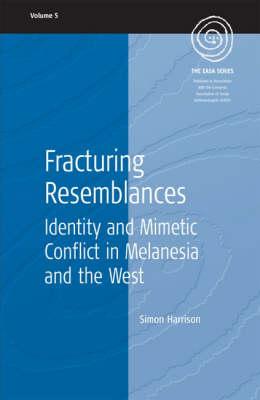
Western societies draw crucially on concepts of the 'individual' in constructing their images of the ethnic group and nation and define these in terms of difference. This study explores the implications of these constructs for Western understanding of social order and ethnic conflicts. Comparing them with the forms of cultural identity characteristic of Melanesia as they have developed since pre-colonial times, the author arrives at a surprising conclusion: he argues that these kinds of identities are more properly and adequately viewed as forms of disguised or denied resemblance, and that it is these covert commonalities that give rise to, and prolong, social divisions and conflicts between groups.
Full Product Details
Author: Simon Harrison
Publisher: Berghahn Books
Imprint: Berghahn Books
Volume: v. 5
Dimensions:
Width: 15.20cm
, Height: 1.00cm
, Length: 22.90cm
Weight: 0.268kg
ISBN: 9781845450977
ISBN 10: 1845450973
Pages: 192
Publication Date: 01 December 2006
Audience:
College/higher education
,
Undergraduate
Format: Paperback
Publisher's Status: Active
Availability: In Print

This item will be ordered in for you from one of our suppliers. Upon receipt, we will promptly dispatch it out to you. For in store availability, please contact us.
Reviews
This book offers a counterintuitive and innovative approach to the politics of cultural difference and social order. The appeal of Harrison's argument is enhanced because he shows that currently dominant approaches to the politics of identity and difference are likely to be misguided, but does not resort to a wrongheaded appeal to universalism that simply collapses difference. . Anthropological Forum Simon Harrison has written a thoughtful short book. It is clearly written and well argued. It uses diverse ethnography to explore proprietary forms of identity, where culture is a form of property to be possessed or selectively given out to others. The book is comparative anthropology at its best...a powerful thoughtful book, [whose] controversial ideas deserve serious debate. . Dialect Anthropol I thoroughly enjoyed this book. It is clearly and convincingly written, covers a large number of fascinating and diverse ethnographic cases, and its central theoretical propositions are well worthy of consideration and debate. . American Anthropologist
-This book offers a counterintuitive and innovative approach to the politics of cultural difference and social order. The appeal of Harrison's argument is enhanced because he shows that currently dominant approaches to the politics of identity and difference are likely to be misguided, but does not resort to a wrongheaded appeal to universalism that simply collapses difference.- - Anthropological Forum -Simon Harrison has written a thoughtful short book. It is clearly written and well argued. It uses diverse ethnography to explore proprietary forms of identity, where culture is a form of property to be possessed or selectively given out to others. The book is comparative anthropology at its best...a powerful thoughtful book, [whose] controversial ideas deserve serious debate.- - Dialect Anthropol -I thoroughly enjoyed this book. It is clearly and convincingly written, covers a large number of fascinating and diverse ethnographic cases, and its central theoretical propositions are well worthy of consideration and debate.- - American Anthropologist This book offers a counterintuitive and innovative approach to the politics of cultural difference and social order. The appeal of Harrison's argument is enhanced because he shows that currently dominant approaches to the politics of identity and difference are likely to be misguided, but does not resort to a wrongheaded appeal to universalism that simply collapses difference. - Anthropological Forum Simon Harrison has written a thoughtful short book. It is clearly written and well argued. It uses diverse ethnography to explore proprietary forms of identity, where culture is a form of property to be possessed or selectively given out to others. The book is comparative anthropology at its best...a powerful thoughtful book, [whose] controversial ideas deserve serious debate. - Dialect Anthropol I thoroughly enjoyed this book. It is clearly and convincingly written, covers a large number of fascinating and diverse ethnographic cases, and its central theoretical propositions are well worthy of consideration and debate. - American Anthropologist This book offers a counterintuitive and innovative approach to the politics of cultural difference and social order. The appeal of Harrison's argument is enhanced because he shows that currently dominant approaches to the politics of identity and difference are likely to be misguided, but does not resort to a wrongheaded appeal to universalism that simply collapses difference. . Anthropological Forum Simon Harrison has written a thoughtful short book. It is clearly written and well argued. It uses diverse ethnography to explore proprietary forms of identity, where culture is a form of property to be possessed or selectively given out to others. The book is comparative anthropology at its best...a powerful thoughtful book, [whose] controversial ideas deserve serious debate. . Dialect Anthropol I thoroughly enjoyed this book. It is clearly and convincingly written, covers a large number of fascinating and diverse ethnographic cases, and its central theoretical propositions are well worthy of consideration and debate. . American Anthropologist
Author Information
Simon Harrison is Reader in Social Anthropology at the University of Ulster, and has carried out ethnographic fieldwork among the people of Avatip in Papua New Guinea. He has published extensively on Melanesian warfare, ethnopsychology, cultural identity, and indigenous forms of intellectual property.