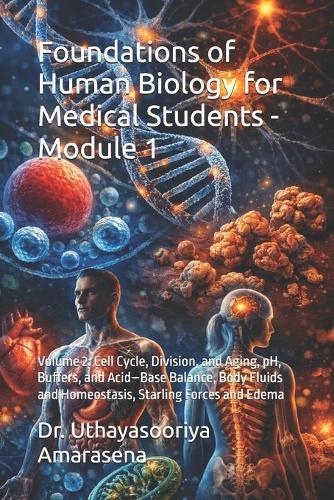
Overview
This modular series has been developed with the primary aim of providing a structured, concept-oriented learning resource that is closely aligned with the curriculum framework of a Medical Faculty in Sri Lanka. It is designed to support medical students in navigating the complexity of foundational and clinical sciences through a systematic and integrated approach. The organization of this series reflects the academic design of the medical curriculum, incorporating vertical, horizontal (transverse), and spiral models of learning adopted by the Faculty. Vertical integration is achieved by linking basic sciences with clinical applications, enabling students to understand how foundational knowledge translates into diagnosis and patient care. Horizontal (transverse) integration is emphasized by connecting related disciplines-such as anatomy, physiology, and biochemistry-within the same stage of learning to promote a unified understanding of the human body. Spiral learning is incorporated by revisiting key concepts at increasing levels of complexity, reinforcing knowledge and enabling progressive mastery over time. This alignment ensures that the content is not only relevant to academic requirements but also consistent with modern medical education strategies that prioritize integration and clinical relevance. A central educational philosophy guiding this work is learning from first principles, inspired by the core idea associated with Richard Feynman. In this approach, complex medical topics are broken down into their most fundamental components and rebuilt logically. The emphasis is placed on understanding: The underlying structure of biological systems The mechanisms governing normal function The alterations that lead to dysfunction The clinical manifestations and their diagnostic significance By focusing on these fundamental relationships-structure → function → dysfunction → disease → diagnosis → management-students are encouraged to develop deep conceptual clarity rather than relying solely on memorization. This approach provides several educational advantages: Strengthens long-term retention of knowledge Enhances analytical and clinical reasoning skills Improves the ability to apply concepts to new and unfamiliar clinical scenarios Facilitates integration across multiple disciplines The content is presented using detailed, hierarchical subheadings to promote clarity, logical organization, and ease of revision. Each section is designed to guide the learner progressively from basic understanding to applied clinical relevance. This series is intended to function as a supportive academic resource. Students are strongly advised to rely primarily on faculty lectures, recommended textbooks, past examination questions, and official institutional learning materials. This work complements those primary sources by organizing, integrating, and simplifying key concepts. Medical science is continuously evolving, and this series represents an ongoing effort to adapt educational content in accordance with advances in knowledge, teaching methodologies, and curriculum development. It is hoped that this modular approach will assist students in building a strong conceptual foundation, fostering critical thinking, and developing the competence required for effective clinical practice.
Full Product Details
Author: Dr Uthayasooriya Amarasena
Publisher: Independently Published
Imprint: Independently Published
Volume: 2
Dimensions:
Width: 15.20cm
, Height: 2.20cm
, Length: 22.90cm
Weight: 0.576kg
ISBN: 9798259186255
Pages: 432
Publication Date: 28 April 2026
Audience:
General/trade
,
General
Format: Paperback
Publisher's Status: Active
Availability: Available To Order

We have confirmation that this item is in stock with the supplier. It will be ordered in for you and dispatched immediately.