|
|
|||
|
||||
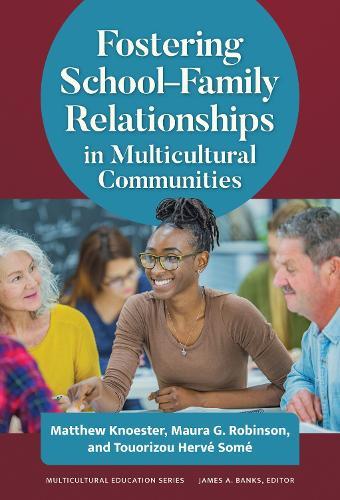
OverviewThis practitioner-friendly resource will help parents and educators with different values and viewpoints to better communicate, understand, and collaborate for the benefit of all children (K–12). Drawing from personal stories and current research, this book suggests ways in which families and schools can work together to optimize the academic, social, and emotional development of all students, with a focus on diverse students and families. Utilizing their unique backgrounds as professional educators, scholars, parents, and immigrants, the authors provide vivid descriptions of successful family–school collaborations, powerful culturally relevant educational experiences, effective communication models, and strategies parents can use to become stronger advocates for public schools in their communities. Discussion questions at the end of each chapter are designed to improve communication so parents can better understand the work of schools and, in turn, educators can learn from families. Book Features: A road map for creating a school community grounded in the tenets of integrated, multicultural education. Tools for creating high-quality communication between families and educators, including guidance for overcoming common obstacles. Information for parents about how to navigate the school system and its resources. Reflection and discussion questions that can be used in book clubs or study groups with both parents and educators. A list of books that the authors recommend reading and discussing following this one. Full Product DetailsAuthor: Matthew Knoester , Maura G. Robinson , Touorizou Hervé Somé , James A. BanksPublisher: Teachers' College Press Imprint: Teachers' College Press Dimensions: Width: 15.60cm , Height: 0.80cm , Length: 22.90cm ISBN: 9780807787526ISBN 10: 0807787523 Pages: 168 Publication Date: 26 September 2025 Audience: Professional and scholarly , Professional & Vocational Format: Paperback Publisher's Status: Active Availability: In Print This item will be ordered in for you from one of our suppliers. Upon receipt, we will promptly dispatch it out to you. For in store availability, please contact us. Table of ContentsContents Series Foreword James A. Banks xiii Acknowledgments xix Introduction 1 Transitioning From Nesting Instincts to the Socialization of Schooling 2 Common Questions That Arise for Parents 4 Many Purposes for Schools 6 Parents and Teachers 7 About This Book 10 About the Authors 11 A Safe Place for Inquiry 12 Discussion Questions 13 1. Education for Democracy 15 Educational Needs of a Democracy 17 Deciding on the Curriculum 19 Educational Governance 21 Book Bans and Other Violations of the Principle of Non-Repression 23 Unequal School Budgets 24 Conclusion 25 Discussion Questions 26 2. Integration and Intercultural Competence 29 Demographics and Segregation 29 Benefits of Integrated Schooling 31 Interrupting Racism 37 Conclusion 39 Discussion Questions 39 3. Education and Culture 41 Coming to the United States 41 Underestimation of Parental Knowledge 44 When Parents May Need to Speak Up on Behalf of Their Children 45 What Can Teachers and Schools Learn From Parents and Families? 48 Culturally Responsive Teaching 50 The Value of Academic Language in Schools 51 Culture and Economic Inequality 53 Conclusion 57 Discussion Questions 58 4. Improving Communication Between Families and Schools 59 One-Way Communication: Newsletters 60 One-Way Communication: Grades and Report Cards 65 One-Way Communication: Standardized Test Scores 67 Another Cautionary Note About Written Communications Sent Home to Families 69 Two-Way Communication: Parent–Teacher Conferences 71 Two-Way Communication: Individualized Education Program (IEPs) and 504 Plans 73 Two-Way Communication: Family Nights 75 Two-Way Communication: Book Study Discussions 76 Conclusion 78 Discussion Questions 79 5. The Most Challenging Aspects of Building Trust 81 Homework 83 Discipline 85 The Challenge of Sending Mixed Messages to Parents 89 Unequal Voice for Parents Within Schools 91 Confronting Race and Racism in Schools 92 Additional Concerns About Trust in Schools 97 Conclusion 99 Discussion Questions 100 6. Enhanced Parental Involvement in Schools 101 It May Take a Village, but Parents’ First Priority Is Their Own Family 102 Volunteering in the School 103 Advocacy at the City Level 105 Organizing in Buffalo, New York 107 Organizing in Southern Indiana 111 Suggestions for Organizing 113 Conclusion 115 Discussion Questions 116 7. Conclusion 119 Education and Democracy 121 Summary of the Book 124 Conclusion 128 Discussion Questions 129 Recommended Reading for Future Book Studies 131 References 133 Index 141 About the Authors 147ReviewsAuthor InformationMatthew Knoester is a professor and chair of the Educational Studies Department at Ripon College. Maura G. Robinson is a diversity, equity, inclusion, and belonging (DEIB) consultant and coach to school districts and organizations. Touorizou Hervé Somé is an associate professor in the Educational Studies Department at Ripon College. Tab Content 6Author Website:Countries AvailableAll regions |
||||