Overview
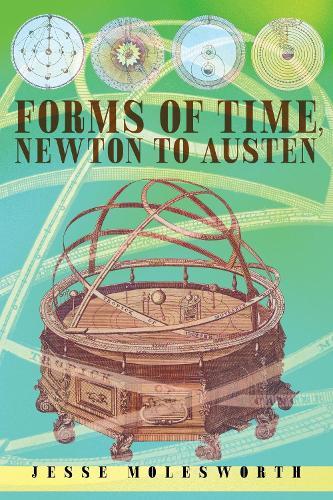
Between 1700 and 1800, the English-speaking world came to terms with one of modernity's most fundamental ideas: the separation of time from its measure, or what Newton described as the distinction between ""absolute"" and ""relative"" time. Jesse Molesworth argues that most experienced this encounter not firsthand, through direct exposure to Newton's writings, but secondhand, through a variety of smaller encounters in art, science, culture, and literature. Enriching our understanding of the connection between science and literature, Forms of Time, Newton to Austen offers the rise of the novel as a case study to examine the relationship between transformations in culture and transformations in literary forms. Through incisive readings of works by Samuel Richardson, Laurence Sterne, Horace Walpole, Ann Radcliffe, Jane Austen, and others, Molesworth reveals that the novel arose by making visible what culture does not or cannot see itself. The emergent ""realist"" novel did not adopt Newtonian claims wholesale. While the novel accommodated the new physicalist sense of ""absolute time"" in theme, its formal techniques offered something else: an escape, however temporary, from the claims made by Newtonian time.
Full Product Details
Author: Jesse Molesworth
Publisher: Stanford University Press
Imprint: Stanford University Press
ISBN: 9781503646377
ISBN 10: 1503646378
Pages: 270
Publication Date: 20 February 2026
Audience:
Professional and scholarly
,
Professional & Vocational
Format: Paperback
Publisher's Status: Active
Availability: Out of stock

The supplier is temporarily out of stock of this item. It will be ordered for you on backorder and shipped when it becomes available.
Reviews
""A major addition to the scholarship on time and narrative. In Molesworth's bravura account of novelists' experiments--Richardsonian epistolarity, Shandean fragmentation, free indirect discourse in Austen--the certainties of Newtonian time are bracingly disrupted: twisted, folded, and ruptured in dizzying ways."" --Thomas Keymer, University of Toronto ""Through its combination of wide-ranging research and dazzling close readings, I learned something new, or thought about something differently (usually both), in each chapter of this fascinating book. Elegantly written, original, and compelling."" --Cynthia Wall, University of Virginia
""Through its combination of wide-ranging research and dazzling close readings, I learned something new, or thought about something differently (usually both), in each chapter of this fascinating book. Elegantly written, original, and compelling."" —Cynthia Wall, University of Virginia ""A major addition to the scholarship on time and narrative. In Molesworth's bravura account of novelists' experiments—Richardsonian epistolarity, Shandean fragmentation, free indirect discourse in Austen—the certainties of Newtonian time are bracingly disrupted: twisted, folded, and ruptured in dizzying ways."" —Thomas Keymer, University of Toronto
Author Information
Jesse Molesworth is Associate Professor of English at Indiana University. He is the author of Chance and the Eighteenth-Century Novel: Realism, Probability, Magic (2010).