|
|
|||
|
||||
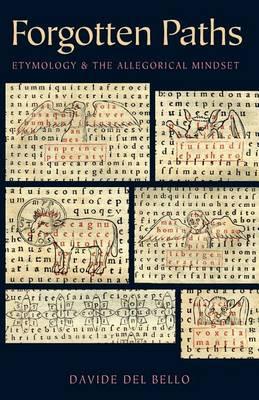
OverviewMuch has been written on allegory as a cognitive tool--a rhetorical device that is more a philosophical forma mentis than sheer literary form. The writings of the classical thinkers, the work of Isidore of Seville, and the texts of Renaissance humanists tacitly acknowledge the rhetorical, argumentative impact of etymology. Yet appreciation for the practice of etymology remains largely uncharted in modern works. When recognized, it is invariably with reservations about its scientific or cognitive worth. Isidore of Seville's etymologies, for instance, continue either to be cited as curious specimens of scientific antiquarianism or altogether dismissed as semantically and phonologically inaccurate. In Forgotten Paths, Davide Del Bello draws on the insights of Giambattista Vico and examines exemplary texts from classical, medieval, and Renaissance culture with the intent to trace the links between etymological and allegorical ways of knowing, writing, thinking, and arguing. Del Bello brings into sharper focus the hazy contours of etymology with respect to allegory; assesses the viability of classical and medieval etymologizing as a dynamic cognitive tool; and appraises the persistence of an etymologico-allegorical modus operandi from the late Enlightenment to postmodernism. Full Product DetailsAuthor: Davide Del BelloPublisher: The Catholic University of America Press Imprint: The Catholic University of America Press Dimensions: Width: 13.90cm , Height: 1.10cm , Length: 21.50cm Weight: 0.525kg ISBN: 9780813226484ISBN 10: 0813226481 Pages: 187 Publication Date: 30 September 2007 Audience: Professional and scholarly , Professional & Vocational Format: Paperback Publisher's Status: Active Availability: Out of stock The supplier is temporarily out of stock of this item. It will be ordered for you on backorder and shipped when it becomes available. Table of ContentsReviewsA very interesting and unusual book. It is gratifying to see this classical and humanist sense of etymology as an integral part of thought brought back to life. Author InformationDavide Del Bello is assistant professor of English at Bergamo University in Italy. He received his Ph.D. in English and rhetoric from Northern Illinois University. Tab Content 6Author Website:Countries AvailableAll regions |
||||