Overview
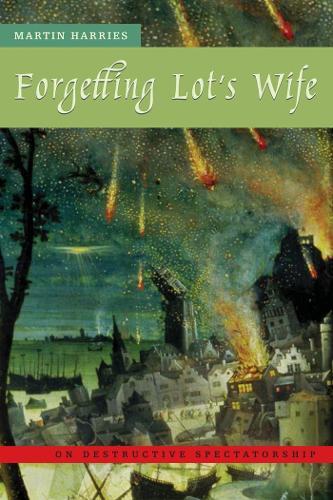
Can looking at disaster and mass death destroy us? Forgetting Lot's Wife provides a theory and a fragmentary history of destructive spectatorship in the twentieth century. Its subject is the notion that the sight of historical catastrophe can destroy the spectator. The fragments of this history all lead back to the story of Lot's wife: looking back at the destruction of the cities of Sodom and Gomorrah, she turns into a pillar of salt. This biblical story of punishment and transformation, a nexus of sexuality, sight, and cities, becomes the template for the modern fear that looking back at disaster might petrify the spectator. Although rarely articulated directly, this idea remains powerful in our culture. This book traces some of its aesthetic, theoretical, and ethical consequences. Harries traces the figure of Lot's wife across media. In extended engagements with examples from twentieth-century theater, film, and painting, he focuses on the theatrical theory of Antonin Artaud, a series of American films, and paintings by Anselm Kiefer. These examples all return to the story of Lot's wife as a way to think about modern predicaments of the spectator. On the one hand, the sometimes veiled figure of Lot's wife allows these artists to picture the desire to destroy the spectator; on the other, she stands as a sign of the potential danger to the spectator. These works, that is, enact critiques of the very desire that inspires them. The book closes with an extended meditation on September 11, criticizing the notion that we should have been destroyed by witnessing the events of that day.
Full Product Details
Author: Martin Harries
Publisher: Fordham University Press
Imprint: Fordham University Press
Dimensions:
Width: 15.20cm
, Height: 1.00cm
, Length: 22.90cm
Weight: 0.290kg
ISBN: 9780823227341
ISBN 10: 0823227340
Pages: 192
Publication Date: 15 June 2007
Audience:
Professional and scholarly
,
Professional & Vocational
,
Postgraduate, Research & Scholarly
Format: Paperback
Publisher's Status: Active
Availability: In Print

This item will be ordered in for you from one of our suppliers. Upon receipt, we will promptly dispatch it out to you. For in store availability, please contact us.
Reviews
. . . A thoughtful treatise on destructive spectatorship. * -The Catholic World * Along with its persuasive identification of Lot's wife as a key figure for modern art and aesthetics, Forgetting Lot's Wife may also offer a model for a mode of critical practice that seeks not to fix or sacralize the past, but rather to enable a necessary critical engagement with the politics and culture of memory. -- -Jared Stark * The Space Between * Examines the modern fear that the sight of a historical catastrophe might destroy the viewer, as it did in the Biblical story of Lot's wife. * -Columbia College Today * . . . Delivers acute, historically attuned analyses of oft-ignored cultural artifacts and a fresh perspective on spectatorial representations in postwar film. * -Film-Philosophy * [A] fascinating work . . . well-written and gripping with much to value and even more to be explored. One hopes Harries continues to develop his theory of destructive spectatorship. * -New England Theatre Journal * A remarkable book, strong in its interpretation of an ancient parable and prescient in its application to a few well-selected examples of art and literature from the century toward which we turn and look back in peril and in dread. -- -Joseph Roach * Yale University * Drawn by the power of the Genesis story, Harries breathes new life into the topic of spectatorship and modernity. In bold, fresh readings of Artaud, Kiefer, and films noirs Harries deciphers modernism's twin compulsion to destroy the spectator and to lay bare the seductions of historical witness. Forgetting Lot's Wife surprises on every page. -- -Elin Diamond * Rutgers University *
Along with its persuasive identification of Lot's wife as a key figure for modern art and aesthetics, Forgetting Lot's Wife may also offer a model for a mode of critical practice that seeks not to fix or sacralize the past, but rather to enable a necessary critical engagement with the politics and culture of memory. -- -Jared Stark * The Space Between * . . . Delivers acute, historically attuned analyses of oft-ignored cultural artifacts and a fresh perspective on spectatorial representations in postwar film. * -Film-Philosophy * . . . A thoughtful treatise on destructive spectatorship. * -The Catholic World * Examines the modern fear that the sight of a historical catastrophe might destroy the viewer, as it did in the Biblical story of Lot's wife. * -Columbia College Today * A remarkable book, strong in its interpretation of an ancient parable and prescient in its application to a few well-selected examples of art and literature from the century toward which we turn and look back in peril and in dread. -- -Joseph Roach * Yale University * Drawn by the power of the Genesis story, Harries breathes new life into the topic of spectatorship and modernity. In bold, fresh readings of Artaud, Kiefer, and films noirs Harries deciphers modernism's twin compulsion to destroy the spectator and to lay bare the seductions of historical witness. Forgetting Lot's Wife surprises on every page. -- -Elin Diamond * Rutgers University * [A] fascinating work . . . well-written and gripping with much to value and even more to be explored. One hopes Harries continues to develop his theory of destructive spectatorship. * -New England Theatre Journal *
A remarkable book, strong in its interpretation of an ancient parable and prescient in its application to a few well-selected examples of art and literature from the century toward which we turn and look back in peril and in dread. -Joseph Roach, Yale University
A remarkable book, strong in its interpretation of an ancient parable and prescient in its application to a few well-selected examples of art and literature from the century toward which we turn and look back in peril and in dread. - Joseph Roach, Yale University
Author Information
MARTIN HARRIES is Professor of English at University of California, Irvine. He is the author of Scare Quotes from Shakespeare: Marx, Keynes, and the Language of Reenchantment.