Overview
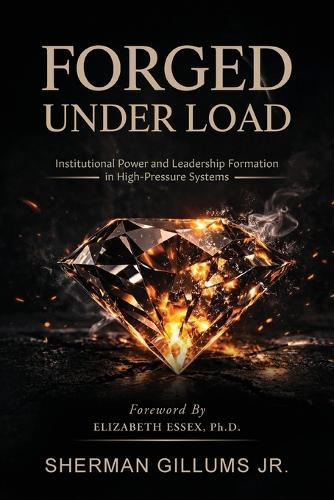
The most dangerous high-pressure systems are the ones that train compromise to feel like compliance. Leadership failures are usually explained the same way. A CEO lacked integrity. A commander lost perspective. A manager ignored warning signs. Somewhere along the way, we decided institutional disasters begin with flawed people making flawed decisions. But what if that explanation is backwards? What if many leadership failures are not failures of character at all, but failures of formation? In high-pressure organizations, people are shaped long before they are tested. Institutions reward certain behaviors, punish others, and quietly teach leaders what survival requires. Protect the mission. Preserve the hierarchy. Do not slow the system down. Over time, compromise stops feeling like compromise. It starts feeling normal. Then the scandal breaks. The Boeing 737 MAX crashes. NASA overlooks another warning sign. The VA Phoenix crisis erupts into public view. And the same institutions that spent years rewarding the behavior suddenly describe the outcome as an unforeseeable ethical failure. In Forged Under Load, Dr. Sherman Gillums Jr. draws on decades of leadership experience in the U.S. Marine Corps, the Department of Homeland Security, and other high-stakes institutions to challenge one of the most influential assumptions in modern leadership study: that ethical collapse begins with bad people. Instead, he introduces a groundbreaking framework for understanding organizational behavior, ethical leadership, institutional culture, and decision-making under pressure: the Leadership Formation-Cost Diagnostic (LFCD). The LFCD shifts the focus away from personality and toward formation. Why do good people inside respected organizations repeatedly produce damaging outcomes? Why do leadership development programs fail to prevent organizational dysfunction? Why do intelligent professionals normalize decisions they once believed they would resist? Through gripping case studies involving the Boeing 737 MAX disaster, NASA's catastrophic failures, the VA Phoenix access crisis, military leadership systems, and institutional decision-making under pressure, Gillums reveals how organizations condition ethical behavior long before visible collapse occurs. Inside, you will discover: - Why traditional leadership development models often fail in high-pressure environments - How organizational culture quietly shapes ethical decision-making - Why ""bad apples"" explanations conceal deeper structural problems - How institutions normalize ethical drift before leaders recognize it themselves - Practical ways to identify hidden formation pressures inside your own organization - A new framework for ethical leadership, organizational psychology, and systems thinking leadership Part leadership book, part organizational psychology, and part institutional failure analysis, Forged Under Load offers a provocative new approach to leadership, ethics, organizational behavior, and crisis decision-making. Because the most dangerous systems are rarely the ones openly demanding corruption. They are the ones that quietly train decent people to accept it.
Full Product Details
Author: Sherman Gillums, Jr ,
Elizabeth Essex, PH D
Publisher: Palmetto Publishing
Imprint: Palmetto Publishing
Dimensions:
Width: 15.20cm
, Height: 0.90cm
, Length: 22.90cm
Weight: 0.227kg
ISBN: 9798318833113
Pages: 162
Publication Date: 16 June 2026
Audience:
General/trade
,
General
Format: Paperback
Publisher's Status: Active
Availability: Not yet available

This item is yet to be released. You can pre-order this item and we will dispatch it to you upon its release.
Author Information
Dr. Sherman Gillums Jr. is a writer and scholar whose work examines how people are shaped by authority, pressure, and institutional power. He served twelve years in the United States Marine Corps and later held senior leadership roles across federal government and national nonprofit organizations. His work focuses on power, leadership formation, moral responsibility, and the long-term consequences of pre-reflective authority exercised in high-pressure systems.