Overview
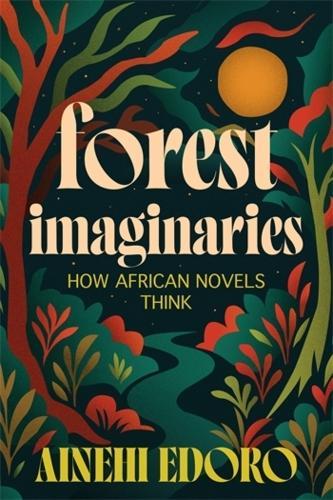
Forests in fiction are often understood simply as settings, symbols, or remnants of a premodern past. Yet many African novelists have turned to the forest to experiment with worldbuilding and to imagine new futures. This groundbreaking book explores the life of the forest in African fiction, showing how writers have used it to reinvent the novel's formal, aesthetic, and political possibilities. Ainehi Edoro argues that forests in African fiction are laboratories for unmaking and remaking the world, where writers break apart familiar forms to test alternate forms of life, knowledge, and power. Instead of treating the forest as a backdrop, these writers imagine it as a living structure: a space where politics, history, myth, violence, technology, the magical, and creativity animate fictional worlds. Spanning indigenous African narratives and contemporary science fiction, Forest Imaginaries traces the lineage of forest worlds in African literature: Chinua Achebe's evil forest, the cosmic forest in Wọle Ṣóyínká's mythic imagination, Thomas Mofolo's forest of imperial dreams, Amos Tutuola's endless fractal forest, and Nnedi Okorafor's aquatic forest of new ecological futures. This book rethinks African literary history by showing how African writers draw on the forest-and the wealth of Indigenous ideas about time, space, and storytelling it conjures-to transform the novel's aesthetic, political, and philosophical horizons.
Full Product Details
Author: Ainehi Edoro
Publisher: Columbia University Press
Imprint: Columbia University Press
ISBN: 9780231220750
ISBN 10: 0231220758
Pages: 304
Publication Date: 20 January 2026
Audience:
College/higher education
,
Professional and scholarly
,
Postgraduate, Research & Scholarly
,
Professional & Vocational
Format: Paperback
Publisher's Status: Active
Availability: Manufactured on demand

We will order this item for you from a manufactured on demand supplier.
Reviews
Ainehi Edoro’s Forest Imaginaries puts one in mind of the work of some of the greatest African philosophers and literary critics, such as V. Y. Mudimbe, Achille Mbembe, Paulin Hountondji, and Abiola Irele, among various others. What she traces of the dialectical relationship between settled communities and the ways in which this relationship both instantiates and varies ideas of sovereignty has deep implications not just for African literary studies and well beyond. This book is a field-defining tour de force. -- Ato Quayson, author of <i>Oxford Street, Accra and Tragedy</i> and <i>Postcolonial Literature</i> In Forest Imaginaries, Ainehi Edoro has produced something rare for any academic monograph, let alone a first one: a book that speaks both to and beyond its historical moment. Her analysis of forests as a force for spatial, political, and metaphysical organization across the long haul of African novel-writing is as pointed as it is fundamental. -- Jeanne-Marie Jackson, author of <i>The African Novel of Ideas: Philosophy and Individualism in the Age of Global Writing</i> In Forest Imaginaries, Edoro clears a path for critical understanding through an African canon that consequently has no interest in thinking in relation to the formal standard established by the European novel. The result is not only a decolonized history of the West African novel but also a fresh look at the limitations of Western anthropology’s nature/culture divide, a framework that renders inherently disposable all things of “nature,” including “bare” human life. A genuine groundbreaker! -- Nancy Armstrong, Gilbert, Louis, and Edward Lehrman Emeritus Professor, Duke University
Ainehi Edoro’s Forest Imaginaries puts one in mind of the work of some of the greatest African philosophers and literary critics, such as V. Y. Mudimbe, Achille Mbembe, Paulin Hountondji, and Abiola Irele. What she traces of the dialectical relationship between settled communities and the ways in which this relationship both instantiates and varies ideas of sovereignty has deep implications for African literary studies and well beyond. This book is a field-defining tour de force. -- Ato Quayson, author of <i>Tragedy and Postcolonial Literature</i> Avoiding the parochial and the polemical, Ainehi Edoro has found a new way to write about the African novel through the paradigm of forests. In so doing, she restores African literature to the imaginative and ritual domain and reveals its deeper soul. This is an important contribution to the critical discourse of one of the most significant literatures of our times. -- Ben Okri, author of <i>The Last Gift of the Master Artists: A Novel</i> In Forest Imaginaries, Ainehi Edoro has produced something rare for any academic monograph, let alone a first one: a book that speaks both to and beyond its historical moment. Her analysis of forests as a force for spatial, political, and metaphysical organization across the long haul of African novel writing is as pointed as it is fundamental. -- Jeanne-Marie Jackson, author of <i>The African Novel of Ideas: Philosophy and Individualism in the Age of Global Writing</i> In Forest Imaginaries, Edoro clears a path for critical understanding through an African canon that consequently has no interest in thinking in relation to the formal standard established by the European novel. The result is not only a decolonized history of the African novel but also a fresh look at the limitations of Western anthropology’s nature/culture divide, a framework that renders inherently disposable all things of “nature,” including “bare” human life. A genuine groundbreaker! -- Nancy Armstrong, Gilbert, Louis, and Edward Lehrman Emeritus Professor, Duke University
Author Information
Ainehi Edoro is a Mellon-Morgridge Assistant Professor of English and African cultural studies at the University of Wisconsin–Madison. She is the founding editor of Brittle Paper, a leading platform for African literary culture.