Overview
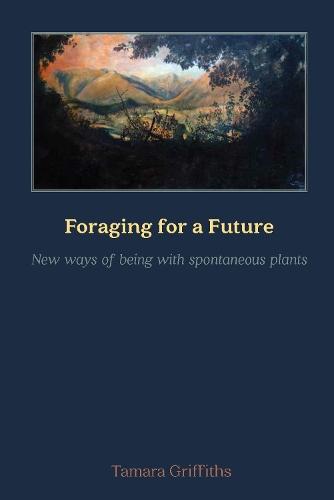
Based on more than five years participation in the Case Delle Erbe movement of the Apennine mountains of Central Italy, Foraging for a Future describes how spontaneous plants have become intrinsic to a social fabric involving an economy of exchange and living with greater freedom. It offers rare insights into a post-productive ‘experience economy’ that empowers people, and yet simultaneously decommodifies experiences – bypassing neoliberalism. In this book, Tamara Griffiths enters into dialogue with Heideggerian thinking, which is applied to the Case Delle Erbe with surprising outcomes. The results illuminate experiences of intersubjectivity beyond humans, showing how we can re-understand ourselves in nature, to create space for reciprocal and rich relationships with more-than-human communities.
Full Product Details
Author: Tamara Griffiths
Publisher: Sean Kingston Publishing
Imprint: Sean Kingston Publishing
Dimensions:
Width: 15.60cm
, Height: 1.40cm
, Length: 23.40cm
Weight: 0.365kg
ISBN: 9781912385645
ISBN 10: 1912385643
Pages: 256
Publication Date: 15 August 2025
Audience:
College/higher education
,
Adult education
,
Undergraduate
,
Further / Higher Education
Format: Paperback
Publisher's Status: Active
Availability: In Print

This item will be ordered in for you from one of our suppliers. Upon receipt, we will promptly dispatch it out to you. For in store availability, please contact us.
Reviews
Ever wanted to think and live differently? Beyond (and before) the hermetically sealed orthodoxy of advanced capitalism, there is another world. A ‘worlding’. This tremendous work, mixing a poetics of life lived with nature with deep philosophical reflection and application, is a book for everyone. The beautifully written and conceptualized anthropological essay asks questions we should all consider, about our finite and complex relationships on the planet; about community; about food; the Anthropocene (Capitalocene) and landscape; and about the rapacious march of capitalism and the pursuit of profit. Peter Varley Emeritus Professor of Tourism and Consumer Studies, Northumbria University Griffiths has written a rich and timely book that illustrates elegantly how to write in a post-phenomenological, non-representational manner by utilising storytelling. Her book offers inspiring insights for those readers interested in post-growth and diverse economies, bioregionalism, localism and slow movement. Most importantly, it gives glimpses of hope by showing other ways of being. Now more than ever we need storytelling that foregrounds how change could take place through joy and gratitude, instead of dwelling with apocalyptic futures. Michael Chapman, Emeritus Professor of English, University of KwaZulu-Natal, Durban This book is especially timely in today’s uncertain and chaotic world, where politics often dominate the global spotlight. It reminds us that we must focus on people, not politics, and rethink our relationship with nature. This is a must-read for teacher educators, school educators, and policymakers. Chenkai Chi, University of Windsor
Author Information
Tamara Griffiths is a Lecturer in the School of Adventure Studies, University of the Highlands and Islands, Scotland.