Overview
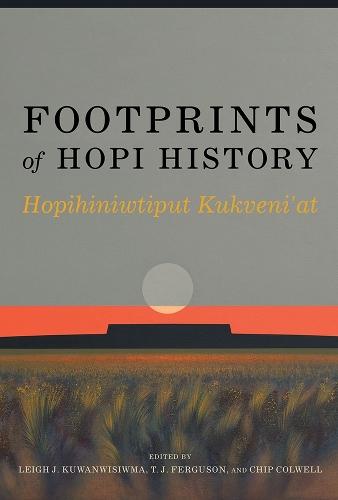
Kukveni 'footprints' are a powerful historical metaphor that the Hopi people use to comprehend their tangible heritage. Hopis say that the deity Máasaw instructed their ancestors to leave footprints during their migrations from their origin place to their home today as evidence that they had fulfilled a spiritual pact to serve as stewards of his land. Today's Hopis understand these footprints to be the archaeological remains of former settlements - pottery sherds, stone tools, petroglyphs, and other physical evidence of past use and occupation of the land. The fourteen chapters in Footprints of Hopi History: Hopihiniwtiput Kukveni’at focus on these Hopi footprints as they are understood through a variety of research techniques, including archaeology, ethnography, documentary history, plant genetics, and educational outreach. The editors and contributors offer fresh and innovative perspectives on Hopi archaeology and history, and demonstrate how one tribe has significantly advanced knowledge about its past through collaboration with archaeologists and cultural anthropologists. The book features managerial uses of research, cultural landscape theory, use of GIS in research, archaeological interpretations of social identity and immigration, analysis of corn genetics, heritage education of youth, and research of oral traditions and documentary history. Footprints of Hopi History highlights the Hopi tribe's leadership in sustained efforts to create bridges between tribal goals and anthropology, forging a path for others to follow.
Full Product Details
Author: Leigh J. Kuwanwisiwma ,
T. J. Ferguson ,
Chip Colwell
Publisher: University of Arizona Press
Imprint: University of Arizona Press
Dimensions:
Width: 14.90cm
, Height: 2.00cm
, Length: 22.60cm
Weight: 0.420kg
ISBN: 9780816540976
ISBN 10: 0816540977
Pages: 288
Publication Date: 14 November 2019
Audience:
Professional and scholarly
,
Professional & Vocational
Format: Paperback
Publisher's Status: Active
Availability: Available To Order

We have confirmation that this item is in stock with the supplier. It will be ordered in for you and dispatched immediately.
Reviews
In their preface, Ferguson and Colwell write that the book aspires to be a case study that illustrates how a program of inclusiveness and empowerment can provide impor-tant new methodological and theoretical frameworks for anthropology while serving a Native community's needs and reflecting its values (xiii). They have succeeded. --American Indian Culture and Research Journal An outstanding contribution to Hopi archaeology, history, and cultural heritage. This book sets a new standard for collaborative research and provides an important example of the Hopi people controlling their own representational histories. --Robert W. Preucel, editor of Archaeologies of the Pueblo Revolt: Identity, Meaning, and Renewal in the Pueblo World Provides a valuable historical overview of, and personal narratives about, Hopi efforts to protect their heritage. The contributors' different perspectives, as well as their varied interactions with Leigh Kuwanwisiwma and Hopi communities, bring forth a rich array of ideas and information. --George Nicholas, editor of Being and Becoming Indigenous Archaeologists
In their preface, Ferguson and Colwell write that the book aspires to be a case study that illustrates how a program of inclusiveness and empowerment can provide important new methodological and theoretical frameworks for anthropology while serving a Native community's needs and reflecting its values (xiii). They have succeeded. - American Indian Culture and Research Journal An outstanding contribution to Hopi archaeology, history, and cultural heritage. This book sets a new standard for collaborative research and provides an important example of the Hopi people controlling their own representational histories. - Robert W. Preucel, editor of Archaeologies of the Pueblo Revolt: Identity, Meaning, and Renewal in the Pueblo World Provides a valuable historical overview of, and personal narratives about, Hopi efforts to protect their heritage. The contributors' different perspectives, as well as their varied interactions with Leigh Kuwanwisiwma and Hopi communities, bring forth a rich array of ideas and information. - George Nicholas, editor of Being and Becoming Indigenous Archaeologists
Author Information
Leigh J. Kuwanwisiwma is a member of the Greasewood Clan from Paaqavi on Third Mesa and the director of the Hopi Cultural Preservation Office. T. J. Ferguson is a professor of anthropology at the University of Arizona and a principal investigator at Anthropological Research, LLC. Chip Colwell is the senior curator of anthropology at the Denver Museum of Nature and Science, and has collaborated with the Hopi tribe since 2002.