Overview
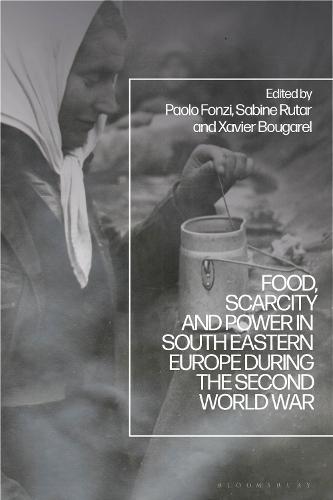
The experience of all occupied countries during the Second World War was characterised by severe material shortages. Food, most noticeably, became a scarcity in everyday life; and that food grew into a major stake for all political groups at this time. This book shines a much-needed spotlight on the political role of food in Southeastern Europe from 1939 to 1945. Controlling food was a key strategy adopted by all actors – be they occupiers, state institutions, resistance organizations, international humanitarian organizations or private interest groups – in substantiating their bid for power. As a predominantly agrarian area with a substantial peasant population, investigating this topic is particularly poignant for Southeastern Europe. From discussions of searching for and fighting for food to offering relief and instrumentalising of food politically, the chapters in this volume add nuance to discussions on the complex intertwined political and social dynamics of war and occupation. In so doing, this sophisticated study fills an important gap in our understanding of the Second World War, food policy, and the social history of Europe more broadly.
Full Product Details
Author: Paolo Fonzi (University of Eastern Piedmont, Italy) ,
Sabine Rutar (Leibniz Institute for East and Southeast European Studies, Germany) ,
Xavier Bougarel (CETOBAC, France)
Publisher: Bloomsbury Publishing PLC
Imprint: Bloomsbury Academic
Dimensions:
Width: 15.60cm
, Height: 2.80cm
, Length: 23.40cm
Weight: 0.454kg
ISBN: 9781350333956
ISBN 10: 1350333956
Pages: 272
Publication Date: 30 April 2026
Audience:
Professional and scholarly
,
Professional & Vocational
Format: Paperback
Publisher's Status: Active
Availability: Manufactured on demand

We will order this item for you from a manufactured on demand supplier.
Reviews
Masterfully researched and impressively detailed, Food, Scarcity and Power in Southeastern Europe During the Second World War, reveals the intimate and far-reaching impacts that high-level Axis decision-making had on the everyday lives of ordinary people. A stunning illustration of the boundless reach of World War II into the daily lives of so many. * Dr. Jacob Flaws, Assistant Teaching Professor and World War II Studies Master’s Program Lead, Arizona State University, USA *
""Masterfully researched and impressively detailed, Food, Scarcity and Power in Southeastern Europe During the Second World War, reveals the intimate and far-reaching impacts that high-level Axis decision-making had on the everyday lives of ordinary people. A stunning illustration of the boundless reach of World War II into the daily lives of so many."" --Dr. Jacob Flaws, Assistant Teaching Professor and World War II Studies Master's Program Lead, Arizona State University, USA
Author Information
Paolo Fonzi is Assistant Professor in Contemporary History at University of Eastern Piedmont, Italy. Sabine Rutar is Senior Research Associate at the Leibniz Institute for East and Southeast European Studies, Germany. Xavier Bougarel is CNRS Researcher at CETOBAC, the Center for Turkish, Ottoman, Balkan and Central Asian Studies, France.