Overview
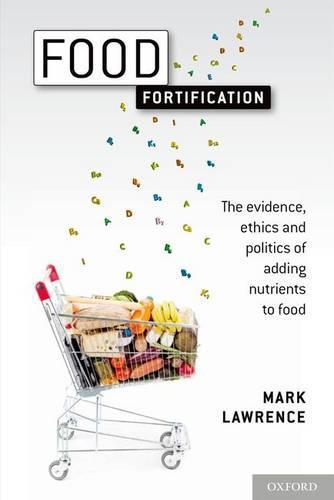
Food Fortification: The evidence, ethics, and politics of adding nutrients to food critically analyses mandatory food fortification as a technology for protecting and promoting public health. Increasing numbers of foods fortified with novel amounts and combinations of nutrients are being introduced into the food supplies of countries around the world to raise populations' nutrient intakes. It is a technology that is becoming more widely used to tackle a variety of public health problems such as micronutrient malnutrition. Food fortification policies and programs are controversial. There are disputes over the ethics of food fortification as everyone who consumes fortified foods will be exposed to raised levels of nutrients irrespective of whether they will gain any benefit and often without their knowledge. There are also contested views about the evidence that is available to support such activities. This book discusses mandatory food fortification as an intervention to protect and promote public health through presenting a synthesis of the findings from research investigations into three topical case studies of mandatory food fortification: Universal salt iodisation to help prevent iodine deficiency disorders; mandatory flour fortification with folic acid to help prevent neural tube defects; and mandatory milk fortification with vitamin D to help prevent vitamin D deficiency. Each case study is assessed for its public health benefits, risks and ethical considerations.
Full Product Details
Author: Mark Lawrence (Associate Professor and Director of the Food Policy Unit, World Health Organization Collaborating Centre for Obesity Prevention, Deakin University, Victoria, Australia)
Publisher: Oxford University Press
Imprint: Oxford University Press
Dimensions:
Width: 17.80cm
, Height: 1.50cm
, Length: 23.60cm
Weight: 0.428kg
ISBN: 9780199691975
ISBN 10: 0199691975
Pages: 280
Publication Date: 03 January 2013
Audience:
College/higher education
,
Postgraduate, Research & Scholarly
Format: Paperback
Publisher's Status: Active
Availability: To order

Stock availability from the supplier is unknown. We will order it for you and ship this item to you once it is received by us.
Reviews
This is an important book, and it should be read by students and others in the fields of nutrition, public health, medicine, and public administration. * Tidsskrift for Den Norske Legeforening *
This is an important book, and it should be read by students and others in the fields of nutrition, public health, medicine, and public administration. Tidsskrift for Den Norske Legeforening
Author Information
Mark has 30 years experience working in food policy at local, national and international levels. As Director of the University's Food Policy Unit, Mark's research interests focus on: food systems and health - in particular protecting food security in the context of environmental sustainability challenges; obesity prevention; and the politics of food fortification and dietary guidelines. Mark teaches at undergraduate and postgraduate level in food policy and food regulation and is the coordinator of the University's postgraduate public health nutrition programme. He is a regular presenter at national and international conferences and has published widely. Mark is a technical advisor to the World Health Organization, a Council Member of the World Public Health Nutrition Association, a member of Food Standards Australia New Zealand's Consumer and Public Health Dialogue and the Australian National Health and Medical Research Council's Dietary Guidelines Working Committee.