Overview
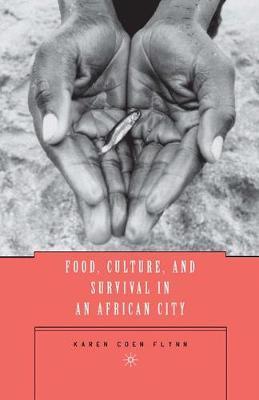
A rich ethnographic portrait of food-provisioning processes in a contemporary African city, offering valuable lessons about the powerful roles of gender, migration, exchange, sex, and charity in food acquisition. Based on anthropologist Karen Coen Flynn's study of Mwanza, Tanzania, this work draws on the personal accounts of over 350 market vendors, low, middle and high-income consumers, urban farmers as well as those, including children, who live on the streets. This strikingly original work offers interdisciplinary appeal to a broad audience of both students and professionals interested in anthropology, African studies, urban studies, gender studies and development economics.
Full Product Details
Author: K. Flynn
Publisher: Palgrave USA
Imprint: Palgrave Macmillan
Edition: 2005 ed.
Dimensions:
Width: 14.00cm
, Height: 1.80cm
, Length: 21.60cm
Weight: 0.355kg
ISBN: 9781403966391
ISBN 10: 1403966397
Pages: 254
Publication Date: 04 July 2005
Audience:
General/trade
,
College/higher education
,
General
,
Tertiary & Higher Education
Format: Paperback
Publisher's Status: Active
Availability: Awaiting stock

The supplier is currently out of stock of this item. It will be ordered for you and placed on backorder. Once it does come back in stock, we will ship it out for you.
Reviews
Food, Culture, and Survival in an African City presents an illuminating account of the dynamics of poverty and survival strategies in urban Africa. Using variables like culture, race, class and gender, Flynn explores how people negotiate life and survival in a poverty stricken environment. This is an excellent work that examines people's lives in urban Africa in the era of globalization and social and economic crisis. It is a must read book in contemporary urban african studies. --Joe Lugalla, University of New Hampshire<br> Karen Coen Flynn's Food, Culture, and Survival in the African City uses 10 months of in-depth ethnographic research in Mwanza, Tanzania to uncover the complex ways people gain access to food and the multiple reasons why they go hungry. In her path-breaking urban research, she interviews over three hundred city dwellers including street adults and children, urban farmers, market vendors, and men and women from diverse ethnic and class groups to explore how income, gender, age, and charity affect their survival. Flynn makes an invaluable contribution to the history of modern Africa, to food studies, and to policy-making in this clearly written and richly detailed book about the ethical and economic costs of hunger and inequality. --Carole Counihan <br> [This book] is original in the sense that it focuses on consumption itself: not just on the dynamics of supply into markets. Flynn is able to look both qualitatively and quantitatively at what 'food' is to various subsections of the urban population...[it] will certainly be a contribution to the field. --Jane I. Guyer, Johns Hopkins University A welcome edition to the literature on food studies, Africanstudies, anthropology, and sociology. In examining the lives of people negotiating the complexities of urban poverty, Flynn sheds light on the food provisioning process and how it is affected by poverty, gender, and ethnicity, as well as by the concepts of charity, health, and morality. The volume will be useful in the classroom and will serve as an important reference text...this richly detailed study is important for increasing our understanding of the ethical, emotional, and biological costs of hunger and food insecurity. - Geraldine Moreno-Black, University of Oregon, Gastronomica
Food, Culture, and Survival in an African City presents an illuminating account of the dynamics of poverty and survival strategies in urban Africa. Using variables like culture, race, class and gender, Flynn explores how people negotiate life and survival in a poverty stricken environment. This is an excellent work that examines people's lives in urban Africa in the era of globalization and social and economic crisis. It is a must read book in contemporary urban african studies. - Joe Lugalla, University of New Hampshire Karen Coen Flynn's Food, Culture, and Survival in the African City uses 10 months of in-depth ethnographic research in Mwanza, Tanzania to uncover the complex ways people gain access to food and the multiple reasons why they go hungry. In her path-breaking urban research, she interviews over three hundred city dwellers including street adults and children, urban farmers, market vendors, and men and women from diverse ethnic and class groups to explore how income, gender, age, and charity affect their survival. Flynn makes an invaluable contribution to the history of modern Africa, to food studies, and to policy-making in this clearly written and richly detailed book about the ethical and economic costs of hunger and inequality. - Carole Counihan [This book] is original in the sense that it focuses on consumption itself: not just on the dynamics of supply into markets. Flynn is able to look both qualitatively and quantitatively at what 'food' is to various subsections of the urban population...[it] will certainly be a contribution to the field. - Jane I. Guyer, Johns Hopkins University
Food, Culture, and Survival in an African City presents an illuminating account of the dynamics of poverty and survival strategies in urban Africa. Using variables like culture, race, class and gender, Flynn explores how people negotiate life and survival in a poverty stricken environment. This is an excellent work that examines people's lives in urban Africa in the era of globalization and social and economic crisis. It is a must read book in contemporary urban african studies. --Joe Lugalla, University of New Hampshire<br> Karen Coen Flynn's Food, Culture, and Survival in the African City uses 10 months of in-depth ethnographic research in Mwanza, Tanzania to uncover the complex ways people gain access to food and the multiple reasons why they go hungry. In her path-breaking urban research, she interviews over three hundred city dwellers including street adults and children, urban farmers, market vendors, and men and women from diverse ethnic and class groups to explore how
Food, Culture, and Survival in an African City presents an illuminating account of the dynamics of poverty and survival strategies in urban Africa. Using variables like culture, race, class and gender, Flynn explores how people negotiate life and survival in a poverty stricken environment. This is an excellent work that examines people's lives in urban Africa in the era of globalization and social and economic crisis. It is a must read book in contemporary urban african studies. --Joe Lugalla, University of New Hampshire<br> Karen Coen Flynn's Food, Culture, and Survival in the African City uses 10 months of in-depth ethnographic research in Mwanza, Tanzania to uncover the complex ways people gain access to food and the multiple reasons why they go hungry. In her path-breaking urban research, she interviews over three hundred city dwellers including street adults and children, urban farmers, market vendors, and men and women from diverse ethnic and class groups to explore how income, gender, age, and charity affect their survival. Flynn makes an invaluable contribution to the history of modern Africa, to food studies, and to policy-making in this clearly written and richly detailed book about the ethical and economic costs of hunger and inequality. --Carole Counihan <br> [This book] is original in the sense that it focuses on consumption itself: not just on the dynamics of supply into markets. Flynn is able to look both qualitatively and quantitatively at what 'food' is to various subsections of the urban population...[it] will certainly be a contribution to the field. --Jane I. Guyer, Johns Hopkins University A welcome edition to the literature on food studies, African studies, anthropology, and sociology. In examining the lives of people negotiating the complexities of urban poverty, Flynn sheds light on the food provisioning process and how it is affected by poverty, gender, and ethnicity, as well as by the concepts of charity, health, and morality.
Food, Culture, and Survival in an African City presents an illuminating account of the dynamics of poverty and survival strategies in urban Africa. Using variables like culture, race, class and gender, Flynn explores how people negotiate life and survival in a poverty stricken environment. This is an excellent work that examines people's lives in urban Africa in the era of globalization and social and economic crisis. It is a must read book in contemporary urban african studies. --Joe Lugalla, University of New Hampshire<br> Karen Coen Flynn's Food, Culture, and Survival in the African City uses 10 months of in-depth ethnographic research in Mwanza, Tanzania to uncover the complex ways people gain access to food and the multiple reasons why they go hungry. In her path-breaking urban research, she interviews over three hundred city dwellers including street adults and children, urban farmers, market vendors, and men and women from diverse ethnic and class groups to explore ho
Author Information
KAREN COEN FLYNN is Assistant Professor of Anthropology at the University of Akron, USA.