Overview
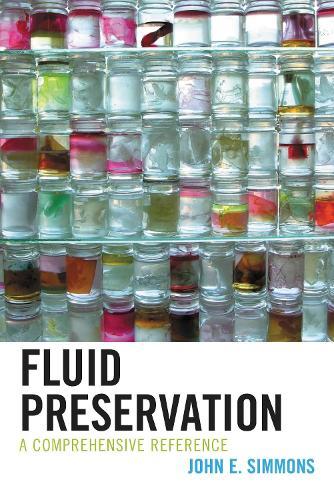
Fluid preservation refers to specimens and objects that are preserved in fluids, most commonly alcohol and formaldehyde, but also glycerin, mineral oil, acids, glycols, and a host of other chemicals that protect the specimen from deterioration. Some of the oldest natural history specimens in the world are preserved in fluid. Despite the fact that fluid preservation has been practiced for more than 350 years, this is the only handbook that summarize all that is known about this complex and often confusing topic. Fluid Preservation: A Comprehensive Reference covers the history and techniques of fluid preservation and how to care for fluid preserved specimens in collections. More than 900 references on fluid preservation were reviewed for this project.An historical survey of preservative recipes provides for guidance for museums with older collections (many fluid preservatives contain hazardous chemicals). Current standards and best practices for collection care and management are presented.Current and controversial topics (e.g., the preservation of DNA, alternatives to alcohol and formaldehyde) are discussed and fully referenced.Health and safety issues involved with caring for fluid preserved collections are discussed.The final chapter addresses fluid preserved specimens as cultural products and their use in art, literature, film, and song. Although most fluid-preserved specimens are found in natural history and medical museums, it is not at all uncommon to find them in art museums, history museums, and science centers. In addition to animals, plants, and anatomical specimens, fluid preserved collections include some minerals and fossils and many other objects. Fluid Preservation is an essential reference for: Natural history curatorsNatural history collections managers ConservatorsMedical and anatomical museum collections managers and curatorsArt and history museum staff who have fluid preserved specimens and objects in their care (e.g., works by Damien Hirst)Private collectorsResearchers using museum collections as sources of DNA, isotopes, etc.Health and safety professionalsExhibit planners and designersMuseum facilities planners and managersPeople interested in the history of sciencePeople interested in the history of natural history museumsMuseum studies students
Full Product Details
Author: John E. Simmons
Publisher: Bloomsbury Publishing Plc
Imprint: Rowman & Littlefield
Dimensions:
Width: 16.30cm
, Height: 3.10cm
, Length: 23.40cm
Weight: 0.667kg
ISBN: 9781442229655
ISBN 10: 1442229659
Pages: 364
Publication Date: 15 May 2014
Audience:
Professional and scholarly
,
Professional & Vocational
Format: Hardback
Publisher's Status: Active
Availability: In Print

This item will be ordered in for you from one of our suppliers. Upon receipt, we will promptly dispatch it out to you. For in store availability, please contact us.
Reviews
This examination of the science behind the fluid preservation of biological specimens is essential reading for curators and conservators alike. There is a wealth of information in this exceptionally well-researched book which is worth buying for the comprehensive reference list alone! John Simmons has also collected anecdotes and misconceptions about fluid preservation which makes his book a suitable read for those outside the small world of museum professionals. -- Simon Moore, Conservator of Natural Sciences and Cutlery Historian, The National Trust, United Kingdom
Author Information
John Simmons holds a B.A. in systematic ecology and an M.A. in Historical Administration and Museum Studies. In 1986, he completed the Collections Care Pilot Training Program (funded by the Bay Foundation) to become one of 30 people in the country to receive specialized training in conservation and collections care. He has spent a total of 30 years as collections manager in two of the largest collections of fluid preserved specimens in the United States (the California Academy of Sciences and the Biodiversity Research Center at the University of Kansas). He has published extensively on collections care topics and conducted seminars, workshops, and training programs in the US, Latin America, Asia, the Middle East, and Europe on the care of natural history collections (his previous publications include the AAM standard reference on collections management policies).