Overview
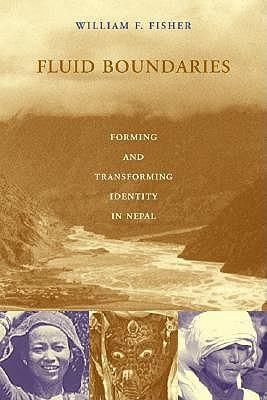
More than an ethnography, this book clarifies one of the most important current debates in anthropology: How should anthropologists regard culture, history, and the power process? Since the 1980s, the Thakali of Nepal have searched for an identity and a clarification of their ""true"" culture and history in the wake of their rise to political power and achievement of economic success. Although united in this search, the Thakali are divided as to the answers that have been proposed: the ""Hinduization"" of religious practices, the promotion of Tibetan Buddhism, the revival of practices associated with the Thakali shamans, and secularization. Ironically, the attempts by the Thakali to define their identity reveal that to return to tradition they must first re-create it - but this process of re-creation establishes it in a way in which it has never existed. To return to ""tradition"" - to become Thakali again - is, in a way, to become Thakali for the very first time.
Full Product Details
Author: William F. Fisher
Publisher: Columbia University Press
Imprint: Columbia University Press
Dimensions:
Width: 15.60cm
, Height: 2.20cm
, Length: 23.40cm
Weight: 0.536kg
ISBN: 9780231110860
ISBN 10: 0231110863
Pages: 256
Publication Date: 03 December 2001
Audience:
Professional and scholarly
,
Professional & Vocational
Format: Hardback
Publisher's Status: Out of Print
Availability: Out of stock

Reviews
This authoritative account of Thakali society remains an extremely welcome addition to... the wider body of anthropological research into the political implications of the social construction of cultural identity. -- Michael Wilmore, University of Adelaide, Australia, Ethnos Fluid Boundaries offers a sophisticated and intellectual evaluation... The book is an essential addition. -- Mark Turin, Journal of the Royal Anthropological Institute His final arguments are well made. He moves questions of ethnic identity on from quests for coherence and authenticity by actors and scholars to a matter of when and where ethnicity becomes an issue. -- Ben Campbell, Social Anthropology
""This authoritative account of Thakali society remains an extremely welcome addition to... the wider body of anthropological research into the political implications of the social construction of cultural identity."" -- Michael Wilmore, University of Adelaide, Australia, Ethnos "" Fluid Boundaries offers a sophisticated and intellectual evaluation... The book is an essential addition."" -- Mark Turin, Journal of the Royal Anthropological Institute ""His final arguments are well made. He moves questions of ethnic identity on from quests for coherence and authenticity by actors and scholars to a matter of when and where ethnicity becomes an issue."" -- Ben Campbell, Social Anthropology
Author Information
William F. Fisher is associate professor of anthropology at Harvard University.