Overview
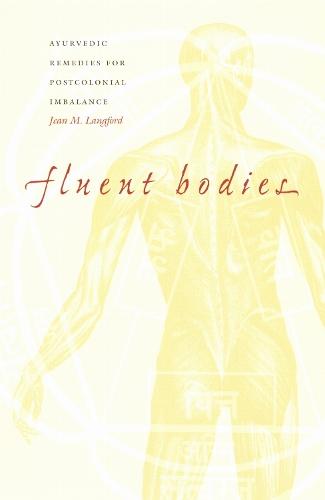
Fluent Bodies examines the modernization of the indigenous healing practice, Ayurveda, in India. Combining contemporary ethnography with a study of key historical moments as glimpsed through early-twentieth-century texts, Jean M. Langford argues that as Ayurveda evolved from an eclectic set of healing practices into a sign of Indian national culture, it was reimagined as a healing force not simply for bodily disorders but for colonial and postcolonial ills. Interweaving theory with narrative, Langford explores the strategies of contemporary practitioners who reconfigure Ayurvedic knowledge through institutions and technologies such as hospitals, anatomy labs, clinical trials, and sonograms. She shows how practitioners appropriate, transform, or circumvent the knowledge practices implicit in these institutions and technologies, destabilizing such categories as medicine, culture, science, symptom, and self, even as they deploy them in clinical practice. Ultimately, this study points to the future of Ayurveda in a transnational era as a remedy not only for the wounds of colonialism but also for an imagined cultural emptiness at the heart of global modernity. Students and scholars of postcolonial theory, medical anthropology, South Asia, and science studies will be enriched by this book.
Full Product Details
Author: Jean M. Langford
Publisher: Duke University Press
Imprint: Duke University Press
Dimensions:
Width: 15.40cm
, Height: 2.80cm
, Length: 22.80cm
Weight: 0.726kg
ISBN: 9780822329312
ISBN 10: 082232931
Pages: 328
Publication Date: 02 October 2002
Audience:
Professional and scholarly
,
Professional & Vocational
Format: Hardback
Publisher's Status: Active
Availability: In Print

This item will be ordered in for you from one of our suppliers. Upon receipt, we will promptly dispatch it out to you. For in store availability, please contact us.
Reviews
[A] fine example of contemporary research located within a post-modern framework. --Farah M. Shroff, Canadian Review of Sociology and Anthropology [I]lluminating... [Langford's] accessible examination of the neo-orientalism with which modern Ayurveda and the development of its terminology is constructed will be of importance to scholars (and students) of a variety of disciplines. --Frederick M. Smith, Religious Studies Review This is an important book. Jean M. Langford provides an insightful description of how different ayurvedic traditions developed and coexisted in both colonial and independent India... The author's formidable linguistic, analytical, and writing skills shine through in this book... [C]ompelling and instructive... [U]ndergraduates and postgraduates, as well as teachers in history and anthropology departments worldwide, are likely to find it of great interest. --Sanjoy Bhattacharya, American Historical Review Also reviewed in Critical Sociology. Listed in Journal of Asian History and, Bulletin of the History of Medicine. Mixed review in Australian Journal of Anthropology
[A] fine example of contemporary research located within a post-modern framework. --Farah M. Shroff, Canadian Review of Sociology and Anthropology [I]lluminating... [Langford's] accessible examination of the neo-orientalism with which modern Ayurveda and the development of its terminology is constructed will be of importance to scholars (and students) of a variety of disciplines. --Frederick M. Smith, Religious Studies Review This is an important book. Jean M. Langford provides an insightful description of how different ayurvedic traditions developed and coexisted in both colonial and independent India... The author's formidable linguistic, analytical, and writing skills shine through in this book... [C]ompelling and instructive... [U]ndergraduates and postgraduates, as well as teachers in history and anthropology departments worldwide, are likely to find it of great interest. --Sanjoy Bhattacharya, American Historical Review Also reviewed in Critical Sociology. Listed in Journal of Asian History and, Bulletin of the History of Medicine. Mixed review in Australian Journal of Anthropology
This rich study incorporates a wide range of contemporary and historical materials to make wonderful theoretical interventions into the literature on Ayurveda and India. Langford pulls the reader into a new understanding of the nuanced relationships between history, nation, modernity, clinical debate, and the practices of Ayurveda. -Vincanne Adams, author of Doctors for Democracy: Health Professionals in the Nepal Revolution
Author Information
Jean M. Langford is Assistant Professor of Anthropology at the University of Minnesota.