Overview
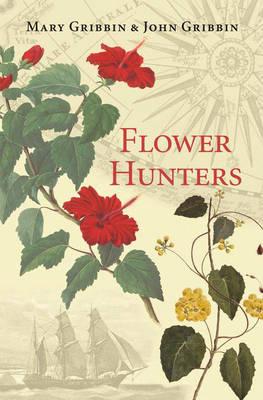
The flower hunters were intrepid explorers - remarkable, eccentric men and women who scoured the world in search of extraordinary plants from the middle of the seventeenth to the end of the nineteenth century, and helped establish the new science of botany. For these adventurers, the search for new, undiscovered plant specimens was something worth risking - and often losing - their lives for. From the Douglas-fir and the monkey puzzle tree, to exotic orchids and azaleas, many of the plants that are now so familiar to us were found in distant regions of the globe, often in wild and unexplored country, in impenetrable jungle, and in the face of hunger, disease, and hostile locals. It was specimens like these, smuggled home by the flower hunters, that helped build the great botanical collections, and lay the foundations for the revolution in our understanding of the natural world that was to follow. Here, the adventures of eleven such explorers are brought to life, describing not only their extraordinary daring and dedication, but also the lasting impact of their discoveries both on science, and on the landscapes and gardens that we see today.
Full Product Details
Author: Mary Gribbin ,
John Gribbin
Publisher: Oxford University Press
Imprint: Oxford University Press
Dimensions:
Width: 15.60cm
, Height: 3.60cm
, Length: 23.40cm
Weight: 0.725kg
ISBN: 9780192807182
ISBN 10: 0192807188
Pages: 352
Publication Date: 01 June 2008
Audience:
General/trade
,
General
Format: Hardback
Publisher's Status: Active
Availability: To order

Stock availability from the supplier is unknown. We will order it for you and ship this item to you once it is received by us.
Reviews
wonderful jim blogs
Sharp, vest-pocket sketches of a dozen intrepid plant collectors by the veteran popular-science team (Annus Mirabilis: 1905, Albert Einstein, and the Theory of Relativity, 2005, etc.).From the mid-17th century through the end of the 19th, pioneering botanists passionately strove to understand the natural world. At first blush, plant collecting seems an innocuous activity, but the Gribbins make it clear that the great collectors were a special breed: They traveled to distant places and combined extraordinary fortitude with the talents of polymaths, diplomats and logicians. Though the authors' prose can be prim and obvious ( it seems appropriate to look at the work which made his reputation ), for the most part they invest their subjects with a well-deserved air of adventure. These individuals battled government interference with the free pursuit of knowledge and grappled with evidence that the world was much older than biblical chronology allowed. To puzzle out obfuscations and gather their quarry, they spent years in remote climes, where they were frequently regarded with dangerous suspicion and almost as frequently became direly ill. Among these swashbucklers were Richard Spruce, who obtained the seeds of the quinine tree; Robert Fortune, chiefly responsible for developing the black tea industry in India; Joseph Hooker, who brought home the rhododendrons of Sikkim; and Francis Masson, whom we have to thank for the Red Hot Pokers. Awarded the Star of India for his work, Hooker wrote happily that he felt this was recognition of hard work under difficulties, of obstacles overcome, and of brilliant deeds. This description applies equally well to Marianne North's astonishing travels to almost every continent and countless remote islands in search of the exotic plants she captured in botanical paintings now exhibited at Kew Gardens: a beautiful, and scientifically valuable record. The Gribbins also spend time on the plant hunters' incidental activities, such as observing the transit of Venus and identifying the magnetic pole.Occasionally staid but erudite portraits of heroic botanists. (Kirkus Reviews)
A compelling romp through the history of plant collecting. Stephen Moss, The Guardian
Author Information
Mary Gribbin and John Gribbin are among the best-known current popular science writers. Together, they have written many acclaimed books, including Ice Age, FitzRoy, Stardust, and Big Numbers. Mary is a Visiting Fellow at the University of Sussex, and a Fellow of the Royal Geographical Society with a special interest in plants and exploration. John is also a Visiting Fellow at the University of Sussex, a Fellow of the Royal Society of Arts, and the author of books including The Universe: A Biography, In Search of Schrodinger's Cat, and Science: A History.