Overview
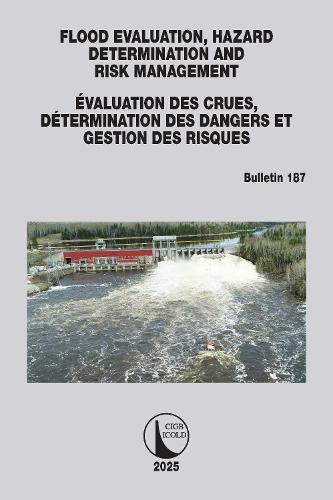
Design criteria for the construction or rehabilitation of dams and hydraulic structures generally begin with a section defining the design flood. Flood determination methods have evolved over the years, but must continue to progress given the degree of uncertainty surrounding the assessment of extreme floods and the fact that factors external to flooding must be taken into account in risk assessment. This ICOLD Bulletin 187 follows in the footsteps of the previous one. It consists of three main chapters following the introductory chapter. The second chapter examines the main aspects of flood volume. The third chapter follows on from the previous bulletin and looks in more detail at stochastic approaches to flood risk assessment. The final chapter deals with the forecasting aspects of proactive flood management. Case studies illustrating short-, medium- and long-term management challenges are presented in Appendix A. Les critères de conception pour la construction ou la réhabilitation des barrages et des structures hydrauliques commencent généralement par une section définissant la crue de projet. Les méthodes de détermination des crues ont évolué au fil des ans, mais elles doivent continuer à progresser étant donné le degré d'incertitude concernant l'évaluation des crues extrêmes et le fait que les facteurs externes aux crues doivent être pris en compte dans l'évaluation des risques. Ce ICOLD Bulletin 187 suit les traces du précédent bulletin. Il se compose de trois chapitres principaux faisant suite au chapitre d'introduction. Le deuxième chapitre examine les principaux aspects liés au volume des crues. Le troisième chapitre fait suite au bulletin précédent et aborde plus en détail les approches stochastiques concernant l'évaluation des risques de crues. Le dernier chapitre traite des aspects prévisionnels liés à la gestion proactive des crues. Des études de cas illustrant les défis de gestion à court, moyen ou long terme sont présentées à l'annexe A.
Full Product Details
Author: Cigb Icold
Publisher: Taylor & Francis Ltd
Imprint: CRC Press
Weight: 0.340kg
ISBN: 9781032987354
ISBN 10: 1032987359
Pages: 206
Publication Date: 14 April 2025
Audience:
College/higher education
,
Professional and scholarly
,
Tertiary & Higher Education
,
Professional & Vocational
Format: Paperback
Publisher's Status: Active
Availability: In Print

This item will be ordered in for you from one of our suppliers. Upon receipt, we will promptly dispatch it out to you. For in store availability, please contact us.
Author Information
The Commission Internationale des Grands Barrages (CIGB) / International Commission on Large Dams (ICOLD) is a non-governmental International Organization which provides a forum for the exchange of knowledge and experience in dam engineering. The Organization leads the profession in ensuring that dams are built safely, efficiently, economically, and without detrimental effects on the environment. Its original aim was to encourage advances in the planning, design, construction, operation, and maintenance of large dams and their associated civil works, by collecting and disseminating relevant information and by studying related technical questions. Since the late sixties, focus was put on subjects of current concern such as dam safety, monitoring of performance, reanalysis of older dams and spillways, effects of ageing and environmental impact. More recently, new subjects include cost studies at the planning and construction stages, harnessing international rivers, information for the public at large, and financing.