Overview
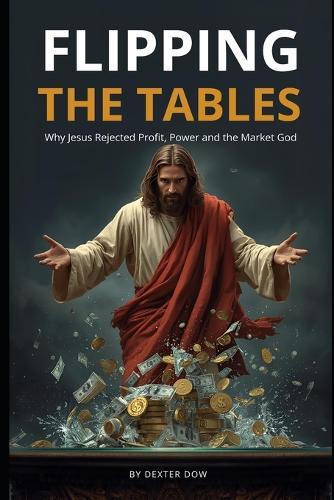
What if Jesus wasn't misunderstood-just inconvenient? What if his teachings weren't vague moral poetry, but a direct assault on the economic systems we now treat as inevitable? What if the reason Christianity fits so comfortably inside capitalism today isn't because Jesus approved of it-but because his message was carefully neutralized? This book begins with a moment that refuses to be spiritualized. Jesus walks into the Temple. He sees merchants, money changers, and religious authorities profiting from access to God. And he does not debate them. He flips their tables. Not metaphorically. Physically. That act-public, disruptive, confrontational-sets the tone for everything that follows. Because the Jesus who overturned tables did not merely oppose greed. He opposed systems that turned human need into profit and worship into transaction. Flipping the Tables makes a simple but explosive claim: Jesus would not participate in capitalism. Not because capitalism lacks charity. Not because markets are inherently evil. But because capitalism, as a system, requires conditions Jesus consistently confronted-poverty, debt, exclusion, and coercion-to function. This is not a book about being nicer within unjust systems. It is a book about why those systems exist-and why Jesus challenged them. Modern Christianity often reduces Jesus to a teacher of personal virtue: be kind, be generous, be humble. Those qualities matter-but they were never the center of his message. Jesus spoke constantly about money, debt, labor, land, power, and poverty. He confronted landlords, creditors, religious elites, and political authorities. He aligned himself with workers, the poor, the indebted, and the excluded-not sentimentally, but structurally. He did not ask people to feel guilty. He asked them to choose. Between God and Mammon. Between accumulation and community. Between profit and people. Capitalism insists those choices are false. Jesus insisted they were unavoidable. Across twenty chapters, Flipping the Tables walks carefully and relentlessly through the life and teachings of Jesus-not as a mascot for modern ideology, but as a first-century Jewish prophet confronting empire, exploitation, and religious complicity. It shows why wealth was spiritually dangerous in his worldview, why poverty was never accidental, why debt was a form of enslavement, why charity often serves as an alibi for injustice, and why claims that ""Jesus wasn't political"" collapse under even minimal scrutiny. It also asks what this means now-in a world where healthcare is commodified, housing is hoarded, education is financed through debt, and labor is treated as disposable. This argument is uncomfortable because it threatens something real. Capitalism is not just an economic system; it is a moral formation. It teaches people how to measure worth, success, and responsibility-and how to tolerate suffering as long as it remains distant. Jesus dismantles that formation. He refuses to measure worth by productivity. He refuses to measure blessing by abundance. He refuses to treat suffering as inevitable. This book does not accuse individuals of bad intentions. It exposes systems that produce harm regardless of intention. It refuses the comfort of neutrality. It insists that participation, silence, and benefit all carry moral weight. Jesus understood this. That is why he did not offer balance. He offered allegiance. And why flipping the tables was never a metaphor.
Full Product Details
Author: Dexter Dow
Publisher: Independently Published
Imprint: Independently Published
Dimensions:
Width: 15.20cm
, Height: 0.90cm
, Length: 22.90cm
Weight: 0.222kg
ISBN: 9798245459684
Pages: 160
Publication Date: 24 January 2026
Audience:
General/trade
,
General
Format: Paperback
Publisher's Status: Active
Availability: Available To Order

We have confirmation that this item is in stock with the supplier. It will be ordered in for you and dispatched immediately.