Overview
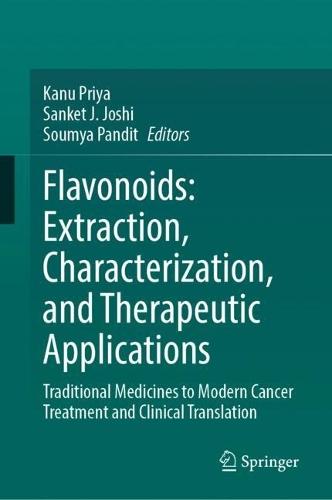
This book examines the role of flavonoids from their origins in traditional medicine to their modern applications in cancer treatment. By connecting ancient remedies with contemporary pharmacological advances, it highlights the growing potential of flavonoids in oncology. Key concepts include the isolation and purification of flavonoids, their role as antioxidants and anti-inflammatory agents, and their ability to modulate cancer cell signaling pathways. The book also examines the synergistic effects of flavonoids when combined with conventional cancer therapies, providing insights into ongoing clinical trials. This work uncovers the biochemical mechanisms of flavonoids and their therapeutic potential, making it an essential resource for researchers and practitioners alike. It addresses the growing interest in combining ancient knowledge with modern techniques for disease prevention and treatment, particularly in oncology. Ideal for senior undergraduate and graduate students, industry professionals, and academics, this book serves as a vital reference for anyone involved in cancer research, herbal medicine, pharmacology, and integrative healthcare. By providing both historical context and contemporary applications, this book is essential for anyone interested in the past and present impact of flavonoid research.
Full Product Details
Author: Kanu Priya ,
Sanket J. Joshi ,
Soumya Pandit
Publisher: Springer Verlag, Singapore
Imprint: Springer Verlag, Singapore
ISBN: 9789819581641
ISBN 10: 9819581648
Pages: 368
Publication Date: 19 May 2026
Audience:
Professional and scholarly
,
Professional & Vocational
Format: Hardback
Publisher's Status: Forthcoming
Availability: Not yet available

This item is yet to be released. You can pre-order this item and we will dispatch it to you upon its release.
Author Information
Dr. Kanu Priya is an Associate Professor in the Department of Life Sciences, School of Bioscience and Technology, at Sharda University in Greater Noida, India. Her areas of specialization include Phyto-therapeutics, animal biotechnology, nanobiotechnology, environmental biotechnology, and pharmacology and toxicology. She teaches both graduate, postgraduate and PhD students in biotechnology and Life Sciences. She has won best women research award in 2025 by Springer Nature. Dr. Soumya Pandit is an Associate Professor at Sharda University, Greater Noida. He earned his PhD from IIT Kharagpur and completed postdoctoral research at the Zuckerberg Institute for Water Research, Ben-Gurion University of the Negev, with additional training at the University of Lleida, Spain. His research focuses on microbial electrochemical systems, bioenergy production, biofilms and biofouling, microalgal biofuels, and nanomaterials for bioenergy and fouling mitigation. He is currently working on enhancing biogas production and conducting life cycle assessment studies. Dr. Sanket Joshi is a Professor and Deputy Director at the Amity Institute of Microbial Technology, Amity University Rajasthan, India. He previously served as Deputy Director of the Oil & Gas Research Center and as an Application Specialist at Sultan Qaboos University, Oman. With 20 years of academic experience and four years in industrial R&D, his work focuses on energy, microbial biotechnology, and environmental bioremediation. He has been listed among the top 2% most highly cited scientists globally (2022–2025) for his contributions to the fields of Energy and Biotechnology.