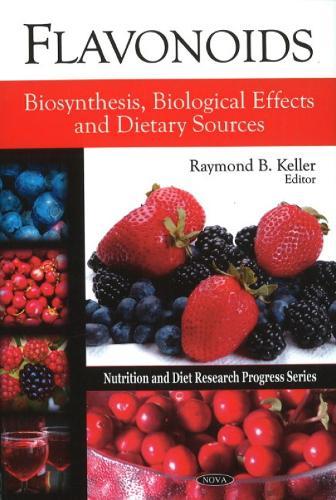
Flavonoids: Biosynthesis, Biological Effects & Dietary Sources

Author:   Raymond B Keller
Publisher:   Nova Science Publishers Inc
ISBN:  

9781607416227


Pages:   347
Publication Date:   01 September 2009
Format:   Hardback
Availability:   In Print   Availability explained
This item will be ordered in for you from one of our suppliers. Upon receipt, we will promptly dispatch it out to you. For in store availability, please contact us.

Our Price $446.16 Quantity:  
Add to Cart

Share |

Flavonoids: Biosynthesis, Biological Effects & Dietary Sources


Overview

Flavonoids, also referred to as bioflavonoids, are polyphenol antioxidants found naturally in plants. They are secondary metabolites, meaning they are organic compounds that have no direct involvement with the growth or development of plants. Flavonoids are plant nutrients that when consumed in the form of fruits and vegetables are non-toxic as well as potentially beneficial to the human body. Flavonoids are widely disbursed throughout plants and are what give the flowers and fruits of many plants their vibrant colours. They also play a role in protecting the plants from microbe and insect attacks. More importantly, the consumption of foods containing flavonoids has been linked to numerous health benefits. Though research shows flavonoids alone provide minimal antioxidant benefit due to slow absorption by the body, there is indication that they biologically trigger the production of natural enzymes that fight disease. Recent research indicates that flavonoids can be nutritionally helpful by triggering enzymes that reduce the risk of certain cancers, heart disease, and age-related degenerative diseases. Some research also indicates flavonoids may help prevent tooth decay and reduce the occurrence of common ailments such as the flu. These potential health benefits, many of which have been proven, have become of particular interest to consumers and food manufacturers. Foods that contain high amounts of flavonoids include blueberries, red beans, cranberries, and blackberries. Many other foods, including red and yellow fruits and vegetables and some nuts, also contain flavonoids. Red wine and certain teas also are rich in flavonoids.

Full Product Details

Author:   Raymond B Keller
Publisher:   Nova Science Publishers Inc
Imprint:   Nova Science Publishers Inc
Weight:   0.814kg
ISBN:  

9781607416227


ISBN 10:   1607416220
Pages:   347
Publication Date:   01 September 2009
Audience:   College/higher education ,  Professional and scholarly ,  Undergraduate ,  Postgraduate, Research & Scholarly
Format:   Hardback
Publisher's Status:   Active
Availability:   In Print   Availability explained
This item will be ordered in for you from one of our suppliers. Upon receipt, we will promptly dispatch it out to you. For in store availability, please contact us.

Table of Contents

Preface; Bioavailability & Metabolism of Dietary Flavonoids -- Much Known -- Much More to Discover; Cytoprotective activity of Flavonoids in relation to their Chemical Structures & Physicochemical Properties; Oligomeric Nature, Colloidal State, Rheology, Antioxidant Capacity & Antiviral Activity of Polyflavonoids; Grapefruit Flavonoids: naringin & naringinin; Development of Promising Natural-derived Molecules to improve Therapeutic Strategies; Effect of a Diet Rich in Cocoa Flavonoids on the Experimental Acute Inflammation; Mechanisms at the Root of Flavonoid Action in Cancer: A Step Toward Solving The Rubik's Cube; Antiophidian Mechanisms of Medicinal Plants; Molecular Targets of Flavonoids during Apoptosis in Cancer Cells; Flavan-3-ol Monomers & Condensed Tannins in Dietary & Medicinal Plants; Chemotaxonomic Applications of Flavonoids; Bioanalysis of Flavonoid Composition of Herbal Extracts & Dietary Supplements; Why is Bioavailability of Anthocyanins so low?; Index.

Reviews

Author Information

Tab Content 6

Author Website:  

Countries Available

All regions
Latest Reading Guide

April RG 26_2


Shopping Cart
Your cart is empty
Shopping cart
Mailing List