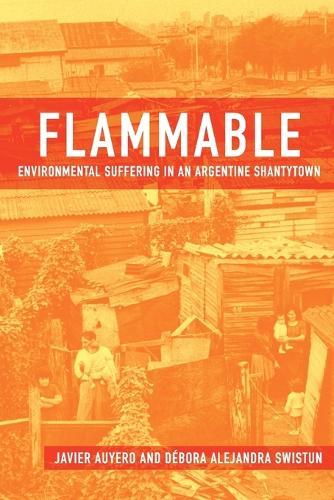
Full Product Details
Author: Javier Auyero (Lozano Long Professor of Latin American Sociology, Lozano Long Professor of Latin American Sociology, University of Texas-Austin) ,
Debora Alejandra Swistun
Publisher: Oxford University Press Inc
Imprint: Oxford University Press Inc
Dimensions:
Width: 15.20cm
, Height: 2.00cm
, Length: 23.10cm
Weight: 0.340kg
ISBN: 9780195372939
ISBN 10: 019537293
Pages: 208
Publication Date: 04 June 2009
Audience:
Professional and scholarly
,
Professional & Vocational
Format: Paperback
Publisher's Status: Active
Availability: To order

Stock availability from the supplier is unknown. We will order it for you and ship this item to you once it is received by us.
Reviews
The authors have accomplished an astounding analysis of the destruction-physical and psychological-of a people living in poverty, their world dominated by a multinational corporate giant whose toxic waste pollutes their everyday lives. This superb and moving political ethnography captures the meanings of contamination to the residents, who live in disaster-immobilized by the toxic uncertainty, powerless confusion, and mistake that ultimately normalize risk and danger. -Diane Vaughan, author of The Challenger Launch Decision In this stunning book, Auyero and Swistun dissect the 'slow-motion human and environmental disaster' wrought by the noxious mix of economic dispossession and extreme pollution in a slum of Buenos Aires. By disclosing how residents experience 'toxic uncertainty' in everyday life, they show why this poisonous habitat not only assaults their individual bodies, but also ravages their social defenses and cultural immunity. With its deft integration of fieldwork, social theory, and narrative, Flammable is a signal contribution that will be widely discussed, often emulated, but not surpassed for a long time to come. -Loic Wacquant, author of Urban Outcasts This brilliant ethnography of a polluted shantytown opens a new theoretical and topical frontier for urban poverty studies. The authors show how impoverished, poisoned residents, compelled to scramble for their daily economic survival in the context of larger political economic forces, are buffeted by competing discourses of agents of the state and civil society. They become trapped in a misrecognized toxic environment that imposes tremendous and ongoing physical suffering, psychic anxiety, and paralyzing uncertainty on them. -Philippe Bourgois, author of In Search of Respect A powerful study of environmental abuse and 'toxic suffering, ' this will acquaint readers in a personal way with a troubling and too-common plight. --Publishers Weekly.. .Distinct from much of th
The authors have accomplished an astounding analysis of the destruction-physical and psychological-of a people living in poverty, their world dominated by a multinational corporate giant whose toxic waste pollutes their everyday lives. This superb and moving political ethnography captures the meanings of contamination to the residents, who live in disaster-immobilized by the toxic uncertainty, powerless confusion, and mistake that ultimately normalize risk and danger. -Diane Vaughan, author of The Challenger Launch Decision In this stunning book, Auyero and Swistun dissect the 'slow-motion human and environmental disaster' wrought by the noxious mix of economic dispossession and extreme pollution in a slum of Buenos Aires. By disclosing how residents experience 'toxic uncertainty' in everyday life, they show why this poisonous habitat not only assaults their individual bodies, but also ravages their social defenses and cultural immunity. With its deft integration of fieldwork, social theory, and narrative, Flammable is a signal contribution that will be widely discussed, often emulated, but not surpassed for a long time to come. -Loic Wacquant, author of Urban Outcasts This brilliant ethnography of a polluted shantytown opens a new theoretical and topical frontier for urban poverty studies. The authors show how impoverished, poisoned residents, compelled to scramble for their daily economic survival in the context of larger political economic forces, are buffeted by competing discourses of agents of the state and civil society. They become trapped in a misrecognized toxic environment that imposes tremendous and ongoing physical suffering, psychic anxiety, and paralyzing uncertainty on them. -Philippe Bourgois, author of In Search of Respect A powerful study of environmental abuse and 'toxic suffering, ' this will acquaint readers in a personal way with a troubling and too-common plight. --Publishers Weekly.. .Distinct from much of the social movement literature, and also the ethnographies of the poor. --Contemporary Sociology
The authors have accomplished an astounding analysis of the destruction-physical and psychological-of a people living in poverty, their world dominated by a multinational corporate giant whose toxic waste pollutes their everyday lives. This superb and moving political ethnography captures the meanings of contamination to the residents, who live in disaster-immobilized by the toxic uncertainty, powerless confusion, and mistake that ultimately normalize risk and danger. -Diane Vaughan, author of The Challenger Launch Decision In this stunning book, Auyero and Swistun dissect the 'slow-motion human and environmental disaster' wrought by the noxious mix of economic dispossession and extreme pollution in a slum of Buenos Aires. By disclosing how residents experience 'toxic uncertainty' in everyday life, they show why this poisonous habitat not only assaults their individual bodies, but also ravages their social defenses and cultural immunity. With its deft integration of fieldwork, social theory, and narrative, Flammable is a signal contribution that will be widely discussed, often emulated, but not surpassed for a long time to come. -Loic Wacquant, author of Urban Outcasts This brilliant ethnography of a polluted shantytown opens a new theoretical and topical frontier for urban poverty studies. The authors show how impoverished, poisoned residents, compelled to scramble for their daily economic survival in the context of larger political economic forces, are buffeted by competing discourses of agents of the state and civil society. They become trapped in a misrecognized toxic environment that imposes tremendous and ongoing physical suffering, psychic anxiety, and paralyzing uncertainty on them. -Philippe Bourgois, author of In Search of Respect A powerful study of environmental abuse and 'toxic suffering, ' this will acquaint readers in a personal way with a troubling and too-common plight. --Publishers Weekly
<br> The authors have accomplished an astounding analysis of the destruction-physical and psychological-of a people living in poverty, their world dominated by a multinational corporate giant whose toxic waste pollutes their everyday lives. This superb and moving political ethnography captures the meanings of contamination to the residents, who live in disaster-immobilized by the toxic uncertainty, powerless confusion, and mistake that ultimately normalize risk and danger. -Diane Vaughan, author of The Challenger Launch Decision<p><br> In this stunning book, Auyero and Swistun dissect the 'slow-motion human and environmental disaster' wrought by the noxious mix of economic dispossession and extreme pollution in a slum of Buenos Aires. By disclosing how residents experience 'toxic uncertainty' in everyday life, they show why this poisonous habitat not only assaults their individual bodies, but also ravages their social defenses and cultural immunity. With its deft integration of fieldwo
<br> The authors have accomplished an astounding analysis of the destruction-physical and psychological-of a people living in poverty, their world dominated by a multinational corporate giant whose toxic waste pollutes their everyday lives. This superb and moving political ethnography captures the meanings of contamination to the residents, who live in disaster-immobilized by the toxic uncertainty, powerless confusion, and mistake that ultimately normalize risk and danger. -Diane Vaughan, author of The Challenger Launch Decision<p><br> In this stunning book, Auyero and Swistun dissect the 'slow-motion human and environmental disaster' wrought by the noxious mix of economic dispossession and extreme pollution in a slum of Buenos Aires. By disclosing how residents experience 'toxic uncertainty' in everyday life, they show why this poisonous habitat not only assaults their individual bodies, but also ravages their social defenses and cultural immunity. With its deft integration of fieldwork, social theory, and narrative, Flammable is a signal contribution that will be widely discussed, often emulated, but not surpassed for a long time to come. -Lo c Wacquant, author of Urban Outcasts<p><br> This brilliant ethnography of a polluted shantytown opens a new theoretical and topical frontier for urban poverty studies. The authors show how impoverished, poisoned residents, compelled to scramble for their daily economic survival in the context of larger political economic forces, are buffeted by competing discourses of agents of the state and civil society. They become trapped in a misrecognized toxic environment that imposes tremendous and ongoing physical suffering, psychic anxiety, and paralyzing uncertainty on them. -Philippe Bourgois, author of In Search of Respect<p><br> A powerful study of environmental abuse and 'toxic suffering, ' this will acquaint readers in a personal way with a troubling and too-common plight. --Publishers Weekly<p><br>
<br> The authors have accomplished an astounding analysis of the destruction-physical and psychological-of a people living in poverty, their world dominated by a multinational corporate giant whose toxic waste pollutes their everyday lives. This superb and moving political ethnography captures the meanings of contamination to the residents, who live in disaster-immobilized by the toxic uncertainty, powerless confusion, and mistake that ultimately normalize risk and danger. -Diane Vaughan, author of The Challenger Launch Decision<br> In this stunning book, Auyero and Swistun dissect the 'slow-motion human and environmental disaster' wrought by the noxious mix of economic dispossession and extreme pollution in a slum of Buenos Aires. By disclosing how residents experience 'toxic uncertainty' in everyday life, they show why this poisonous habitat not only assaults their individual bodies, but also ravages their social defenses and cultural immunity. With its deft integration of fieldwork,
Author Information
Javier Auyero is Joe R. and Teresa Lozano Long Professor of Latin American Sociology at the University of Texas at Austin, and is the author of, among other books, Routine Politics and Collective Violence in Argentina. Débora Alejandra Swistun received her BA in Anthropology from the University of La Plata, Argentina.