Overview
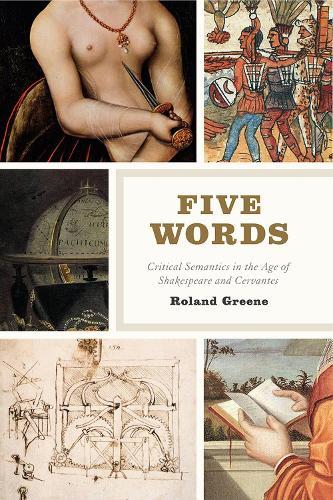
Blood. Invention. Language. Resistance. World. Five ordinary words that do a great deal of conceptual work in everyday life and literature. In this original experiment in critical semantics, Roland Greene considers how these words changed over the course of the sixteenth century and what their changes indicate about broader forces in science, politics, and other disciplines. Rather than analyzing works, careers, or histories, Greene discusses a broad swath of Renaissance and transatlantic literature—including Shakespeare, Cervantes, Camões, and Milton—in terms of the development of these five words. Aiming to shift the conversation around Renaissance literature from current approaches to riskier enterprises, Greene also proposes new methods that take advantage of digital resources like full-text databases, but still depend on the interpreter to fashion ideas out of ordinary language. Five Words is an innovative and accessible book that points the field of literary studies in an exciting new direction.
Full Product Details
Author: Roland Greene
Publisher: The University of Chicago Press
Imprint: University of Chicago Press
Dimensions:
Width: 14.00cm
, Height: 1.80cm
, Length: 21.60cm
Weight: 0.254kg
ISBN: 9780226709710
ISBN 10: 022670971
Pages: 224
Publication Date: 21 July 2020
Audience:
Professional and scholarly
,
Professional & Vocational
Format: Paperback
Publisher's Status: Active
Availability: Manufactured on demand

We will order this item for you from a manufactured on demand supplier.
Reviews
One of our leading theorists in the field of European Renaissance literature offers an absorbing and important discussion of five dynamical concepts, rooted in particular words, which underwent profound change in the age of Shakespeare and Cervantes. These writers do not merely designate the age: they are the most influential writers in the West, and the deepest users of the words that have shaped the mind of the West. To understand other cultures, we need to understand the limits and the range of our own culture. This book is a timely contribution to that effort. --Gordon Teskey, Harvard University Roland Greene's new book is a brilliant exercise in cultural and linguistic criticism. Drawing on broad study in half a dozen languages and serious engagement with recent developments in critical thought, Greene guides his readers through nuanced readings of a set of key terms that shape the emergence of modernity. He shows how such seemingly innocent words as 'world' and 'invention' hide entire galaxies of meaning that shape the culture of the early modern period. Along the way, he develops a set of critical paradigms that will influence our understanding of the intersection of language and culture far beyond the confines of this excellent study. --Timothy Hampton, University of California, Berkeley There is nothing like Five Words in current criticism. Grounded upon deep erudition, it represents a genuine breakthrough in critical methodology, conceptual history, and the social and cultural task of locating literature among the other discourses. Roland Greene's efforts to relate and interrelate the implications of the 'five words' shape an overarching argument about critical semantics that will have great impact upon the entire field of literary study. --William Kennedy, Cornell University Greene explores each of his words through sensitive, detailed readings. . . . Five Words reminds us of the importance of individual critical intelligence and offers a strong example of such intelligence at work. --Modern Philology Beautiful and evocative. . . . Written with the deep learning and associative sensibility of a true humanist and drawing on an astonishing range of works in order to capture the semantic explosion of the sixteenth and seventeenth centuries, Roland Greene's book is itself both inventive and worldly. --Julia Reinhard Lupton Studies in English Literature 1500-1900 A unique, compelling, and often dazzling approach to literature and culture of the early modern period. . . . Each chapter of Five Words is engaging and useful in its own right, and certainly research in any one of these five areas would be enriched by Greene's extensive work on that subject. The book's greatest achievement, however, is in demonstrating how these five words together animate the worlds of Renaissance thought and culture. --Comparative Literature Studies [T]he chapters' angular assertions work conceptually to deliver rather dazzling and unexpected insights. . . . His ability to illuminate texts as beleaguered as the initial sonnet of Sidney's Astrophil and Stella or the trial scene from The Merchant of Venice no less than a poem by Buchanan or a mixed-race account of the Spanish colonization of Peru confirms Greene's astonishing critical adroitness throughout. --Christopher Martin Sixteenth Century Journal [Greene's] unique approach allows for a range of insights--historical, cultural, and linguistic--that offer new ways of viewing the rise of modernity. . . . Highly recommended. --Choice [A] stunningly good book, erudite but lively, informed by a great depth and breadth of reading, and tackling difficult yet very important (some would say urgent) questions. It should be read by everyone with an interest in Renaissance literature, and in language itself. --Hannah Crawforth Renaissance Quarterly Five Words's erudition and scope are indisputable as it draws on a vast store of sources ranging from Cicero to Philip Sidney, Antonio Viera to the Inca Garcilaso, not to mention Shakespeare and Cervantes. --Comparative Drama
One of our leading theorists in the field of European Renaissance literature offers an absorbing and important discussion of five dynamical concepts, rooted in particular words, which underwent profound change in the age of Shakespeare and Cervantes. These writers do not merely designate the age: they are the most influential writers in the West, and the deepest users of the words that have shaped the mind of the West. To understand other cultures, we need to understand the limits and the range of our own culture. This book is a timely contribution to that effort. --Gordon Teskey, Harvard University Roland Greene's new book is a brilliant exercise in cultural and linguistic criticism. Drawing on broad study in half a dozen languages and serious engagement with recent developments in critical thought, Greene guides his readers through nuanced readings of a set of key terms that shape the emergence of modernity. He shows how such seemingly innocent words as 'world' and 'invention' hide entire galaxies of meaning that shape the culture of the early modern period. Along the way, he develops a set of critical paradigms that will influence our understanding of the intersection of language and culture far beyond the confines of this excellent study. --Timothy Hampton, University of California, Berkeley [Greene's] unique approach allows for a range of insights--historical, cultural, and linguistic--that offer new ways of viewing the rise of modernity. . . . Highly recommended. --Choice There is nothing like Five Words in current criticism. Grounded upon deep erudition, it represents a genuine breakthrough in critical methodology, conceptual history, and the social and cultural task of locating literature among the other discourses. Roland Greene's efforts to relate and interrelate the implications of the 'five words' shape an overarching argument about critical semantics that will have great impact upon the entire field of literary study. --William Kennedy, Cornell University A unique, compelling, and often dazzling approach to literature and culture of the early modern period. . . . Each chapter of Five Words is engaging and useful in its own right, and certainly research in any one of these five areas would be enriched by Greene's extensive work on that subject. The book's greatest achievement, however, is in demonstrating how these five words together animate the worlds of Renaissance thought and culture. --Comparative Literature Studies Greene explores each of his words through sensitive, detailed readings. . . . Five Words reminds us of the importance of individual critical intelligence and offers a strong example of such intelligence at work. --Modern Philology Five Words's erudition and scope are indisputable as it draws on a vast store of sources ranging from Cicero to Philip Sidney, Antonio Viera to the Inca Garcilaso, not to mention Shakespeare and Cervantes. --Comparative Drama [T]he chapters' angular assertions work conceptually to deliver rather dazzling and unexpected insights. . . . His ability to illuminate texts as beleaguered as the initial sonnet of Sidney's Astrophil and Stella or the trial scene from The Merchant of Venice no less than a poem by Buchanan or a mixed-race account of the Spanish colonization of Peru confirms Greene's astonishing critical adroitness throughout. --Christopher Martin Sixteenth Century Journal [A] stunningly good book, erudite but lively, informed by a great depth and breadth of reading, and tackling difficult yet very important (some would say urgent) questions. It should be read by everyone with an interest in Renaissance literature, and in language itself. --Hannah Crawforth Renaissance Quarterly Beautiful and evocative. . . . Written with the deep learning and associative sensibility of a true humanist and drawing on an astonishing range of works in order to capture the semantic explosion of the sixteenth and seventeenth centuries, Roland Greene's book is itself both inventive and worldly. --Julia Reinhard Lupton Studies in English Literature 1500-1900
One of our leading theorists in the field of European Renaissance literature offers an absorbing and important discussion of five dynamical concepts, rooted in particular words, which underwent profound change in the age of Shakespeare and Cervantes. These writers do not merely designate the age: they are the most influential writers in the West, and the deepest users of the words that have shaped the mind of the West. To understand other cultures, we need to understand the limits and the range of our own culture. This book is a timely contribution to that effort. --Gordon Teskey, Harvard University Roland Greene's new book is a brilliant exercise in cultural and linguistic criticism. Drawing on broad study in half a dozen languages and serious engagement with recent developments in critical thought, Greene guides his readers through nuanced readings of a set of key terms that shape the emergence of modernity. He shows how such seemingly innocent words as 'world' and 'invention' hide entire galaxies of meaning that shape the culture of the early modern period. Along the way, he develops a set of critical paradigms that will influence our understanding of the intersection of language and culture far beyond the confines of this excellent study. --Timothy Hampton, University of California, Berkeley There is nothing like Five Words in current criticism. Grounded upon deep erudition, it represents a genuine breakthrough in critical methodology, conceptual history, and the social and cultural task of locating literature among the other discourses. Roland Greene's efforts to relate and interrelate the implications of the 'five words' shape an overarching argument about critical semantics that will have great impact upon the entire field of literary study. --William Kennedy, Cornell University A unique, compelling, and often dazzling approach to literature and culture of the early modern period. . . . Each chapter of Five Words is engaging and useful in its own right, and certainly research in any one of these five areas would be enriched by Greene's extensive work on that subject. The book's greatest achievement, however, is in demonstrating how these five words together animate the worlds of Renaissance thought and culture. --Comparative Literature Studies Greene explores each of his words through sensitive, detailed readings. . . . Five Words reminds us of the importance of individual critical intelligence and offers a strong example of such intelligence at work. --Modern Philology Five Words's erudition and scope are indisputable as it draws on a vast store of sources ranging from Cicero to Philip Sidney, Antonio Viera to the Inca Garcilaso, not to mention Shakespeare and Cervantes. --Comparative Drama [T]he chapters' angular assertions work conceptually to deliver rather dazzling and unexpected insights. . . . His ability to illuminate texts as beleaguered as the initial sonnet of Sidney's Astrophil and Stella or the trial scene from The Merchant of Venice no less than a poem by Buchanan or a mixed-race account of the Spanish colonization of Peru confirms Greene's astonishing critical adroitness throughout. --Christopher Martin Sixteenth Century Journal [A] stunningly good book, erudite but lively, informed by a great depth and breadth of reading, and tackling difficult yet very important (some would say urgent) questions. It should be read by everyone with an interest in Renaissance literature, and in language itself. --Hannah Crawforth Renaissance Quarterly Beautiful and evocative. . . . Written with the deep learning and associative sensibility of a true humanist and drawing on an astonishing range of works in order to capture the semantic explosion of the sixteenth and seventeenth centuries, Roland Greene's book is itself both inventive and worldly. --Julia Reinhard Lupton Studies in English Literature 1500-1900 [Greene's] unique approach allows for a range of insights--historical, cultural, and linguistic--that offer new ways of viewing the rise of modernity. . . . Highly recommended. --Choice
Roland Greene's new book is a brilliant exercise in cultural and linguistic criticism. Drawing on broad study in half a dozen languages and serious engagement with recent developments in critical thought, Greene guides his readers through nuanced readings of a set of key terms that shape the emergence of modernity. He shows how such seemingly innocent words as 'world' and 'invention' hide entire galaxies of meaning that shape the culture of the early modern period. Along the way, he develops a set of critical paradigms that will influence our understanding of the intersection of language and culture far beyond the confines of this excellent study. --Timothy Hampton, University of California, Berkeley One of our leading theorists in the field of European Renaissance literature offers an absorbing and important discussion of five dynamical concepts, rooted in particular words, which underwent profound change in the age of Shakespeare and Cervantes. These writers do not merely designate the age: they are the most influential writers in the West, and the deepest users of the words that have shaped the mind of the West. To understand other cultures, we need to understand the limits and the range of our own culture. This book is a timely contribution to that effort. --Gordon Teskey, Harvard University A unique, compelling, and often dazzling approach to literature and culture of the early modern period. . . . Each chapter of Five Words is engaging and useful in its own right, and certainly research in any one of these five areas would be enriched by Greene's extensive work on that subject. The book's greatest achievement, however, is in demonstrating how these five words together animate the worlds of Renaissance thought and culture. --Comparative Literature Studies Five Words's erudition and scope are indisputable as it draws on a vast store of sources ranging from Cicero to Philip Sidney, Antonio Viera to the Inca Garcilaso, not to mention Shakespeare and Cervantes. --Comparative Drama [Greene's] unique approach allows for a range of insights--historical, cultural, and linguistic--that offer new ways of viewing the rise of modernity. . . . Highly recommended. --Choice There is nothing like Five Words in current criticism. Grounded upon deep erudition, it represents a genuine breakthrough in critical methodology, conceptual history, and the social and cultural task of locating literature among the other discourses. Roland Greene's efforts to relate and interrelate the implications of the 'five words' shape an overarching argument about critical semantics that will have great impact upon the entire field of literary study. --William Kennedy, Cornell University Greene explores each of his words through sensitive, detailed readings. . . . Five Words reminds us of the importance of individual critical intelligence and offers a strong example of such intelligence at work. --Modern Philology [T]he chapters' angular assertions work conceptually to deliver rather dazzling and unexpected insights. . . . His ability to illuminate texts as beleaguered as the initial sonnet of Sidney's Astrophil and Stella or the trial scene from The Merchant of Venice no less than a poem by Buchanan or a mixed-race account of the Spanish colonization of Peru confirms Greene's astonishing critical adroitness throughout. --Christopher Martin Sixteenth Century Journal [A] stunningly good book, erudite but lively, informed by a great depth and breadth of reading, and tackling difficult yet very important (some would say urgent) questions. It should be read by everyone with an interest in Renaissance literature, and in language itself. --Hannah Crawforth Renaissance Quarterly Beautiful and evocative. . . . Written with the deep learning and associative sensibility of a true humanist and drawing on an astonishing range of works in order to capture the semantic explosion of the sixteenth and seventeenth centuries, Roland Greene's book is itself both inventive and worldly. --Julia Reinhard Lupton Studies in English Literature 1500-1900
Author Information
Roland Greene is the Mark Pigott KBE Professor in the School of Humanities and Sciences at Stanford University. His most recent book, Unrequited Conquests: Love and Empire in the Colonial Americas, is also published by the University of Chicago Press.